Accept the fact: Average Handle Time (AHT) can make or break a call center’s groove. You want agents to be efficient, but not so fast that customers feel rushed. Balancing speed and service is central to effective call center management.
This is a critical factor for businesses that outsource to the Philippines contact centers, where aligning AHT with management strategies ensures offshore teams meet global standards for quality and performance.
Optimize smart, not fast. The goal is to streamline the experience without sacrificing quality using AI and automation. In this guide, we break down how to calculate AHT, determine ideal benchmarks, and use metrics to reflect real interactions. Let’s make AHT a metric you actually look forward to improving.


TL;DR: Optimizing AHT via Philippine Outsourcing
Average Handle Time (AHT) is more than a speed metric—it’s a balance of efficiency and quality. While the formula remains the standard, the strategy for improving it has shifted from “talking faster” to “working smarter.”
The Philippines Advantage: Companies that outsource to the Philippines gain access to a workforce trained in “empathetic efficiency,” consistently beating global AHT benchmarks in Technical Support and Healthcare by 15–20%.
Tech-Driven Speed: Efficiency is driven by AI Co-pilots and Robotic Process Automation (RPA) that eliminate “dead air” and automate tedious after-call data entry.
Quality over Quickness: Modern SLAs are moving toward Value-Based Metrics. A slightly longer AHT is considered a win if it achieves First-Call Resolution (FCR) and a high Customer Effort Score (CES).
The Bottom Line: Don’t cut seconds at the expense of the customer. Use specialized offshore training and real-time AI coaching to turn AHT into a metric of optimized performance.
Understanding Average Handle Time (AHT)
Let’s break it down. Average Handle Time (AHT) is the average duration of a complete customer interaction, from the second the phone rings to the last bit of after-call work time. It’s made up of three parts: talk time, hold time, and any follow-up tasks your agents need to wrap up the issue.
Think of it like this: every second your agents spend on phone calls, looking something up in the internal knowledge base, or updating records after the call ends, it all counts toward your AHT.
What is AHT?
At its core, AHT = Talk Time + Hold Time + After Call Work Time.
This metric shows how much time customers spend interacting with your team from start to finish. It helps gauge how smoothly your customer service operations are running.
A low AHT might suggest your agents are quick and efficient, or that they’re rushing customers off the line. On the other hand, a higher AHT could mean your team is taking time to resolve complex issues or struggling with slow systems or missing information.
Why is AHT important?
In contact centers, AHT is a key player in efficiency and cost. Lowering AHT can boost productivity and reduce overhead, but the real win is when you improve customer satisfaction at the same time. Customers want answers fast, but not at the cost of feeling unheard.
A well-managed AHT contributes to a
- Smoother, more consistent customer experience, especially when intelligent workflows are used
- Intense agent training
- Quick access to an internal knowledge base supports it
Common misconceptions about AHT
One of the biggest myths out there? That shorter is always better.
While it’s tempting to aim for the lowest possible average handle time, this mindset can backfire. If agents feel pressured to rush, it can lead to
- Incomplete resolutions
- Callbacks
- Drop in customer satisfaction.
What really matters is finding that sweet spot where you handle calls efficiently and effectively.
Because at the end of the day, it’s not just about the talk time, it’s about the quality of the customer experience during every minute of it.
How to Calculate AHT (Formulas & Examples)
Knowing how to calculate average handle time is essential if you want to improve your customer service operations. Whether you’re managing phone calls, email tickets, or live chats, the formula stays fairly straightforward, but the inputs change depending on the channel.
Let’s walk through the key formulas by channel and then break one down with a real-world example.
AHT Formula for Phone Calls
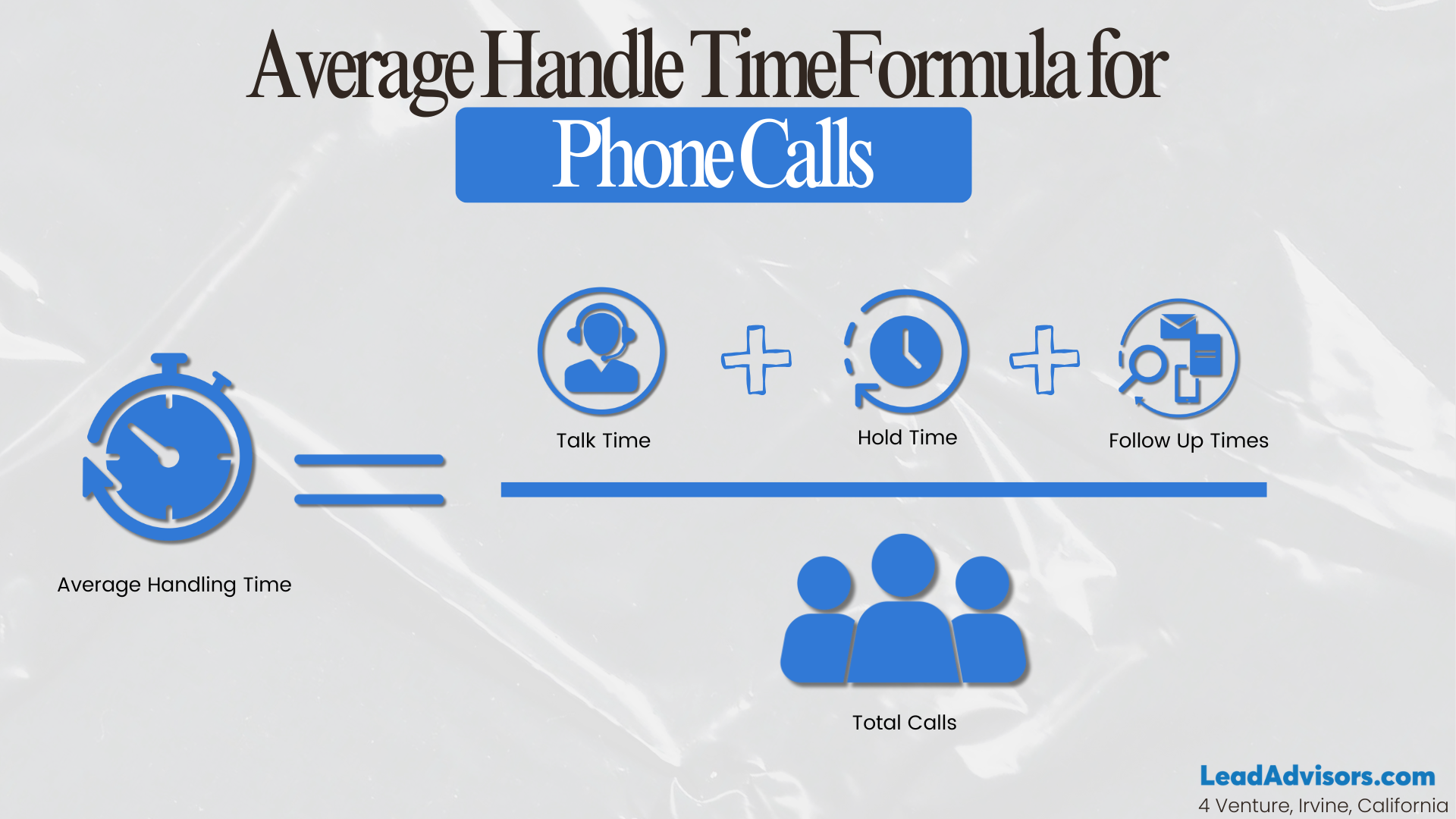
AHT = (Talk Time + Hold Time + Follow-Up Time) / Total Calls
This is the most common formula used in call centers and contact centers. It includes the full time your call center agents spend talking, holding, and completing after-call work time for each customer.
Example:
If your team spends a total of 3,000 minutes on talk time, 800 minutes on hold, and 700 minutes on follow-up tasks for 500 calls:
 AHT = (3000 + 800 + 700) / 500 = 9 minutes per call
AHT Formula for Email Support
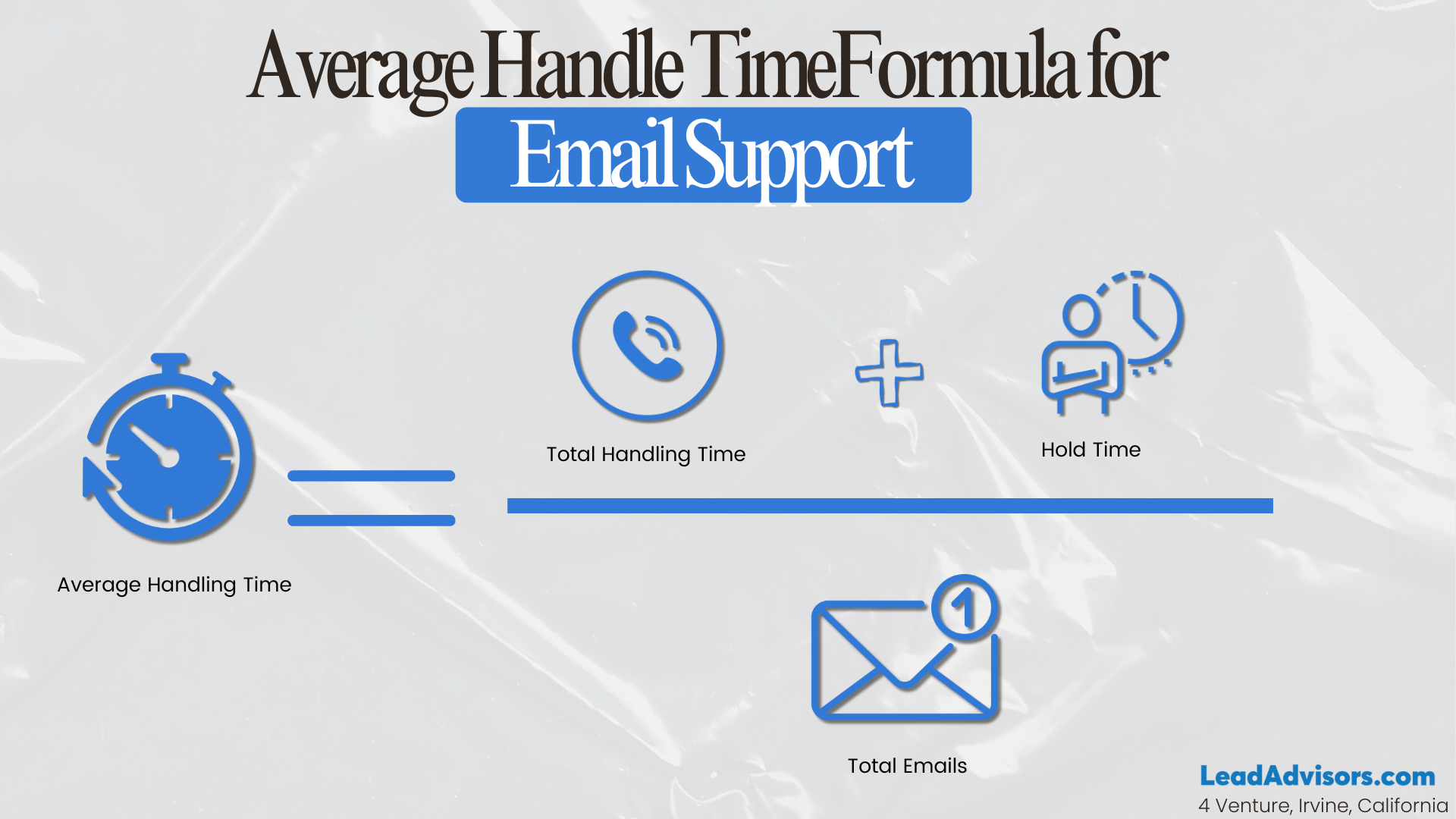
AHT = (Total Handling Time + Wait Time) / Total Emails
For email, you’ll want to track how much time agents spend reading, researching, and responding – plus any delays before replies are sent. It’s a little trickier since emails aren’t as time-sensitive as calls, but it still affects your overall customer experience.
Example:
Let’s say the team spent 1,200 minutes handling 400 customer emails, and customers waited an average of 10 minutes per email for a reply:
AHT = (1200 + 4000) / 400 = 13 minutes per email
AHT Formula for Live Chat
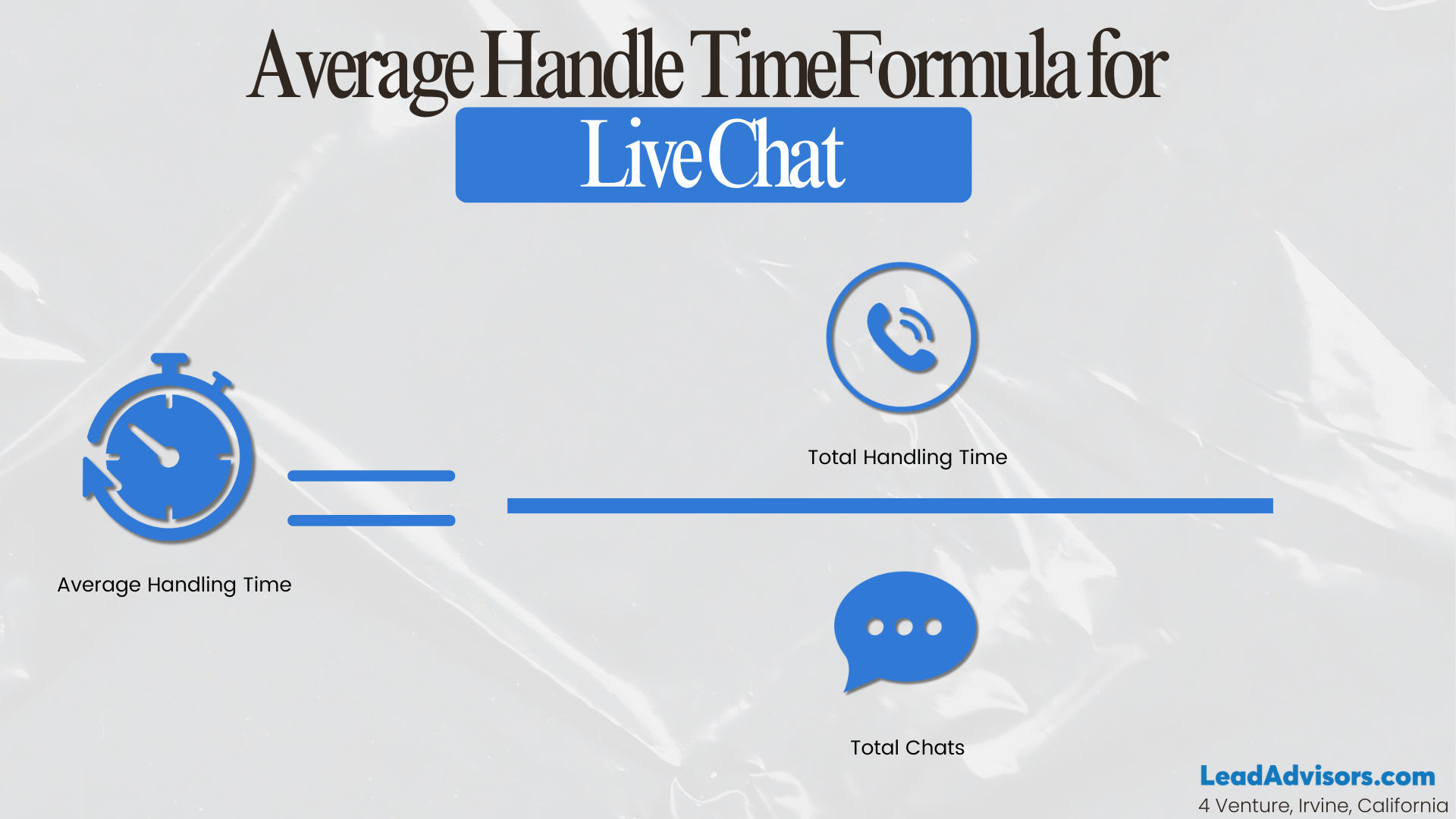
AHT = Total Handle Time / Total Chats
Live chat tends to be faster than calls or email, but can include simultaneous conversations. If your call center software tracks the average duration of chat sessions, this formula gives a solid benchmark.
Example:
Your chat agents handled 1,800 minutes across 600 chats:
AHT = 1800 / 600 = 3 minutes per chat
AHT Calculation Example (Step-by-Step)
Let’s say you’re running a blended contact center handling only phone support. Last week, your agents logged the following:
- Talk time: 2,400 minutes
- Hold time: 600 minutes
- After-call work time: 500 minutes
- Total customer calls: 400
Step 1: Add up all the time spent per interaction
2,400 (talk) + 600 (hold) + 500 (follow-up) = 3,500 minutes
Step 2: Divide by the total number of calls
3,500 / 400 = 8.75 minutes
Your team’s average handle time is 8.75 minutes per call.
This tells you how much time customers spend on the line and how efficiently your team is moving through interactions.
From here, you can look at ways to improve processes, update your internal knowledge base, or strengthen agent training to help trim unnecessary time while still working to improve customer satisfaction.
What Is a Good AHT?
Here’s the thing: there’s no one-size-fits-all answer to the “perfect” average handle time. What’s considered good in one industry might be unrealistic in another. The key is finding the right balance between efficiency and experience based on your unique call center operations.
So, if you manage a high-volume support team, like a 200-seat call center, efficient scaling strategies can help you maintain that balance.
This often depends on effective workforce management in call centers, especially when coordinating agent schedules, forecasted demand, and training across shifts.
Let’s take a look at what’s typical across industries and where teams often go wrong when chasing a lower AHT.
Industry Benchmarks for AHT: The Global vs. Philippines Perspective
While the standard “6-minute rule” exists, it doesn’t tell the whole story for companies looking to outsource to the Philippines providers. In the Philippine BPO landscape, AHT isn’t just about speed; it’s a reflection of specialized training and high cultural empathy that often leads to faster, more effective resolutions compared to global averages.
Below is a comparison of current (2025–2026) AHT benchmarks across key industries. You’ll notice that while Philippine benchmarks are competitive, the real “win” is often seen in the First Call Resolution (FCR) and Customer Satisfaction (CSAT) scores that accompany these times.
AHT Benchmarks: Global vs. Philippines (2026)
| Industry | Global Benchmark (Avg) | Philippines BPO Benchmark | Why the Difference? |
| Retail & E-commerce | 5 – 6 minutes | 3 – 5 minutes | High English proficiency and rapid AI-assisted navigation reduce “dead air.” |
| Technical Support | 8 – 12 minutes | 7 – 10 minutes | Specialized STEM-focused training programs in Manila and Cebu accelerate troubleshooting. |
| Healthcare | 7 – 10 minutes | 6 – 8 minutes | Deep familiarity with US HIPAA standards and medical terminology streamlines intake. |
| Banking & Finance | 6 – 8 minutes | 5 – 7 minutes | Rigorous identity verification protocols are balanced with efficient, culturally aligned rapport-building. |
The “Philippines Advantage” in AHT Optimization
When you outsource to the Philippines, you aren’t just getting lower labor costs; you are tapping into a workforce where empathetic efficiency is a core competency.
Vertical-Specific Training: Philippine providers often utilize “Academy-style” training, where agents spend weeks mastering specific industry nuances before taking their first call. This reduces the “learning curve” hold times that inflate AHT.
Neutral Accents & Cultural Fit: Because Filipino agents have a high cultural affinity with Western markets, there is less time spent on clarification and more time spent on resolution.
AI Integration: Many top-tier Philippine BPOs now use “Agent Assist” AI that surfaces knowledge base articles in real-time, allowing agents to stay engaged with the customer while the tech handles the data retrieval.
Key Takeaway: If your AHT is dropping but your CSAT is rising, you’ve found the “sweet spot.” This is the hallmark of a well-managed Philippine outsourcing partnership.
Common Pitfalls in Managing AHT
If you’re seeing AHT drop but customer experience scores tanking, something’s off. Here are a few missteps to watch out for:
- Over-prioritizing speed over quality
Fast calls aren’t always effective calls. Rushing talk time might hurt long-term retention and lead to repeat contacts, which ironically increases your workload. - Neglecting agent training and real-time feedback
AHT isn’t just about time—it’s about how prepared your agents are. Without proper agent training, even the best tools won’t help reduce handle time effectively. - Ignoring the role of technology in efficiency
Sticking with outdated systems or siloed tools means your team is wasting time clicking around instead of helping customers. Leveraging CRM integrations, AI, or a central internal knowledge base can reduce after-call work time and improve flow.
Remember: A “good” AHT isn’t the lowest; it’s the one that delivers consistent, high-quality customer interactions while keeping your call center agents supported and your customers happy.
The Relationship Between QA and AHT Optimization
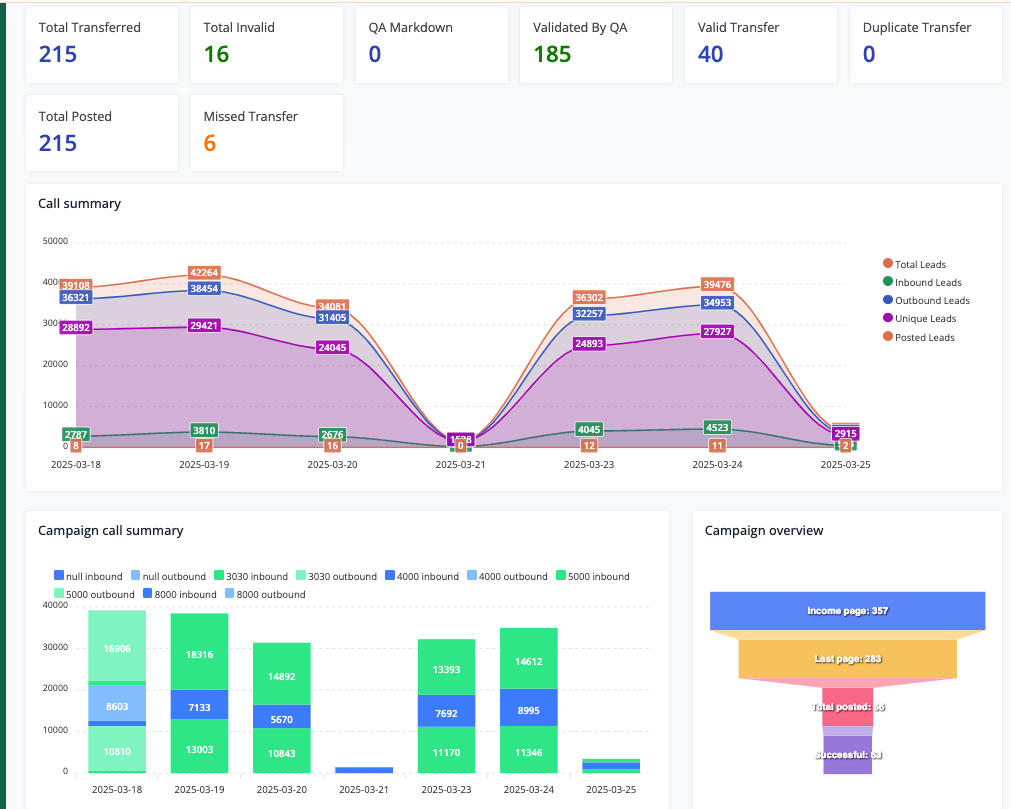
If you’re only looking at the average handle time formula without factoring in quality assurance (QA), you’re missing a big piece of the puzzle. Quality Assurance doesn’t just help ensure that agents are saying the right things; it directly impacts how efficiently calls are handled and how consistently your support team delivers a high-quality customer experience.
Let’s break it down.
Why Call Center QA Directly Impacts AHT
An effective QA process plays a key role in helping teams improve AHT without the need to hurry customers off the phone. Here’s how:
- Fewer errors = faster resolution
QA helps reduce call center mistakes that lead to escalations or callbacks, improving agent performance and lowering overall handle time. - Higher first-call resolution (FCR)
When QA teams flag recurring issues or gaps in agent training, they empower the support team to solve the customer’s issue the first time around, leading to better outcomes and lower AHT. - Consistent call handling
QA creates a standard for how calls should be managed, which helps agents avoid guesswork and keeps your average handle time steady across the board.Applying call center quality assurance best practices, which focus on standardizing interactions while leaving room for flexibility when needed, supports this consistency.
Traditional QA vs. AI-Powered QA for AHT
Manual QA is valuable, but it’s slow. And when you’re trying to improve something as time-sensitive as AHT, AI-powered QA is a total game-changer.
| Aspect | Traditional QA | AI-Powered QA |
| Sampling Size | Limited calls are manually reviewed | 100% of interactions analyzed in real-time |
| Feedback Speed | Delayed (days/weeks) | Instant, real-time coaching |
| Consistency | Subjective scoring | AI-driven, standardized scoring |
| Efficiency Gains | Reactive issue-fixing | Proactive optimization & trend analysis |
By using AI to evaluate every single interaction, call center managers can better understand both agent performance and the trends affecting the customer satisfaction score. It also means less time spent analyzing and more time acting.
Using QA Analytics to Identify AHT Bottlenecks
This is where things get really useful. QA tools, especially those powered by AI, can help pinpoint exactly where things slow down:
- Spotting long-handle-time patterns
Are certain agents or teams consistently clocking higher-than-average AHT? QA analytics can surface those patterns and help you dig into the “why.” - Sentiment analysis to catch frustration early
AI can detect tone and emotional cues, showing you where customer interactions are going off the rails—before the customer’s issue turns into a complaint. - Identifying script and process slowdowns
Sometimes it’s not the agent—it’s the script. QA data can reveal which parts of your process are dragging out calls, whether due to compliance protocols, redundant questions, or unclear next steps.
Best Practices to Improve AHT Without Compromising Quality
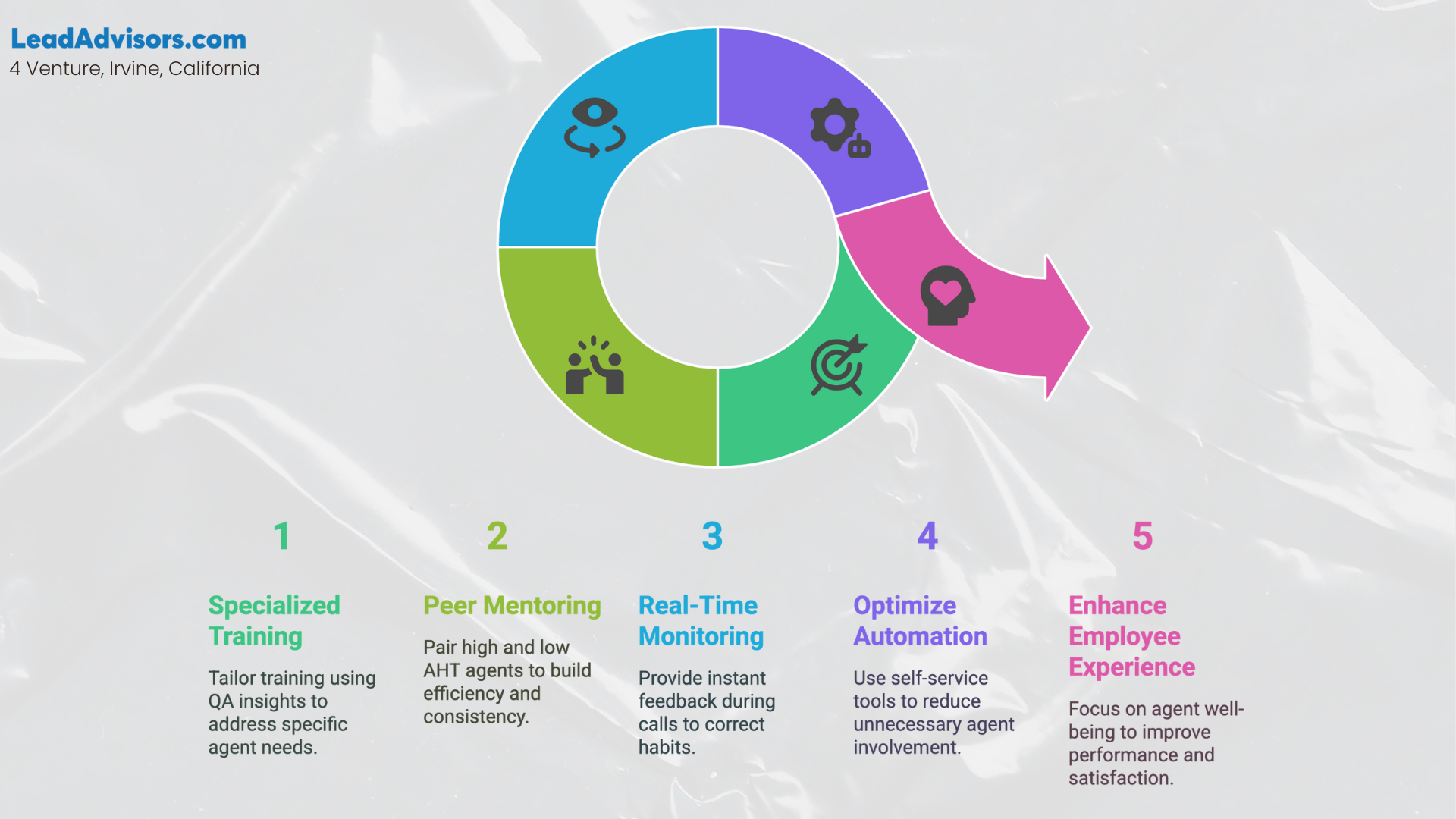
Lowering your average handle time is a win, but only when it’s done without turning agents into call robots or hurting the customer experience. Here’s how to tighten up AHT while keeping quality (and morale) high across your support team.
1) Specialized Agent Training: The Philippine Blueprint for Efficient Conversations
When you outsource to the Philippines contact centers, you aren’t just hiring a team; you’re tapping into a training culture designed specifically to eliminate “dead air” and maximize every second of talk time. Unlike generic onboarding, Philippine BPO training focuses on the intersection of cultural intelligence and conversational control.
Here is how these specialized training programs are structured to improve your AHT:
Mastering the “Conversational Flow” to Eliminate Dead Air
“Dead air”—those awkward silences while an agent searches for information—is a major AHT killer. Philippine training programs address this through:
Active Filler Techniques: Agents are trained to use “verbal nods” and provide “play-by-play” updates (e.g., “I’m pulling up your account details now, Mr. Smith, just a moment while the system loads…”). This maintains engagement and prevents the customer from feeling ignored.
Parallel Processing: Training emphasizes the ability to navigate CRM tools while simultaneously building rapport. This ensures that the “talk time” and “hold time” components of the AHT formula are optimized.
Cultural Alignment and Idiomatic Proficiency
A high level of Western cultural affinity means Philippine agents spend less time clarifying context and more time solving problems.
Neutral Accent & Nuance: Training focuses on accent neutralization and understanding regional idioms (US, UK, or Australian). This reduces the need for customers to repeat themselves—a leading cause of inflated talk time.
Empathy-Efficiency Balance: Filipino agents are naturally empathetic, but specialized training teaches them how to “empathize and pivot.” This allows them to acknowledge a customer’s frustration quickly and move directly into the resolution phase without letting the conversation derail.
Scenario-Based Simulations & AI Shadowing
Training in the Philippines often involves “Academy-style” environments where agents must pass rigorous simulations before going live:
Stress-Testing Scripts: Agents practice with dynamic, campaign-specific scripts that prepare them for the 20% of complex cases that usually take up 80% of total handle time.
AI-Assisted Coaching: Modern Philippine BPOs use AI tools during training to flag long pauses or repetitive phrases in real-time, allowing new hires to self-correct their pace before they ever handle a live customer.
The Result: This specialized approach doesn’t just cut seconds; it improves First-Call Resolution (FCR). By training agents to be both “culturally intuitive” and “technically precise,” Philippine BPOs ensure that calls are handled right the first time, preventing the repeat contacts that secretly drive up your overall operational costs.
2) Pairing High AHT Agents with Low AHT Mentors
Peer coaching is one of the most underrated strategies in call centers. Pairing agents who consistently perform well with those struggling can build efficiency and consistency across the floor.
And it’s not just anecdotal; QA tools can help you track whether mentorship is actually lowering average handle time over time, making those improvements measurable.
3) Real-Time Call Monitoring & Instant Feedback
Why wait until the end of the week to correct a bad habit? With live QA tools and AI-powered coaching, support team leads can step in while a call is still in progress.
This kind of in-the-moment course correction not only helps reduce AHT on the fly but also reinforces best practices for call centers when they matter most—during actual customer calls.
4) Optimizing Self-Service & Automation to Reduce AHT
If customers are calling in about things they could solve themselves, your average handle time formula is going to suffer. Tools like AI chatbots, dynamic FAQs, and an up-to-date internal knowledge base help reduce unnecessary agent involvement.
QA insights can also highlight common FAQ gaps – the repetitive issues that lead to high phone call volumes that could’ve been avoided with better self-service.
5) Improving Employee Experience to Reduce AHT Stress
Let’s not forget the human side of this. When agents are overloaded, stressed, or unclear about expectations, it slows everything down and tanks the customer satisfaction score.
Focusing on the employee experience is just as important as process optimization. QA data can help rebalance workloads, flag burnout trends, and support a culture where speed and agent satisfaction can actually coexist.
Leveraging AI & Automation for AHT Optimization
Optimizing Average Handle Time doesn’t mean pushing agents to rush; it means removing the technical friction that slows them down. When you outsource to the Philippines providers, you gain access to high-end tech stacks that supercharge agent efficiency at a fraction of the onshore cost.
Campaign-Specific Call Scripts for Efficiency
Not all interactions are equal. Philippine BPOs use dynamic scripting that adapts to the customer’s intent in real-time. By utilizing AI to analyze which phrases lead to faster resolutions, managers can fine-tune language and tone, ensuring agents avoid the unnecessary back-and-forth that inflates talk time.
AI-Powered QA for Real-Time Coaching
In a modern offshore environment, agents don’t wait days for a performance review. AI-powered QA tools evaluate 100% of interactions instantly. These tools track sentiment and “high-friction” moments, providing real-time feedback that allows agents to course-correct during the call, significantly reducing the learning curve for new hires.
Automated Workflows & CRM Integration
After-call work (ACW) is often the biggest “hidden” drain on AHT. Top-tier Philippine hubs utilize Robotic Process Automation (RPA) and CRM integrations to handle the heavy lifting:
Auto-logging: AI summarizes the conversation and updates the ticket.
Instant Data Retrieval: Customer history is surfaced automatically, so agents don’t have to “dig” through tabs while the customer waits on hold.
Data-Driven Insights to Continuously Reduce AHT
AI connects the dots between training and results. Analytics tools highlight recurring bottlenecks—such as a specific technical step that always adds three minutes to a call—allowing for rapid updates to the knowledge base. This creates a real-time feedback loop: systems get smarter, agents get sharper, and AHT becomes a reflection of optimized performance, not just speed.
Striking the Right Balance Between QA and AHT Efficiency
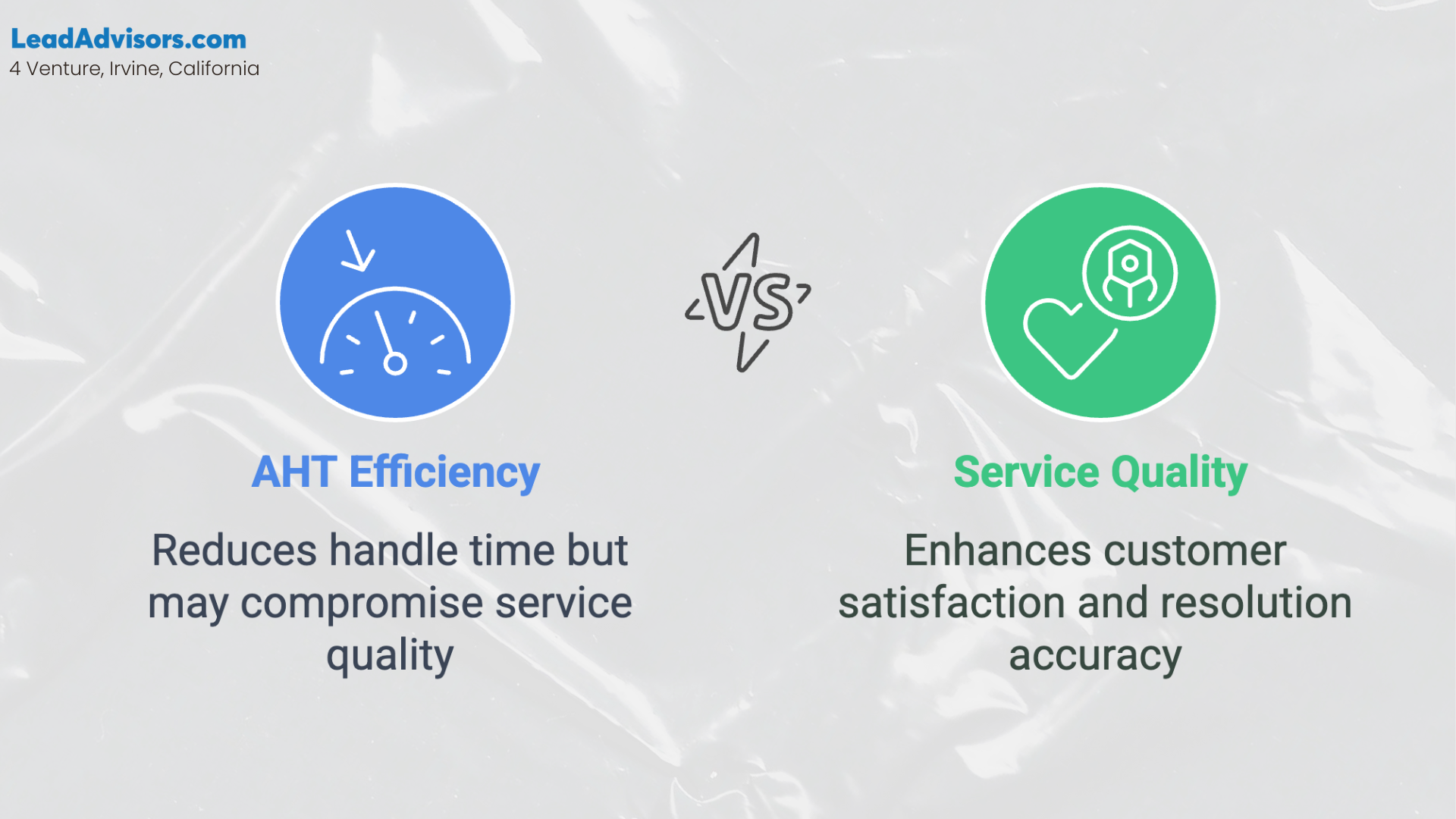
Average handle time is important, but it’s not the only thing that matters. Chasing shorter calls at all costs can backfire quickly. The real win? Balancing AHT with service quality so your support team delivers fast, accurate, and human-centered customer interactions.
Avoiding the Pitfall of Cutting AHT at the Expense of Service Quality
Lowering AHT for the sake of a number can come at a cost, especially when it compromises the accuracy of resolutions. When agents rush, they might miss important details, give half-baked answers, or create confusion, resulting in repeat calls that ultimately increase workload.
Sometimes, longer, more effective calls are the key to preventing future issues. A thorough first call can do more to lower total handle time than five rushed ones ever could.
Holistic Agent Performance Metrics: Beyond AHT
AHT is just one piece of the puzzle. High-performing call center agents aren’t just fast, they’re accurate, empathetic, and consistent. That’s why smart agent performance reviews also factor in:
- QA scores
- Customer satisfaction ratings (CSAT or customer satisfaction score)
- First-call resolution rates
- Escalation rates
QA scoring should align with – not contradict your AHT goals. If your top agents have slightly longer AHTs but consistently solve the customer’s issue, that’s a win. The goal is to support better outcomes, not just faster ones.
Using QA Data to Balance Efficiency and Service Excellence
Modern QA dashboards, especially those powered by AI, can show both sides of the story: quality and efficiency metrics side-by-side. When you can see how talk time, QA scores, and customer satisfaction interact, it’s easier to coach your agents toward that ideal sweet spot.
More importantly, QA data helps ensure your team is focused on what really matters: prioritizing customer needs rather than racing to the finish line.
Because at the end of the day, success in the call center world doesn’t come from shaving minutes; it comes from delivering the kind of service people remember for the right reasons.
Limitations of the AHT Metric & Other Key Call Center KPIs
We’ve talked a lot about average handle time, because yes, it’s a vital metric. But here’s the reality: AHT doesn’t tell the whole story. On its own, it can be misleading and even risky if it becomes the only number your team focuses on.
That’s why the smartest call centers treat AHT as part of a bigger picture, one that includes outcomes, not just speed. Other metrics, such as the call abandonment rate, can reveal whether delays or wait times are causing customers to hang up before reaching an agent—something AHT alone may not capture.
Why AHT Alone Doesn’t Define Success: Moving Toward Value-Based SLAs
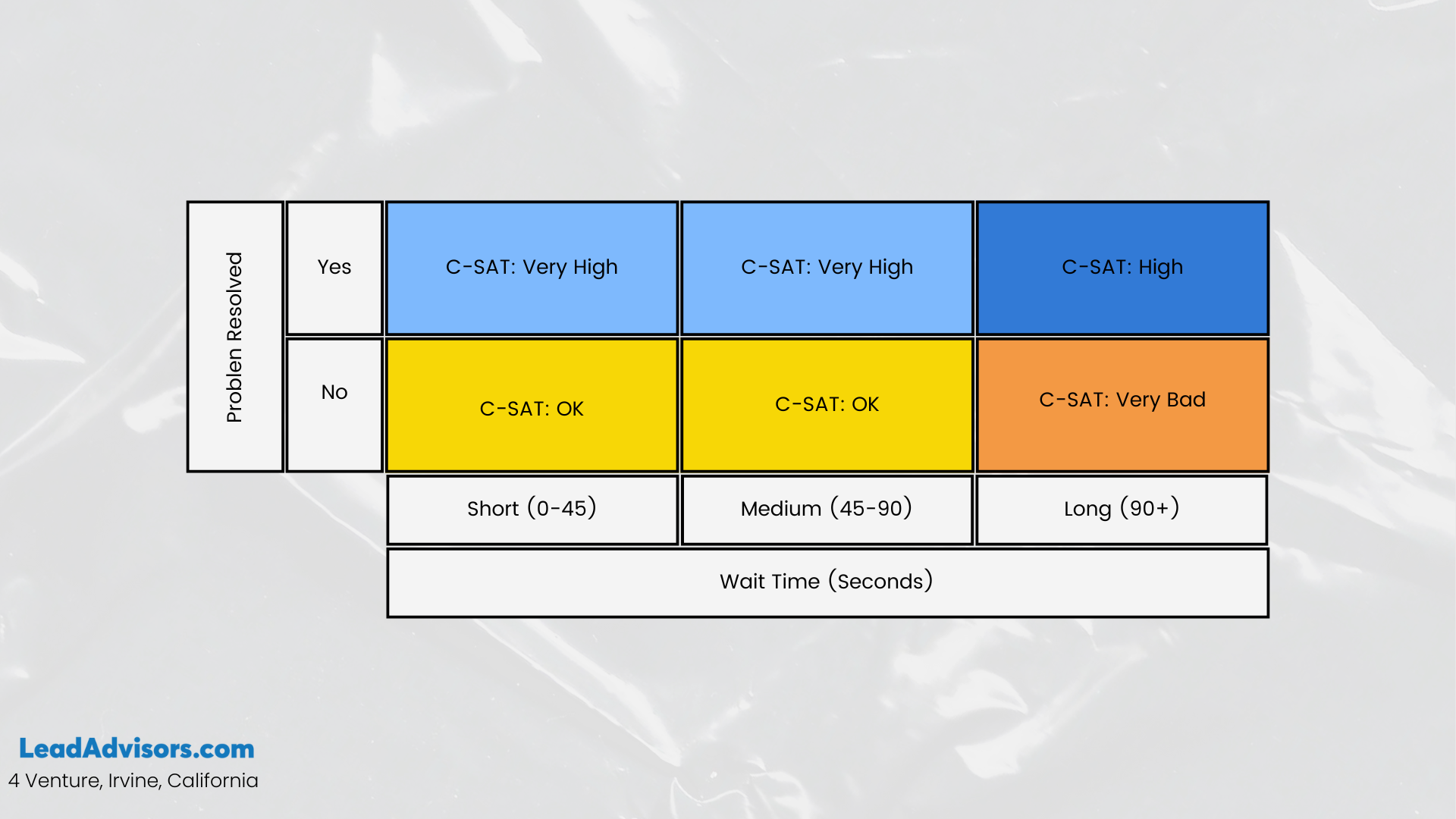
In the world of outsourcing, KPIs are the heartbeat of the partnership. However, focusing solely on the average handle time formula is a trap. For companies that outsource to the Philippines providers, the industry is seeing a massive shift: Service Level Agreements (SLAs) are moving away from “how fast was the call?” toward “how much value was created?”
The Pitfall of “Speed-First” Metrics
If an agent’s only goal is a low AHT, they will naturally prioritize ending the call over solving the problem. This leads to:
High Repeat Contact Rates: Customers call back 20 minutes later because the original issue wasn’t fully addressed.
Low CSAT: Customers feel like they are being “processed” rather than “helped.”
Agent Burnout: The constant pressure to hit a timer creates a high-stress environment that leads to turnover.
The Rise of Value-Based KPIs in the Philippines
Modern Philippine BPOs are now anchoring their success to “Customer Effort” and “Total Resolution” rather than just seconds on a clock.
Customer Effort Score (CES): This measures how easy it was for the customer to get their issue resolved. A slightly longer AHT is considered a success if the CES is high, as it indicates the customer didn’t have to struggle or call back.
First-Call Resolution (FCR): In the Philippines, FCR is often viewed as the “North Star.” Resolving a complex technical issue in 10 minutes (one call) is infinitely more efficient than “resolving” it in 4 minutes but requiring three follow-up calls.
Sentiment Score: Using AI to measure the emotional state of the customer at the end of the call provides a more accurate picture of “quality” than a stopwatch ever could.
Balancing AHT with Quality Assurance (QA)
The best Philippine outsourcing partners use a “Balanced Scorecard” approach. They look at where AHT and Quality intersect.
The “Golden Ratio”: If an agent has a slightly higher AHT but an exceptionally high FCR and CSAT, they are often your most valuable asset. They aren’t “slow”—they are thorough.
By shifting the focus to these value-based targets, you ensure that your offshore team isn’t just a cost-center, but a driver of long-term customer loyalty.