
Construction SEO is a method of online marketing that allows your website to rank higher on the pages of search engine results (SERPs). By locally optimizing your contractor SEO, continuously updating your Google Business Profile, and targeting the most effective construction keywords, you will be able to attract hot leads, increase your organic traffic, and outperform your local competitors.
Look, I know you’re busy managing crews, but here’s the reality: 1.7 million searches for contractors happen every month. If you aren’t visible, you’re invisible. Think of SEO for construction companies as the “digital footings” of your business. Without them, nothing else you build online will stand.
While your competition snags high-margin projects through organic search, you shouldn’t rely on expensive ads or “hit-or-miss” referrals. More than 90% of your clients research your construction services online before calling. If you aren’t optimized for local SEO for construction companies, you’re handing leads to the guy down the street. In this guide, I’ll teach you the SEO strategy for construction companies that turns your site into a 24/7 lead-generation machine.


What Is SEO for Construction Companies?
Think of SEO for construction companies as the process of making your business the “obvious choice” to Google. It’s not just an abstract marketing buzzword; it’s the practice of improving your visibility so you show up exactly when a homeowner or developer searches for “residential construction companies in [your city]” or “commercial contractors near me.”
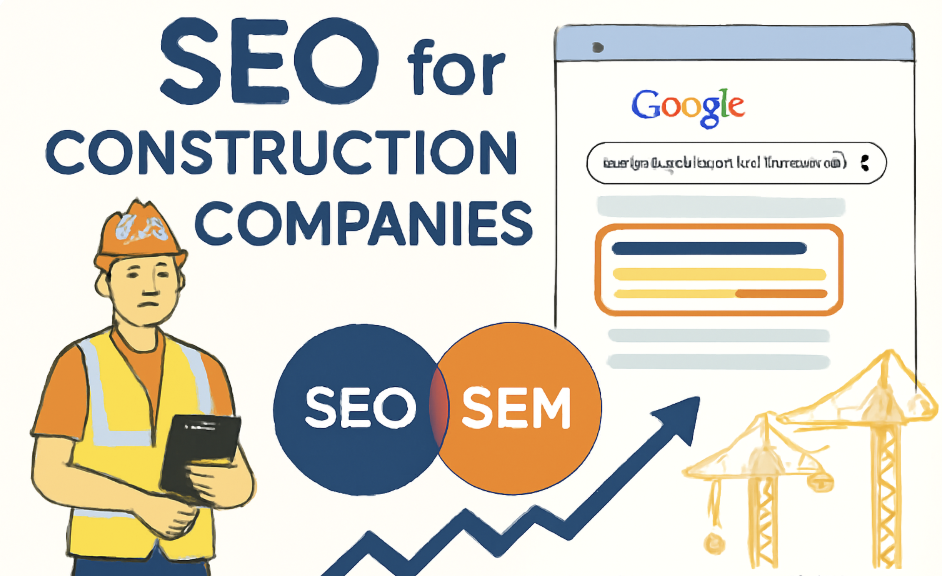
Here is the difference that really matters between a construction company’s SEO and SEM: The construction company’s SEO builds long-term organic visibility via strategic content and technical improvements. On the other hand, SEM (Search Engine Marketing) gives instant results through paid advertisements.
I often compare SEO to the foundation of your digital house; it takes time to pour and cure, but it supports everything else you build online. Your paid ads are simply “renting” space without a proper SEO strategy for construction companies, and this space disappears as soon as you stop paying.
Why Construction Companies Need SEO in 2026
The industry has fundamentally changed. Word-of-mouth is great, but it’s no longer the only way people find you. Here’s why your firm needs to prioritize SEO for contractors:
- The Research Phase: Before a client ever requests a quote, they are doing deep-dive research. If your site provides the answers, you win the trust before the first meeting.
- Mobile-First Leads: Most local SEO for tradies and SEO for local builders queries happen on a smartphone—often right from a job site. If your site isn’t mobile-friendly, you’re invisible.
- Beating the Competition: Your competitors are already hiring a contractor SEO agency or an SEO specialist for construction companies. To stay competitive, you have to be in the race.
The payoff? Construction SEO generates leads with higher close rates and much lower acquisition costs than traditional mailers or billboards. Instead of you chasing projects, high-value, qualified leads come to you.
Key Takeaway: Investing in SEO for builders means you stop “renting” your leads from third-party sites and start “owning” your presence on page one.
Why Local SEO Matters for Your Construction Business
If you’re running a business that physically moves dirt or hammers nails, local SEO for construction companies is the backbone of your entire digital presence. Think of it this way: there’s no point in ranking for “best kitchen remodeler” in another state if you only work in Houston or San Diego.
When a neighbor searches for a “home builder near me,” Google’s algorithm acts like a digital foreman, prioritizing businesses with the strongest local signals. If your local SEO for contractors strategy is on point, you get the call; if not, you’re invisible.
What Local SEO Actually Delivers for You:
| Benefit | Impact on Your Business |
| Consistent Lead Flow | A predictable project pipeline without you ever having to make a cold call. |
| Higher Profit Margins | Inbound leads through your website are pre-sold on your expertise, making them easier to close at better rates. |
| Geographic Targeting | You can specifically target the high-end zip codes or cities where you actually want to work. |
| Competitive Edge | You can outrank larger, national firms by dominating your specific city’s “Map Pack.” |
The “Hidden” Roadblocks
In my experience, the biggest challenge your construction business will face isn’t a lack of skill—it’s “broken” digital signals. Most contractors struggle with:
- Thin Content: Having a website that’s just a “Contact Us” page and a few photos.
- The Mobile Lag: A site that looks great on a desktop but is impossible to use on a phone at a job site.
- NAP Inconsistency: Having different versions of your Name, Address, and Phone number across the web. This confuses Google and kills your rankings.
Whether you’re looking for SEO for construction companies in Brooklyn or SEO for construction companies in Houston, TX, the goal is to show Google that you are a legitimate, trusted, and local authority.
Key Takeaway: Local SEO isn’t just about being “on” the internet; it’s about being the top choice in your specific service area.
Core Pillars of Construction SEO
Think of your SEO strategy like a major build. You wouldn’t frame a house without a solid foundation and a clear set of prints, right? To get the best results, you need to focus on these three structural pillars.
Keyword Research: Speaking Your Client’s Language
Before you touch your website, you need to know exactly what your future clients are typing into that search bar. Residential construction companies don’t want the same traffic as industrial firms, so your construction keywords need to be laser-focused.
Start by targeting these high-intent top SEO keywords for construction companies:
- The “Bread & Butter”: “General contractor in [City Name]” or “licensed builders [Service Area].”
- The “Immediate Need”: “SEO for electrical contractors” or “emergency roof repair.”
- The “Niche”: “SEO for luxury construction companies” or “home remodeler SEO.”
I always tell my friends in the trade: don’t just chase “big” numbers. While millions search for “home ideas,” only a few hundred might search for “SEO for construction companies, Colorado Springs.” Those few hundred are the ones ready to sign a contract. That is the secret of long-tail intent.
Technical SEO: The Foundation Everything Sits On
You could have the most beautiful project photos in the world, but if your site’s “plumbing” is leaky, Google won’t rank you. Period. Fix these basics before you spend a dime on SEO services for construction companies:
- Mobile Responsiveness: Over 60% of searches happen on phones. If your site is hard to tap, you’re losing money.
- Page Load Speed: If it takes more than 3 seconds to load your gallery, your lead is gone.
- HTTPS Security: Google (and your clients) won’t trust an “Unsecured” site.
- Schema Markup: This is a bit of code that tells Google, “Hey, I’m a local business with 5-star reviews in Charlotte.”
On-Page SEO: Optimizing Every Element
On-page SEO is basically how you “dress” your pages for Google and human users. It is recommended that you apply the following rules to every page on your site, from your homepage to your SEO blog writing for local construction companies:
- Title Tags: Make sure to keep them under 60 characters and put your city in there (e.g., “Custom Home Builder in Houston | [Your Company Name]”).
- Meta Descriptions: View this as your 160-character’ elevator pitch to get the click.
- H1 & H2 Headers: Employ these heading tags to logically structure your page. Do not just “keyword stuff.” Google is intelligent enough to detect when you are being “spammy.
- Alt-Text: Tell Google what your project photos are about so it can understand that “modern-kitchen-remodel.jpg” is a photo of the service you offer.
Pro Tip: Use internal linking to connect related projects. If you’re talking about a kitchen remodel, link to your “cabinetry” service page. It keeps people (and Google) on your site longer.
Local SEO Mastery: Dominating Your Service Area
If you want to win the “local game,” you need to dominate the “Map Pack”—those top three listings that appear alongside a map in Google search results. For a builder, this is prime real estate. Let’s look at how you can claim your spot.
Google Business Profile Optimization
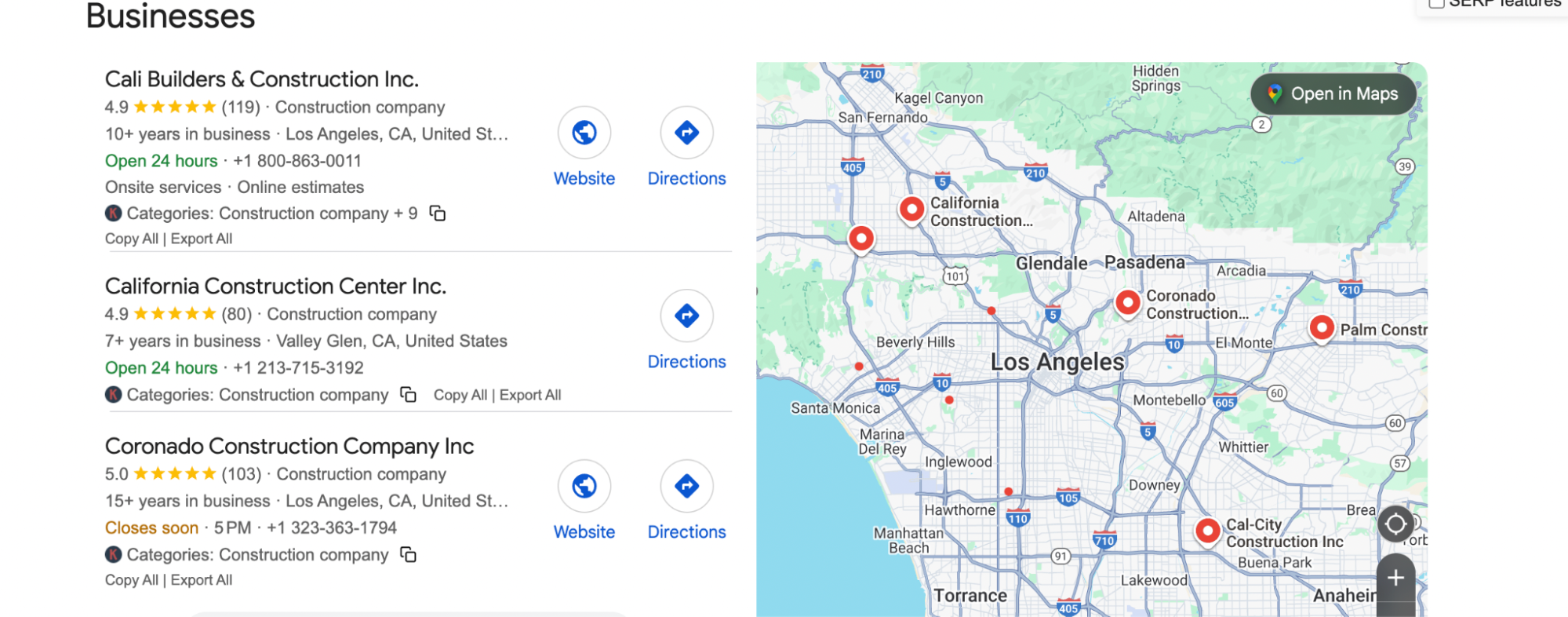
A Google Business Profile (GBP) remains a construction company’s local SEO single most valuable local SEO asset. It is usually the first thing a customer notices, even before visiting your website.
Your Optimization Checklist:
- Be Specific: Don’t just select the category of “contractor.” Instead, pick the one that exactly fits your business, such as “custom home builder,” “paving contractor,” or “roofing contractor.”
- Show Off Your Craft: Post high-quality pictures of your finished work regularly, say every week. Google adores new content, and so do your prospective clients.
- Keywords in Bio: Compose a profile description that naturally incorporates construction keywords along with the particular services that you render.
The Review Engine: This is the most important factor. Always request reviews from clients who are pleased with your service. I recommend that you reply to all reviews, even to the difficult ones. It conveys to Google (and everyone else) that you are a devoted and professional owner.
Building Local Citations
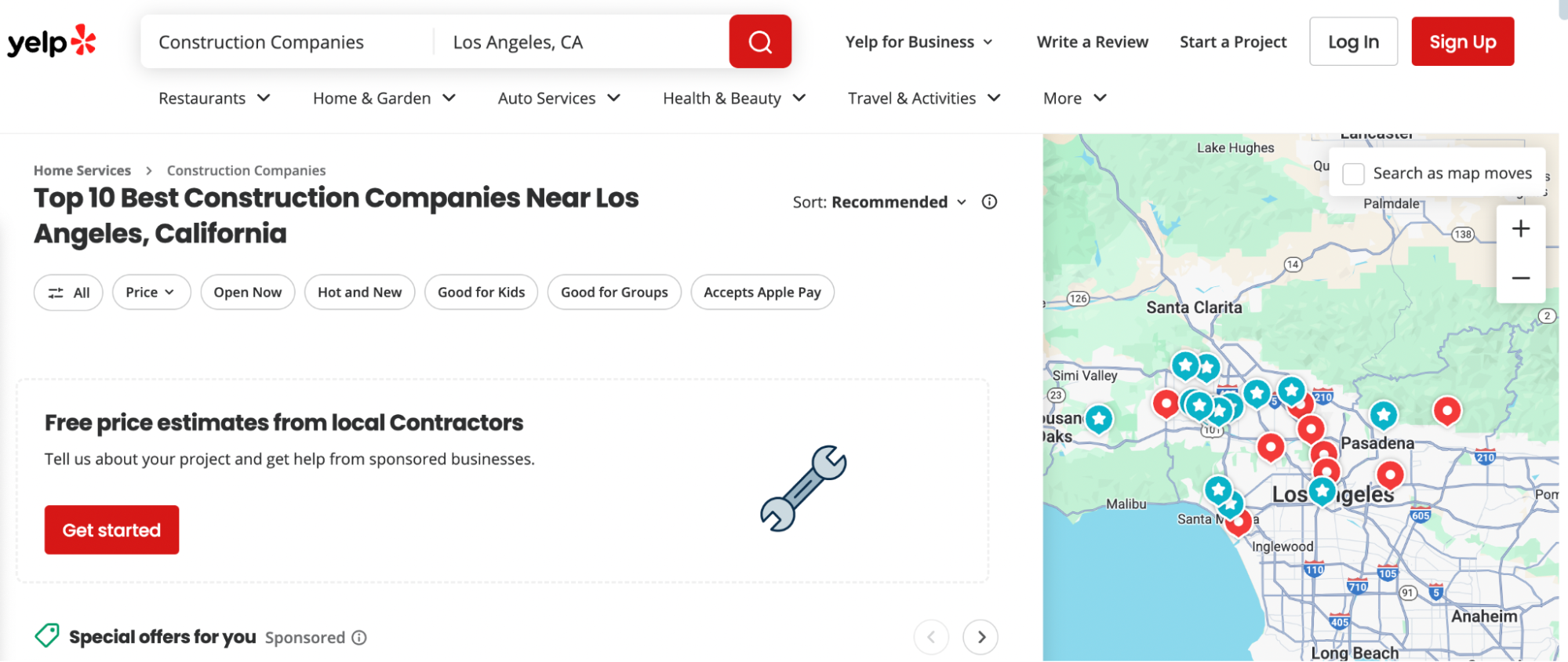
A citation is a simple way of saying any place where your business name, address, and phone number (NAP) are visible online. Search engines rely on these to check that you are a genuine, legitimate business.
To improve your local SEO for general contractors, you should be found on:
- Industry Giants: Houzz, BuildZoom, and Angi.
- Local Listings: Yelp, Apple Maps, and Bing Places.
- Trade Associations: Your local Chamber of Commerce or groups like the NAHB.
Friend-to-Friend Tip: Consistency is the most important factor in this case. If one site mentions” 123 Main Street” and another says “123 Main St,” it can actually confuse Google’s “brain.” So, keep your NAP the same everywhere.
Service Area Pages: Targeting Every Location
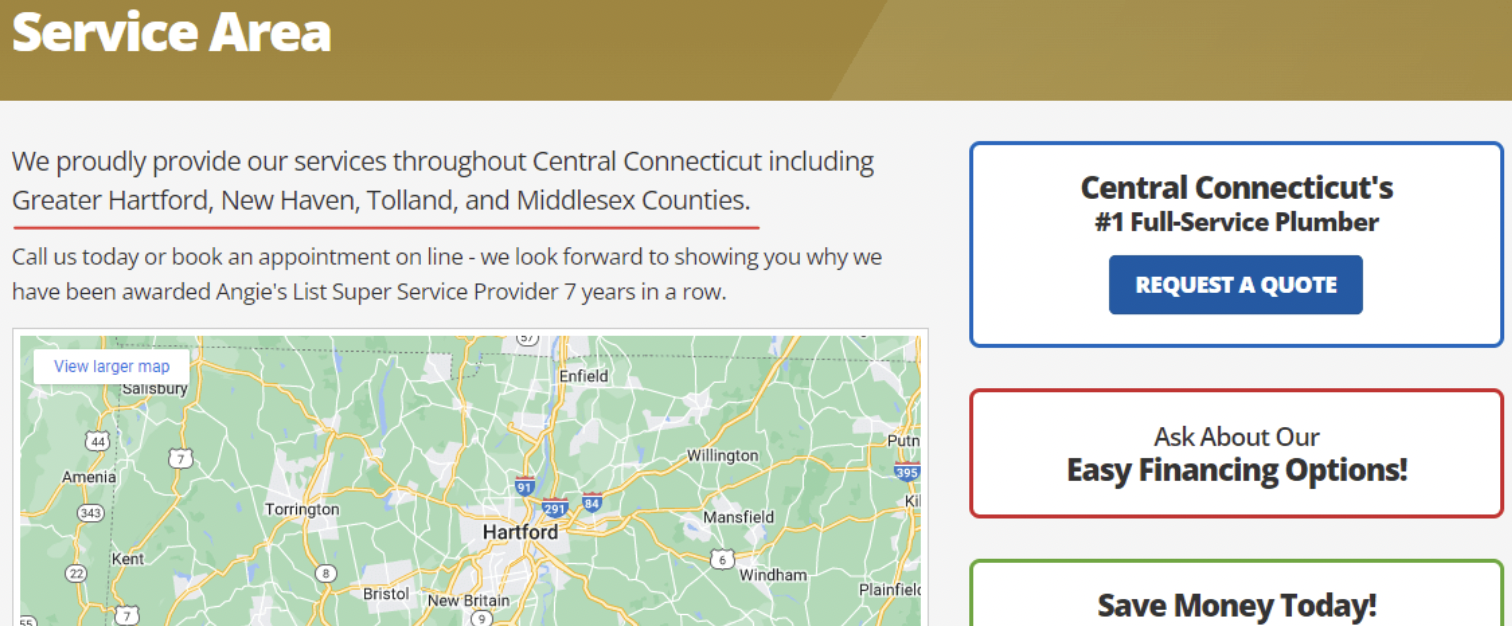
If your business caters to different cities, for example, you are searching for SEO for construction companies in Houston, TX, but also have clients in The Woodlands and Katy, you will require separate pages for each of these locations.
However, don’t simply copy and paste the content! To get to the top for SEO for local builders, each web page must be different. You can try to incorporate:
- Local Landmarks: Indicating particular neighborhoods or landmarks helps Google associate you with that location.
- Local Reviews: Give a testimonial from a customer who lives in that particular city.
- Regional Expertise: Refer to local building codes or climate-related issues that are specific to the area (for example, hurricane-resistant construction in Houston).
This approach aids your construction company’s SEO work in spreading to the whole region instead of being confined only to the city where your office is situated.
Content Strategy: Build Authority, Not Just Pages
Listen, content marketing is what separates the thriving firms from the ones stuck in obscurity. But I’m not talking about cranking out generic “fluff” posts. Real construction company seo is about proving your expertise so a reader becomes a client.
Service Pages That Actually Convert
Your service pages are where SEO meets a sales pitch. If you’re a specialist, don’t just say “we do renovations.” You want a dedicated page for “Commercial Tenant Improvements” or “SEO for Electrical Contractors.”
What I recommend you include:
- Specific Descriptions: Detailed breakdowns of what you do.
- The Process: Walk them through the consultation to the final walkthrough. People fear the unknown; tell them what to expect.
- Proof: Use before-and-after images of your actual work.
- Pricing Transparency: You don’t need to give exact quotes, but providing ranges builds massive trust.
A Clear CTA: Every page needs a “Request a Free Estimate” button.
Project Portfolios: Show, Don’t Just Tell

Case studies are your secret weapon for SEO for builders. They serve “double duty” by showcasing your craftsmanship while capturing long-tail search traffic.
Structure your case studies like this:
- The Challenge: What did the client need?
- The Solution: How did you solve it?
- The Services: List the specific construction services used.
- The Results: Use measurable outcomes (e.g., “completed 2 weeks ahead of schedule”).
Alt-Text: Tag your images with names like modern-kitchen-remodel-brooklyn-contractor.jpg instead of IMG_1234.jpg. This helps you rank in Google Image search!
Blogging for Construction SEO
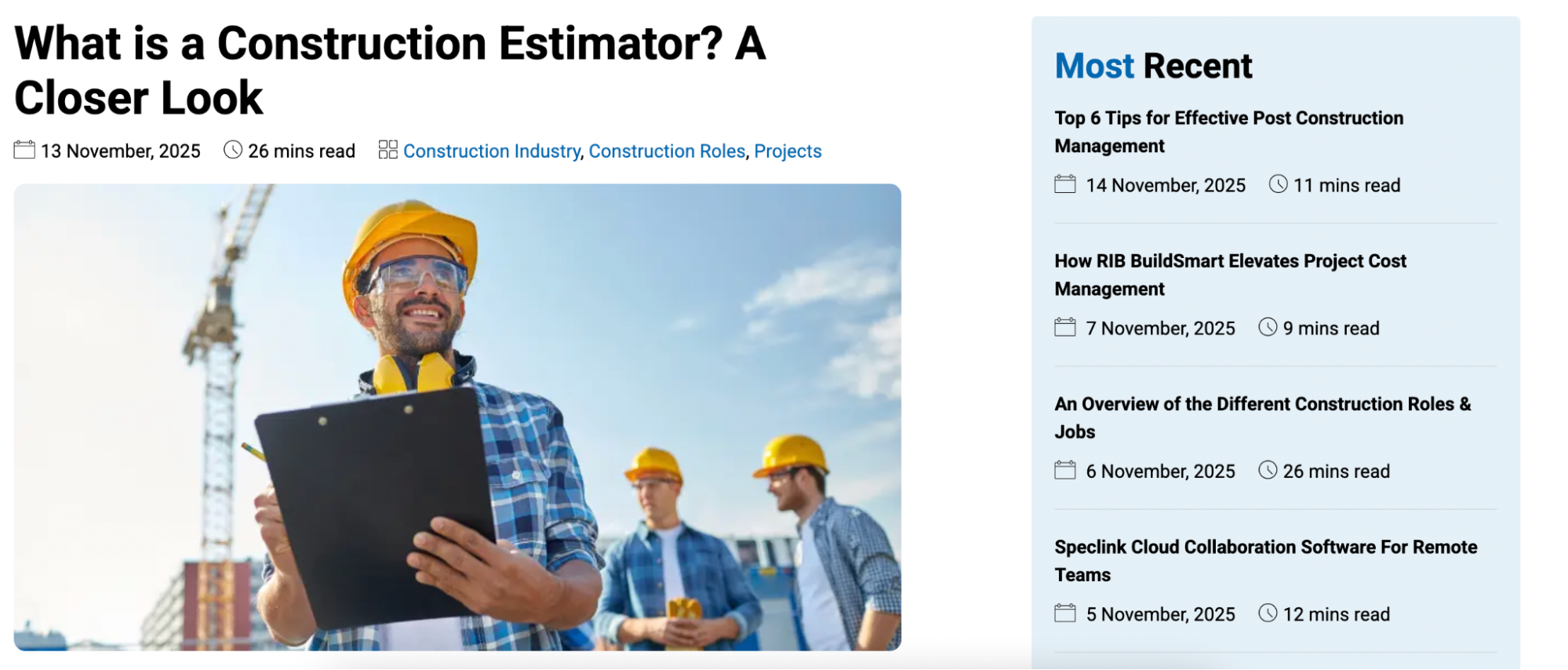
A blog isn’t a “nice-to-have” anymore; it’s your authority-building engine. But forget the “5 Tips for Picking Paint” posts. Write stuff that shows you know your trade inside and out:
- Building Codes: Explain complex local requirements in your area.
- Cost Breakdowns: Tackle the “how much does it cost” questions head-on.
- Material Comparisons: Help them choose between quartz vs. granite or steel vs. wood framing.
Pro Tip: Use internal linking. If you write a blog post about “Common HVAC Issues,” link it directly to your commercial service page. This guides your potential clients deeper into your site and helps Google understand your structure.
Off-Page SEO: Building Authority Beyond Your Website
Look at off-page SEO as your digital reputation. It’s everything that happens away from your website that tells Google, “This firm is the real deal.” While on-page SEO is what you say about yourself, off-page SEO is what the rest of the world says about you.
For your construction company’s SEO to truly work, you need high-quality backlinks (links from other websites to yours). But be careful—quality beats quantity every time in 2026.
Quality Over Quantity in Link Building
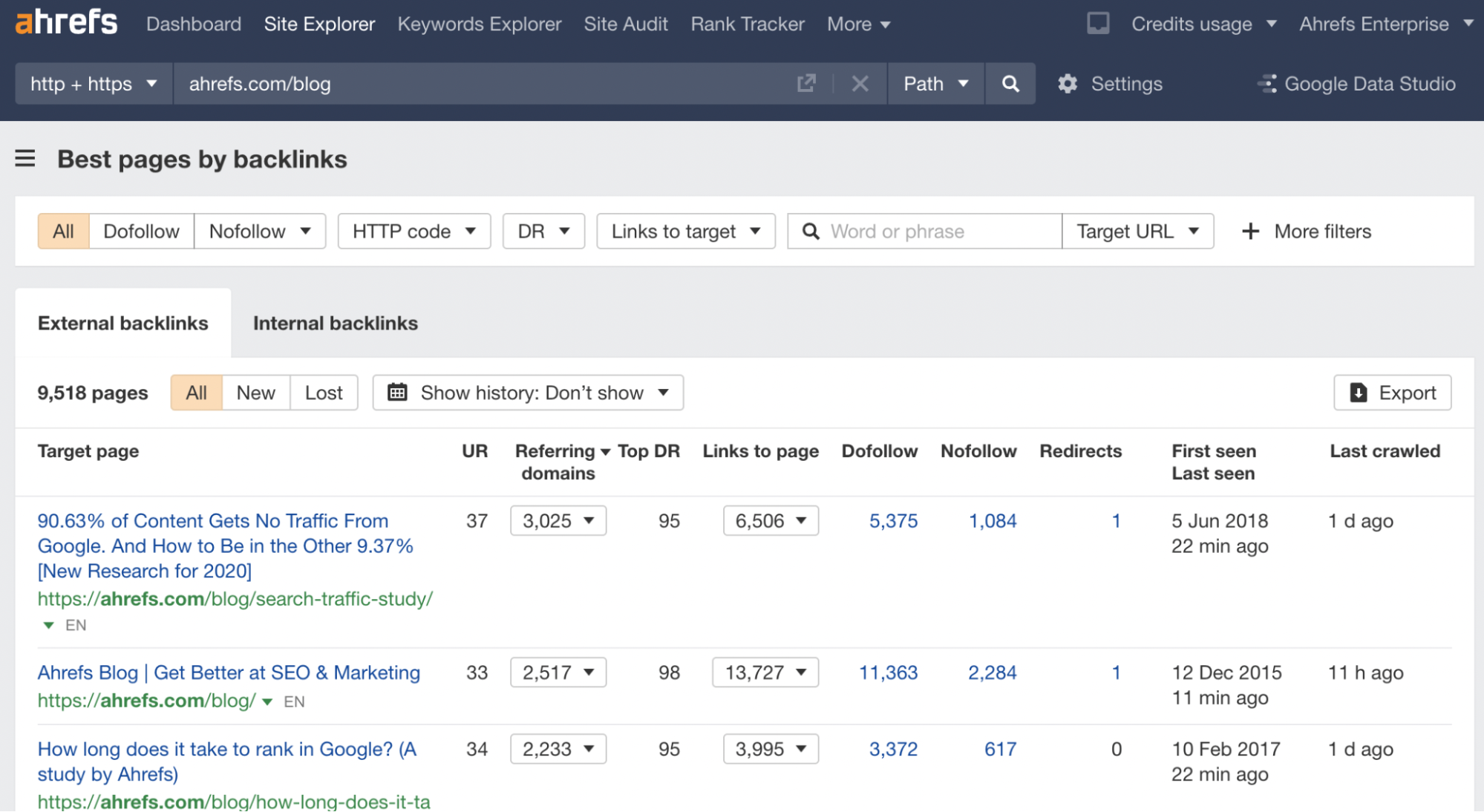
One link from a respected trade publication is worth more than 100 links from random, spammy directories. If you want to be the best SEO for contractors, focus on these local and industry-specific wins:
- Strategic Partnerships: Reach out to architects, engineers, or suppliers you work with. A “Partners” page where you link to each other is a goldmine for local SEO for contractors.
- Local Sponsorships: Sponsor a Little League team or a community 5k. Getting a link from a .org or local news site signals to Google that you are a pillar of your community.
- Industry Associations: Ensure you have links from the AGC, NAHB, or regional groups. These are high-authority signals for SEO for builders.
- Guest Contributions: Write an expert piece for a site like Construction Dive or a local real estate blog. It proves your expertise to both Google and potential clients.
Friend-to-Friend Advice: Stay far away from “link farms” or anyone offering to sell you 1,000 links for $50. Google will sniff that out faster than a building inspector finds a code violation, and they will penalize your rankings for it.
Affiliate Editorial Reviews: External Validation That Converts
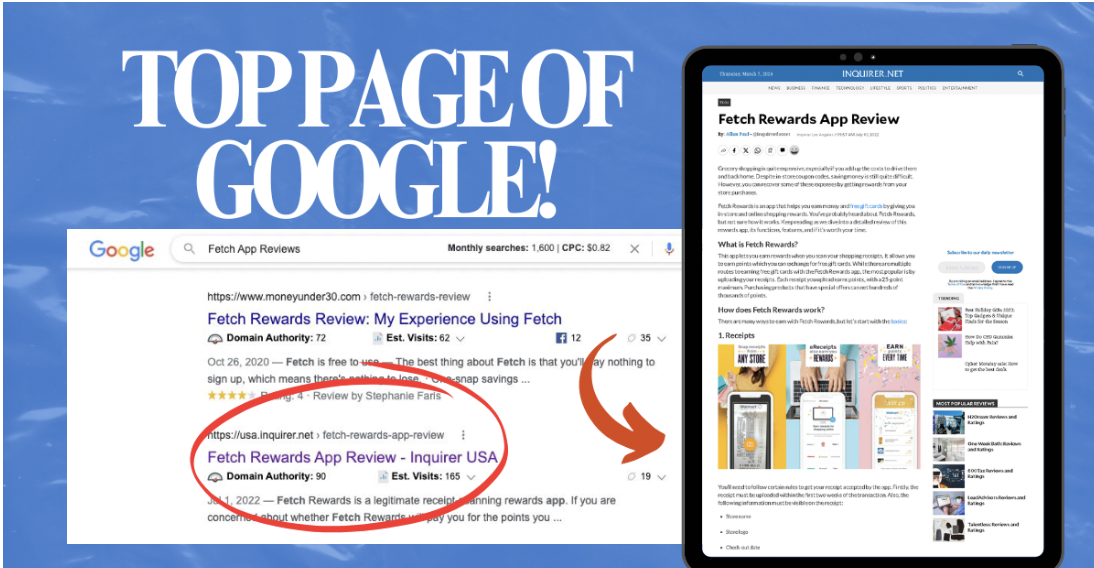
Here’s a secret that many SEO agencies for construction companies won’t tell you: third-party validation converts better than any self-promotion. Securing editorial reviews or features on trusted sites is like having a digital “word-of-mouth” referral on steroids.
Why this supercharges your construction company SEO:
- Instant Trust: When a third-party publisher features your “Luxury Home Build,” it carries more weight than you saying you’re the best.
- Referral Traffic: People reading a “Best Contractors in [Your City]” list are already “warm” leads ready to hire.
- SEO Juice: These sites usually have high authority, which “rubs off” on your site through the link.
You can look for “Best Contractor” listicles or project spotlights. If you want to scale this, partnering with a contractor SEO agency that specializes in PR can help you secure these high-value placements.
Advanced SEO Strategies for Construction Companies
Once you’ve got the basics down, it’s time to move into the “high-performance” tactics. If you want to be the best SEO for contractors in your market, you need to think beyond just keywords. You need to focus on how people interact with your brand.
Conversion Rate Optimization (CRO): Turning Clicks into Contracts
Driving traffic to your site means nothing if they leave without calling you. CRO is the art of turning “browsers” into “buyers.” Think of it as making sure the “flow” of your digital office is easy to navigate.
High-converting elements you need:
- Above-the-Fold CTAs: Put “Get Your Free Estimate” right at the top so they don’t have to scroll.
- Simplified Forms: Only ask for the basics (Name, Email, Phone, Project Type). Don’t make them fill out a 20-question survey just to get a call back.
- Trust Indicators: Proudly display your licenses, insurance, and industry associations. It tells the client you’re a professional, not a “trunk slammer.”
- Social Proof: If you have 5-star reviews or an award from the NAHB, put them front and center.
Video & Visual SEO: Showing Off Your Craft
Construction is a visual business. Use that to your advantage! Video content doesn’t just look cool; it keeps people on your site longer, which tells Google your site is valuable.
Try these video ideas:
- Time-lapses: Everyone loves seeing a project go from a hole in the ground to a finished home.
- Client Testimonials: A video of a happy client in their new kitchen is worth more than a thousand words of text.
- Behind-the-Scenes: Show your crew in action to humanize your brand.
Pro Tip: Upload these to YouTube with titles like “General contractor SEO tips” or “Home builder SEO project walkthrough,” then embed them on your service pages.
Voice Search: “Hey Siri, Find a Contractor”
More people are searching via voice than ever before. These queries are usually longer and more conversational. To win at voice search optimization, you need to think about how people actually talk.
- Target Questions: Create an FAQ page that answers things like, “How much does a kitchen remodel cost in Charlotte?”
- “Near Me” Keywords: Focus on local SEO for contractors by mentioning your specific neighborhoods and landmarks.
Be Quotable: Use short, clear sentences. When Siri or Alexa looks for an answer, she’s looking for a “featured snippet”—a concise, 40-50-word answer that she can read aloud.
Building Your Local SEO Funnel
Look, I know this sounds like a lot, but you wouldn’t try to dry-in a house before the foundation is poured. A successful SEO strategy for construction companies needs a systematic approach. Here is the proven framework I recommend for your business.
Phase 1: Audit & Foundation (Month 1)
Before you build, you have to survey the land.
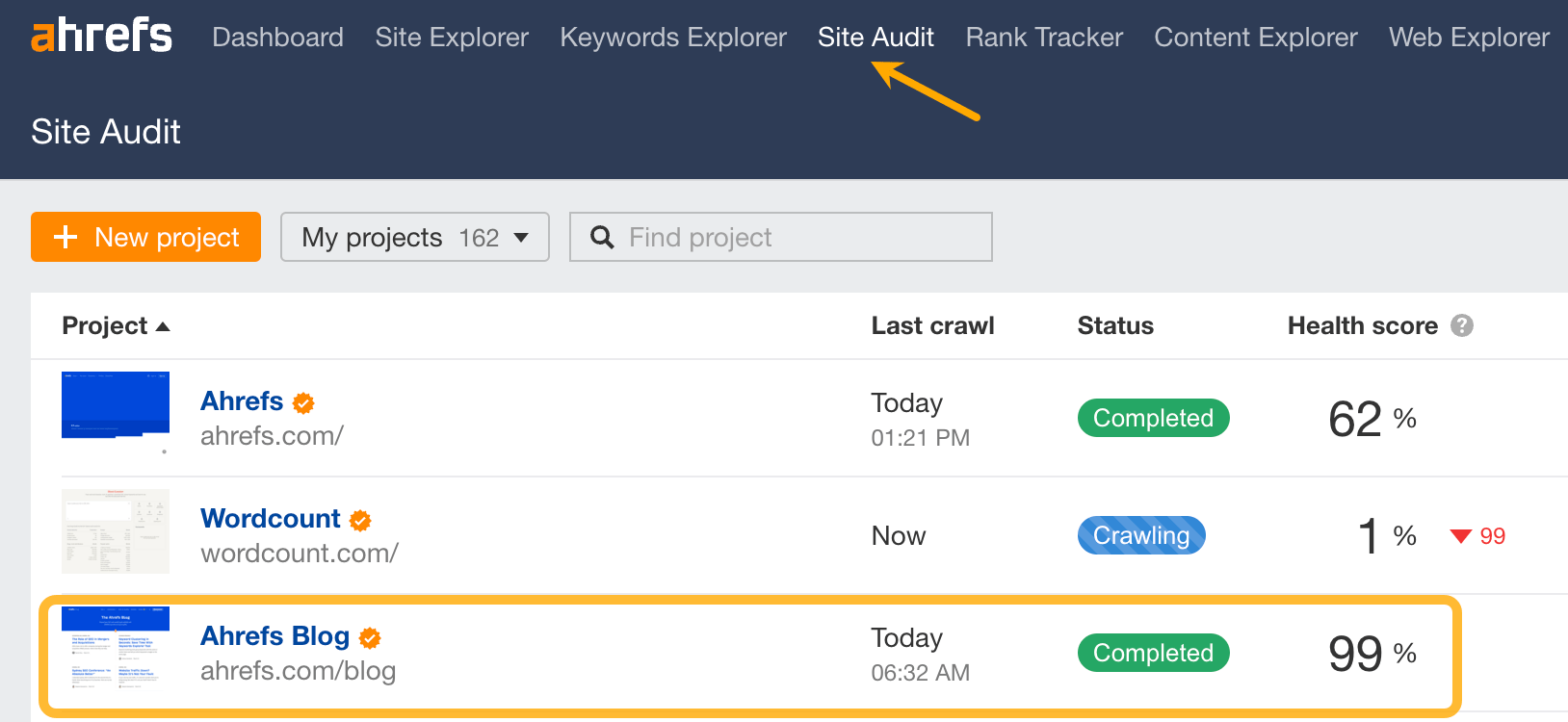
Website audit
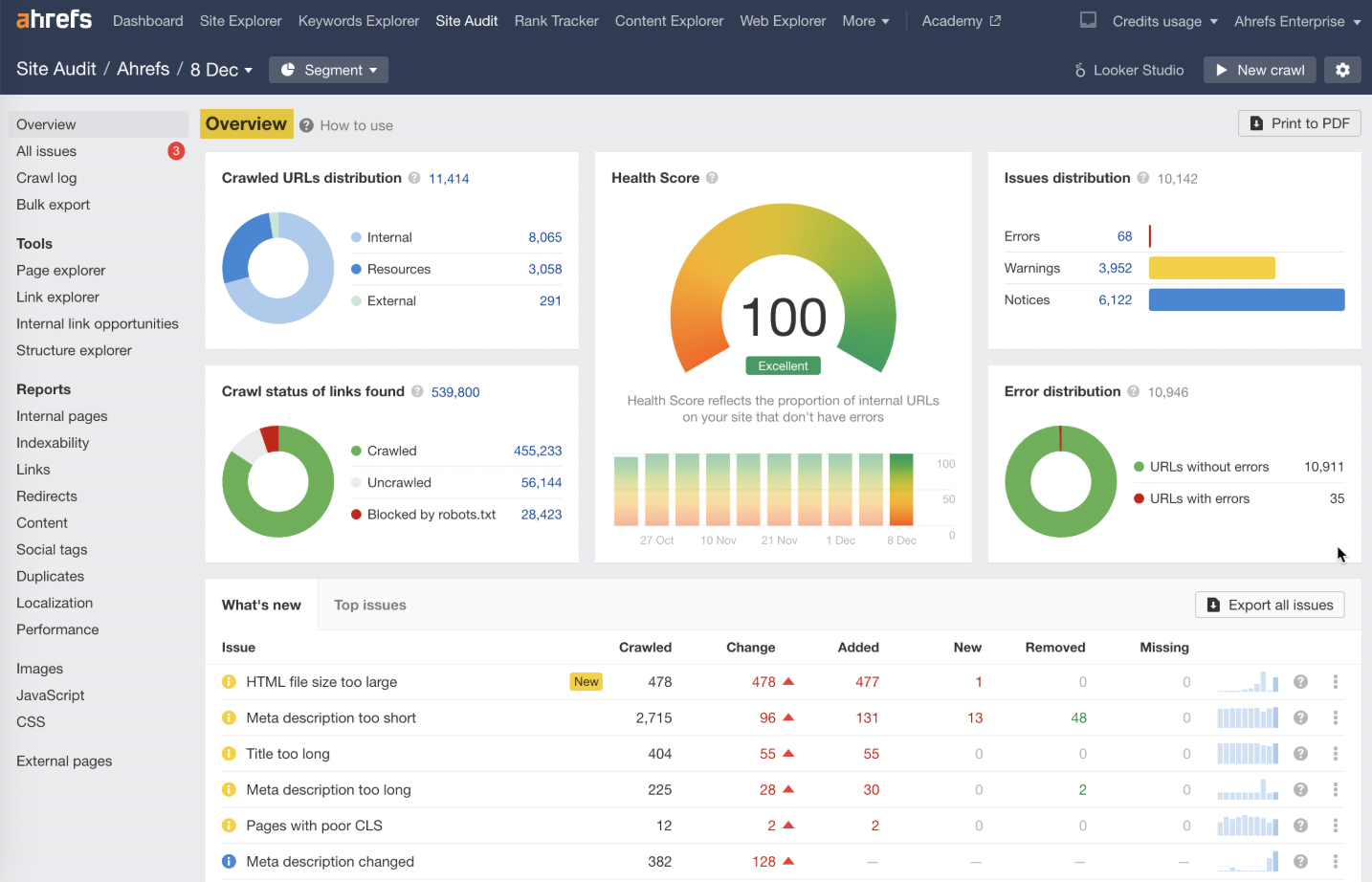
You need to identify technical “code violations” like broken links or slow-loading galleries. Use tools like Google PageSpeed Insights to make sure your site doesn’t tank your rankings before you even start.
Competitor analysis
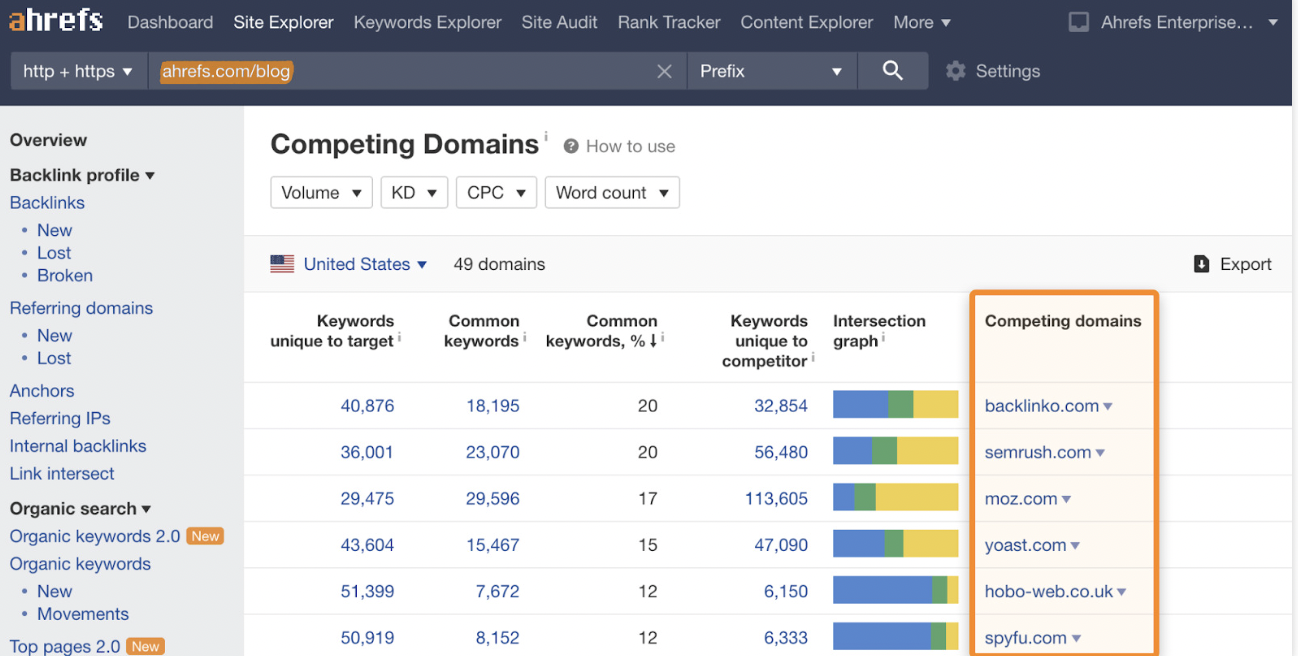
See what the other best SEO for contractors in your area are doing. What keywords are they winning? How do their project galleries look? Find the gaps where they’re lazy, and that’s where you strike.
Keyword mapping
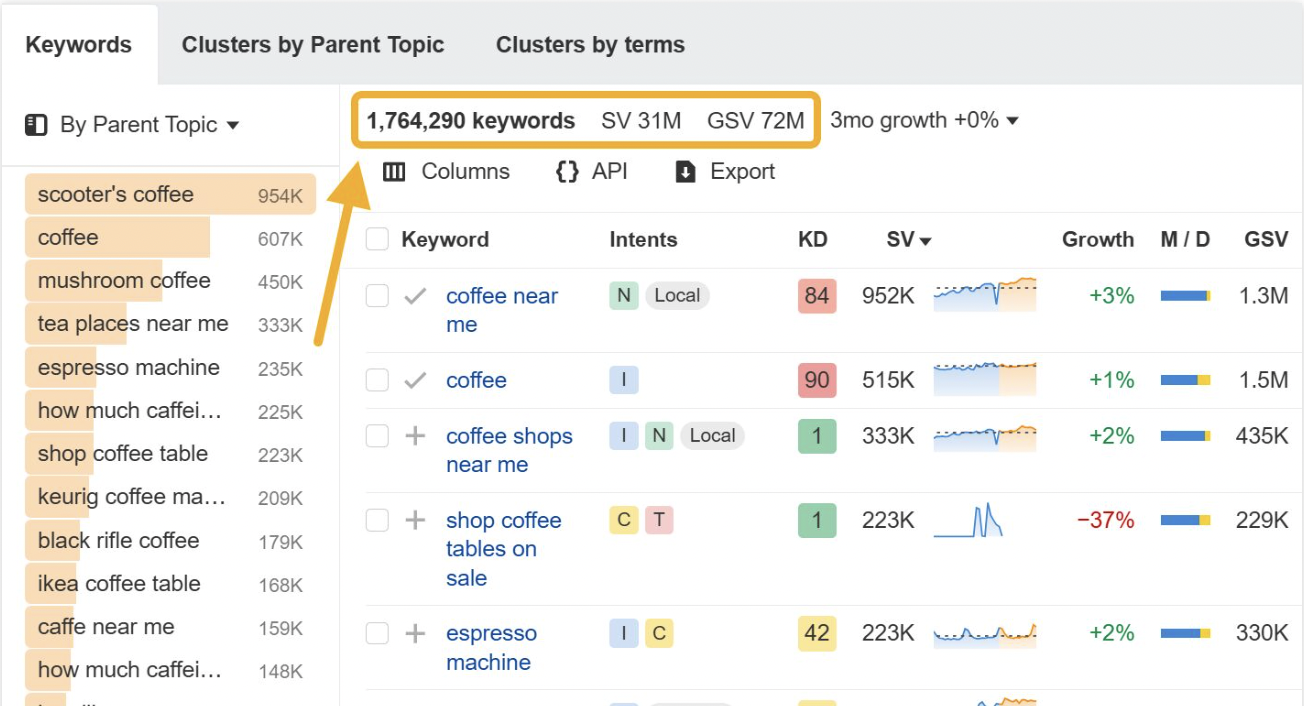
Don’t just throw words at a page. Assign specific construction keywords to specific pages. For example, one page targets “SEO for remodelers,” while another focuses on “general contractor seo.” This prevents “keyword cannibalization,” which is just a fancy way of saying you’re competing against yourself.
Phase 2: Optimization & Creation (Months 2-3)
Now we start the “framing.”
Technical fixes
Resolve those speed and security issues. Ensure your site is mobile-responsive—this is non-negotiable for local SEO for contractors.
On-page Optimization
Update titles, descriptions, headers, and content across your entire site. Rewrite thin pages with substantial, keyword-rich content that actually answers potential clients’ questions. Add internal links connecting related pages. Install schema markup for local businesses, reviews, and services. This phase transforms your existing pages from basic placeholders into conversion-focused assets.
Google Business Profile
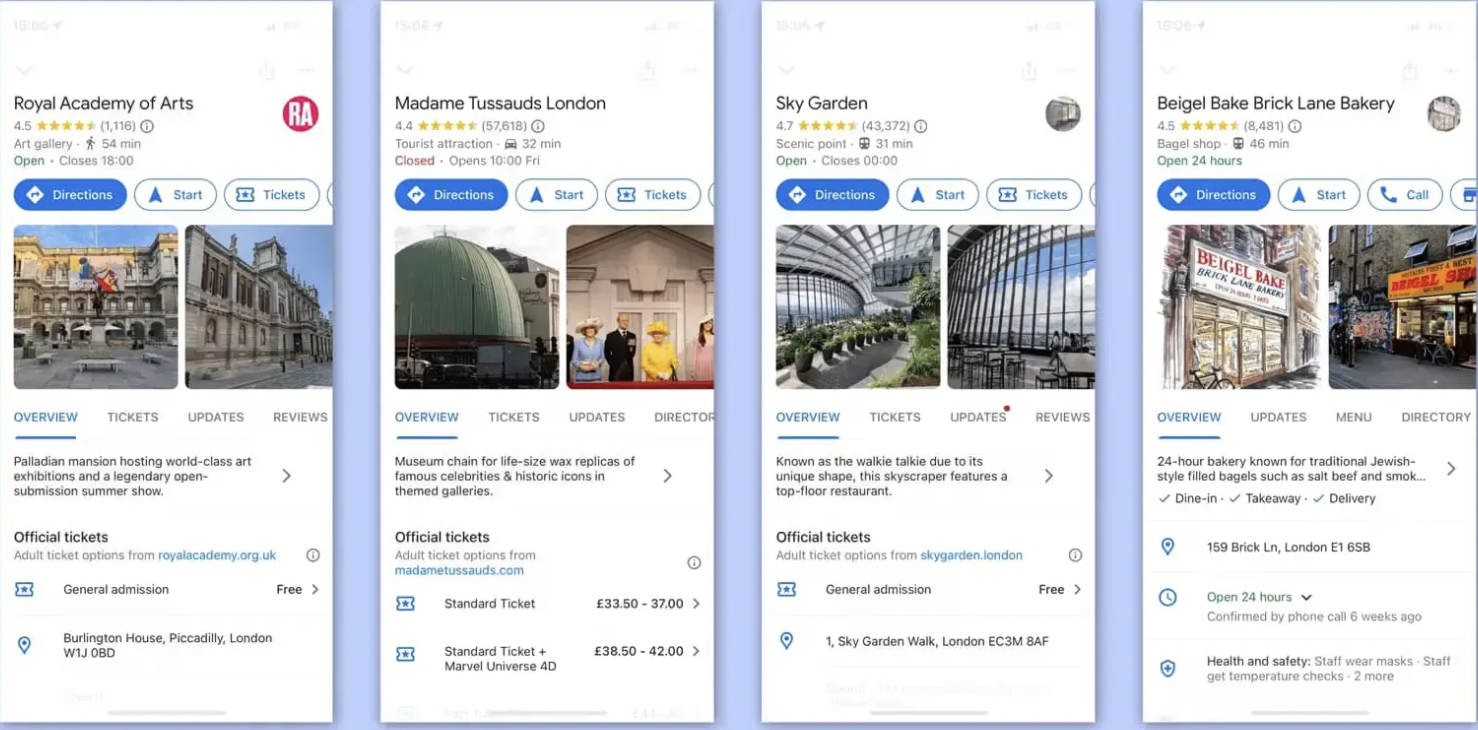
This is your digital job sign. Upload at least 10 high-quality project photos and write a description that includes terms like “local SEO for general contractors.”
Initial content
Launch your priority service pages. Aim for 800+ words that actually answer your clients’ questions. If you’re targeting Charlotte, make sure those pages mention local building codes or neighborhoods.
Phase 3: Authority Building (Months 4-6)
This is the “exterior finish” phase, where you prove you’re the expert.
- Content Production: Start SEO blog writing for local construction companies. Focus on topics like “How much a renovation costs in [City]” to prove your expertise.
- Link Building: Reach out to your architects and suppliers for mutual links. One link from a local lumber yard or a trade association like the NAHB beats 100 random directory links.
- Citation Building: Ensure your Name, Address, and Phone (NAP) are identical on Yelp, Houzz, and the Chamber of Commerce. This consistency is the secret to local SEO for tradies.
Phase 4: Refinement & Growth (Months 7-12)
Now we’re doing the “punch list” and moving in.
- Performance Tracking: Use Google Analytics to see which pages are actually bringing in qualified leads.
- Expansion: Once you’re dominating your main city, start creating pages for adjacent areas—like SEO for construction companies in Houston, TX, expanding into Katy or Sugar Land.
- Advanced Tactics: This is when you add video walkthroughs or voice search optimization to really pull ahead of the competition.
Pro Tip: SEO is a marathon, not a sprint. If you stay consistent with your review generation and content updates, your website will eventually become your #1 source of new business.
E-E-A-T: Building Trust and Authority
When Google looks at your website, it’s acting like a building inspector. It uses a framework called E-E-A-T (Experience, Expertise, Authoritativeness, and Trustworthiness) to decide if you’re a master craftsman or a fly-by-night operation. If you want to rank for the best SEO for contractors, you have to prove you know your stuff.
Here’s how I suggest you demonstrate each pillar to Google:
- Experience: Don’t just show a finished kitchen. Show a “work in progress” shot. Explain a specific problem you solved, like finding dry rot behind a wall, and how you fixed it. This proves you have “dirt-under-the-fingernails” experience.
- Expertise: This is where SEO blog writing for local construction companies shines. When you write about the specific R-value of insulation needed for Colorado Springs winters, you’re showing Google you’re an expert in your field.
- Authoritativeness: This comes from other people talking about you. Getting a mention in a local newspaper or a link from the NAHB tells Google you are an authority in the construction world.
- Trustworthiness: This is the big one. Make sure your license number, insurance certificates, and bonding info are clearly visible. Use real photos of you and your crew—not just stock photos of guys in clean hard hats.
Pro Tip: If you specialize in eco-friendly builds, add a “Sustainability” page. It shows you’re forward-thinking and attracts clients looking for high-efficiency homes. It’s a massive trust signal for SEO for builders.
Measuring Your Construction SEO Success
I’ll be honest with you: it’s easy to get distracted by “vanity metrics” like how many total hits your site got. But unless those hits are turning into signed contracts, they don’t pay the bills. When you’re looking at your construction company’s SEO performance, you need to focus on the numbers that impact your bottom line.
Key Performance Indicators (KPIs) for Contractors
Here are the metrics I recommend you check every month:
- Organic Traffic Growth: Are more people finding your site through Google (not just typing in your brand name)?
- Keyword Rankings: Are you climbing the ladder for high-value terms like “seo for remodelers” or “home builder SEO” in your city?
- Conversion Metrics: This is the big one. How many people actually clicked “Request a Quote” or tapped your phone number to call your office?
- Google Business Profile Insights: Track how many people are finding your map listing and asking for directions to your showroom or calling you directly from the “Map Pack.”
- Lead Quality: Are the inquiries coming in for the $50k+ remodels you want, or are they for $500 handyman fixes you don’t? This tells you if your construction keywords are hitting the right audience.
The Tools in Your Digital Toolbox
You don’t need a degree in data science to track this stuff. Here are the essential tools your SEO specialist for construction companies should be using:
- Google Analytics: This shows you where your visitors come from and what they do on your site.
- Google Search Console: This is like a direct line to Google. It tells you exactly which construction keywords are bringing people to your pages and if there are any technical “code violations” on your site.
- Google Business Profile Dashboard: Your home base for tracking local SEO for contractors and managing your reviews.
- Rank Tracking Software: Tools like Ahrefs or SEMrush help you keep an eye on your competitors and see where you’re winning (or losing) ground.
Key Takeaway: Treat your SEO data like a project budget. Review these metrics monthly and adjust your SEO strategies for construction companies based on what is actually generating revenue.
SEO Timeline: Setting Realistic Expectations for 2026
Look, I’ll be straight with you: SEO for construction companies isn’t a “flip of the switch.” It’s a cumulative investment, much like building a multi-phase development. You can’t move tenants in until the framing and inspections are done.
In 2026, the timeline has shifted slightly because Google is faster at indexing but more selective about quality. Here is the realistic roadmap for your construction SEO journey.
The Realistic Roadmap
| Phase | Timeframe | What’s Happening Under the Hood | Visible Results |
| Foundation | Months 1–3 | Technical fixes, keyword mapping, and local SEO for contractors’ setup. | Cleaner data, faster site speeds, and your first few long-tail keywords appearing. |
| Traction | Months 3–6 | Seo blog writing for local construction companies starts, and Google Maps SEO kicks in. | You’ll start appearing in the “Map Pack” for specific services. Traffic begins to climb steadily. |
| Momentum | Months 6–12 | Authority building through links and consistent project case studies. | Significant lead generation. People stop asking, “Is this working?” because the phone is ringing. |
| Dominance | Year 1+ | Advanced CRO and targeting high-competition terms like “general contractor SEO.” | You become the “local landmark” online. Your site becomes a defensive barrier against competitors. |
Factors That Speed Up (or Slow Down) Your Progress
Every job site has its own challenges, and SEO for builders is no different. Several factors will determine how quickly you see a return on your SEO price construction company investment:
- Market Competition: Ranking for “SEO for construction companies in Houston, TX” will take longer than a smaller town like Guildford or Runcorn, simply because there are more players in the game.
- Website History: An old domain with some existing trust is like a renovated fixer-upper—it’s faster to finish than a “new build” on a brand-new URL.
- Review Velocity: In 2026, Google rewards businesses that look “alive.” If you’re getting one new review a week, you’ll outpace the guy who gets ten reviews in one day and then goes silent for six months.
- Content Depth: Google’s AI now prioritizes “Expertise.” If your content is thin, you’ll stay in the basement of search results.
Friend-to-Friend Advice: The “quick wins” are always in Google Business Profile optimization. You can often see an uptick in direction requests and calls within the first few weeks just by cleaning up your profile and adding fresh project photos.
SEO vs. Paid Advertising: What’s Right for Your Construction Business?
I often get asked, “Should I just pay for ads and be done with it?” It’s a fair question. In the construction world, the smartest players don’t choose one or the other—they use them like a hammer and a level. They do different jobs, but you need both to finish the project.
When Paid Ads (PPC) are Your Best Friend
Paid ads are like renting a generator—you get power the second you plug it in, but the lights go out the moment you stop paying.
- Immediate Needs: Use them when you have a gap in your schedule and need to keep your crews busy this week.
- Testing the Waters: Want to see if people in a new zip code are looking for SEO for luxury construction companies? Run a small ad campaign first to test the demand.
- The “Emergency” Call: If you do emergency roof repair or plumbing, paid ads put you at the very top, exactly when someone’s basement is flooding.
Why SEO is Your Long-Term Retirement Plan
If ads are renting, a construction company’s SEO is like owning the building. It takes longer to build, but once it’s done, it provides value for years.
- Lower Costs: In 2026, the average organic lead for contractors costs around $35, while a paid lead can run as high as $135. That’s a massive difference in your profit margin.
- Higher Trust: Most people skip the “Sponsored” tags and go straight to the organic results. Ranking there proves to the client that you are a trusted local authority.
- Asset Creation: Every blog post you write about best SEO practices for construction companies is an asset that keeps working for you while you sleep.
The Integrated “Power Play”
The winning approach? Use AI SEO services for construction companies and paid ads together.
- The Data Loop: Use paid ads to find out which keywords actually turn into phone calls.
- The Hand-Off: Once you start ranking organically for those terms, you can slowly dial back your ad spend and keep the same number of leads.
- The Double-Presence: If you show up in the ads and the organic results, you look like the dominant force in your market.
| Feature | Paid Ads (PPC) | Construction SEO |
| Speed | Instant results | 4–9 months for traction |
| Cost | Pay per click (forever) | Upfront investment; “free” clicks later |
| ROI (Long-term) | $2.50 – $3.00 for every $1 | $7.00 – $8.00+ for every $1 |
| Trust Factor | Moderate | High |
Common Construction SEO Mistakes to Avoid
Even with the best intentions, I’ve seen some great contractors accidentally sabotage their own websites. SEO isn’t just about what you do; it’s also about what you don’t do. In 2026, Google’s AI is smarter than ever—it can spot “shortcuts” from a mile away.
Even with the best intentions, I’ve seen great contractors accidentally sabotage their own websites. In 2026, Google’s AI is smarter than ever—it spots “shortcuts” from a mile away. Avoid these pitfalls to keep your rankings from crumbling:
- Duplicate Content “Templates”: Don’t just swap city names (e.g., “Remodeling in Houston” vs. “Remodeling in Katy”) while keeping the rest of the text identical. Google flags this as spam. Each location needs its own unique story.
- Ignoring the Mobile Experience: If your site doesn’t load perfectly on a smartphone, you’re losing leads. Most people search for local SEO for tradies while on the move.
- Neglecting Your Google Business Profile: This is free real estate! If you aren’t posting photos or responding to reviews, you’re leaving money on the table.
- Keyword Stuffing: Writing “We are the best SEO for contractors providing contractor SEO services” sounds robotic. Speak like a friend, not a machine.
- Buying “Shady” Backlinks: Avoid “link farms.” Low-quality links will get your site blacklisted faster than a major safety violation shuts down a job site.
- The “Set-it-and-Forget-it” Trap: SEO is like heavy equipment—it needs maintenance. You need ongoing SEO blog writing for local construction companies to stay relevant.
- Chasing the Wrong Keywords: Don’t target “how to build a deck” (which attracts DIYers). Focus on high-intent terms like “general contractor SEO” or “home builder SEO company.”
The best insurance? Work with an SEO specialist for construction companies who actually understands the trades.