
If you are a lawyer, then chances are that you are aware of the term SEO. Maybe you have used a personal injury lawyer SEO service in the past and were not entirely pleased with the outcome. I understand that it can be frustrating to look at your competition dominating the Google search engine while you are stuck on page three, essentially invisible to the remaining 96% of people who look for a lawyer online.
The reality is that if a law firm is not coming up for the term “car accident lawyer near me,” then they are essentially missing out on a lot of money. However, a personal injury lawyer SEO is more than just keywords and terms. It is about creating a reputation that Google respects just as much as the people of the world respect.
A personal injury lawyer SEO is a type of online strategy that is used to help a law firm gain more visibility in the search engine results. This is done by using keywords related to personal injury, such as “truck accident attorney,” and Google Business Profile.

What Is Personal Injury Lawyer SEO?
So, first things first: what in the world is personal injury lawyer SEO?
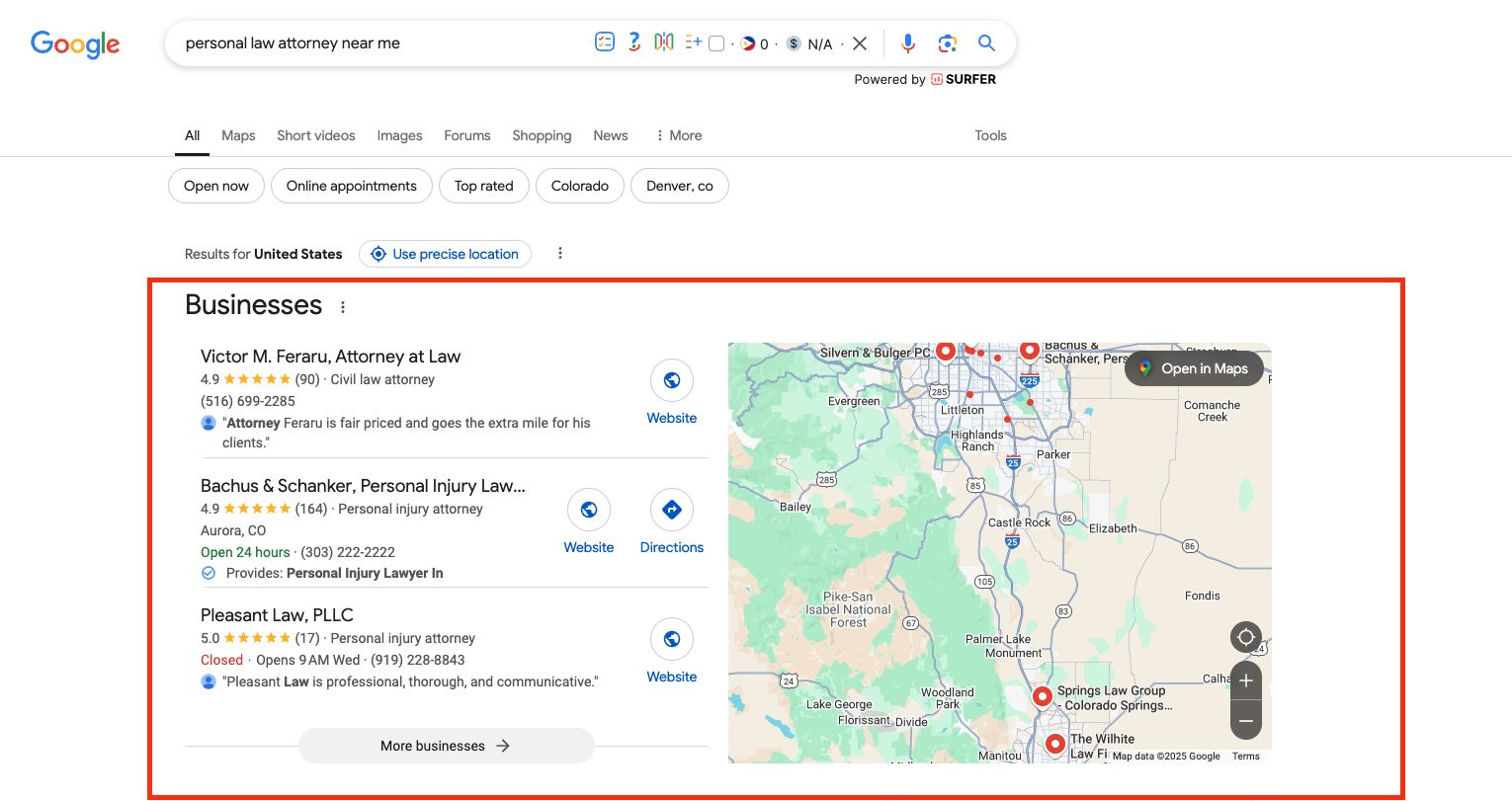
Well, at its core, it’s the art and science of getting your personal injury lawyer website to show up at the very top of the search engine results page—in other words, in the “Map Pack” or at least in the very top of the organic results—when someone types in a query after an accident.
It’s like real estate. The very top of Google is like the “Prime Waterfront” of the internet. If you’re not there, you might as well have an office in a back alley somewhere. And in this space, being seen is equivalent to being viable.
The Core Pillars of Lawyer SEO
What a personal injury lawyer SEO expert is really doing when they look at a site is examining the interplay of all five of the above factors:
- Relevant Keywords: Focusing on high-value keywords like “car accident attorney,” “slip and fall lawyer,” or “truck accident law firm.” This is the basis of personal injury lawyer SEO keywords.
- Technical SEO & Mobile UX: Making sure that the site loads in under 2 seconds and looks great on a smartphone. The average injury victim is looking for the scene of the accident or a hospital bed, and they’re certainly not waiting for a site to load.
- High-Value Content: Developing a personal injury lawyer SEO content strategy that actually helps people, like answering a question like “How long do I have to file a claim in Florida?” instead of simply promoting the attorney’s services.
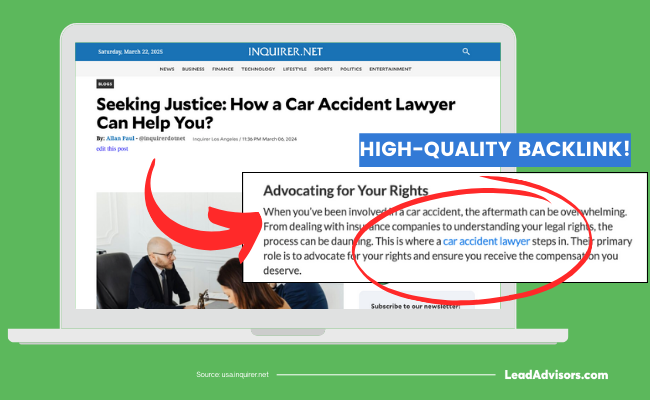
- Authoritative Link Building: Obtaining relevant links from legal directories like Avvo or Justia, and news organizations to prove to Google that you’re an authority in the field.
- Local SEO Signals: Making sure that you appear in the search results if someone types in “injury lawyer near me.”
The End Goal: Organic Trust
Your ultimate objective with lawyer search engine optimization is to be discovered organically. This means you aren’t paying for a spot via local service ads or PPC; you’re showing up because Google’s algorithm has determined your site is the most helpful and trustworthy answer to the user’s problem.
When you rank organically, you aren’t just a “sponsored” link—you’re the expert.
Why is Personal Injury Lawyer SEO Essential?
Here’s the reality: injury victims don’t window shop. When someone is hurt, they need help now. They are reaching for their phones and typing phrases like “personal injury lawyer near me” or “I got hit by a truck, what do I do?” directly into Google.
If your personal injury law firm SEO isn’t dialed in, you aren’t just missing a click—you’re handing a signed case to your competitor.
I have witnessed firsthand the power of search engine optimization for lawyers in creating more qualified leads for a firm. These firms eventually reach a point where they can cut back on their ad spend because they’re getting a new personal injury client every week through organic search.
SEO is not just about getting more visibility; it’s about establishing E-E-A-T to become the “go-to” firm in your city.
SEO vs. SEM for Personal Injury Lawyers

So, let’s clear up that million-dollar question I hear every single week from law firm partners: “Should we spend our budget on personal injury lawyer seo services or just dump it all into Google Ads?”
The answer isn’t “one or the other.” You can (and probably should) do both—but you need to understand the mechanics of each before you start writing checks to an SEO agency.
What is SEO?
Search Engine Optimization (SEO) is the process of fine-tuning your website so that it appears organically in Google search results. When someone types in high-intent personal injury keywords like:
- “personal injury lawyer near me”
- “car accident attorney in [City]”
- “how much is a slip and fall case worth?”
SEO takes time. You’re building a personal injury lawyer SEO content strategy, earning local backlinks, and tightening up your technical SEO. Think of it like planting a fruit tree: it takes a few months to bear fruit, but once it does, you’re eating for free. Once you rank high, you get a steady flow of clients without paying for every single click.
What is SEM?
Search Engine Marketing (SEM), or Pay-Per-Click (PPC), is when you bid on keywords like “best personal injury attorney Los Angeles.” Your ad shows up immediately at the very top of Google—even above the organic listings.
It’s fast and effective for getting leads today. But the second you stop paying? Poof. Your visibility vanishes. That’s why I call SEM a light switch—it’s instant, but momentary.
Quick Comparison: SEO vs. SEM for Personal Injury Lawyers
| Feature | Personal Injury Lawyer SEO | SEM (Google Ads / PPC) |
| Cost Structure | Long-term investment; $0 per click | Pay-per-click; ongoing ad spend |
| Time to Results | Slower (can take 3–6 months) | Instant visibility |
| Sustainability | Long-lasting once you’re ranked | Stops when the budget runs out |
| Click Credibility | Often viewed as more trustworthy | Some users skip “Sponsored” results |
| Traffic Growth | Compounds over time | Fixed to your daily budget |
| ROI Over Time | Higher (no cost per lead once ranking) | Lower (fixed cost for every lead) |
Why SEO Should Be Your Foundation
Both have their time and place, but if you’re serious about building a sustainable business, your law firm SEO strategy always comes first, for the following reasons:
- Trust & Authority: By ranking organically, you prove your authority in the field, both to Google and your potential clients.
- Cost-Efficiency: Pages that rank high organically receive traffic for years without any additional cost.
- Better Conversions: Pages that are well-optimized feel more like a resource, rather than a sales pitch, which creates the necessary trust required for a client to sign a contract.
- The “Moat”: Once you’ve established dominance over the local pack, it’s virtually impossible for a competitor to take the top spot away from you.
When to Use SEM
I’m not saying you should ignore ads—far from it. As a personal injury lawyer SEO expert, I recommend running SEM when:
- You’re launching a brand-new law firm website and need leads immediately.
- You’re expanding to a new city, like setting up personal injury lawyer SEO in Florida.
- You want to test which personal injury keywords actually turn into signed cases before you build out 20 pages of content for them.
The Smart Strategy: Combine Both
Use SEO for personal injury to build your long-term fortress. While that’s brewing, use SEM to fill the gaps. This ensures your personal injury law firm is seen at every stage of the journey—whether a client is just researching their rights or is ready to hire an accident lawyer right this second.
Core Components of an Effective Personal Injury Lawyer SEO Strategy
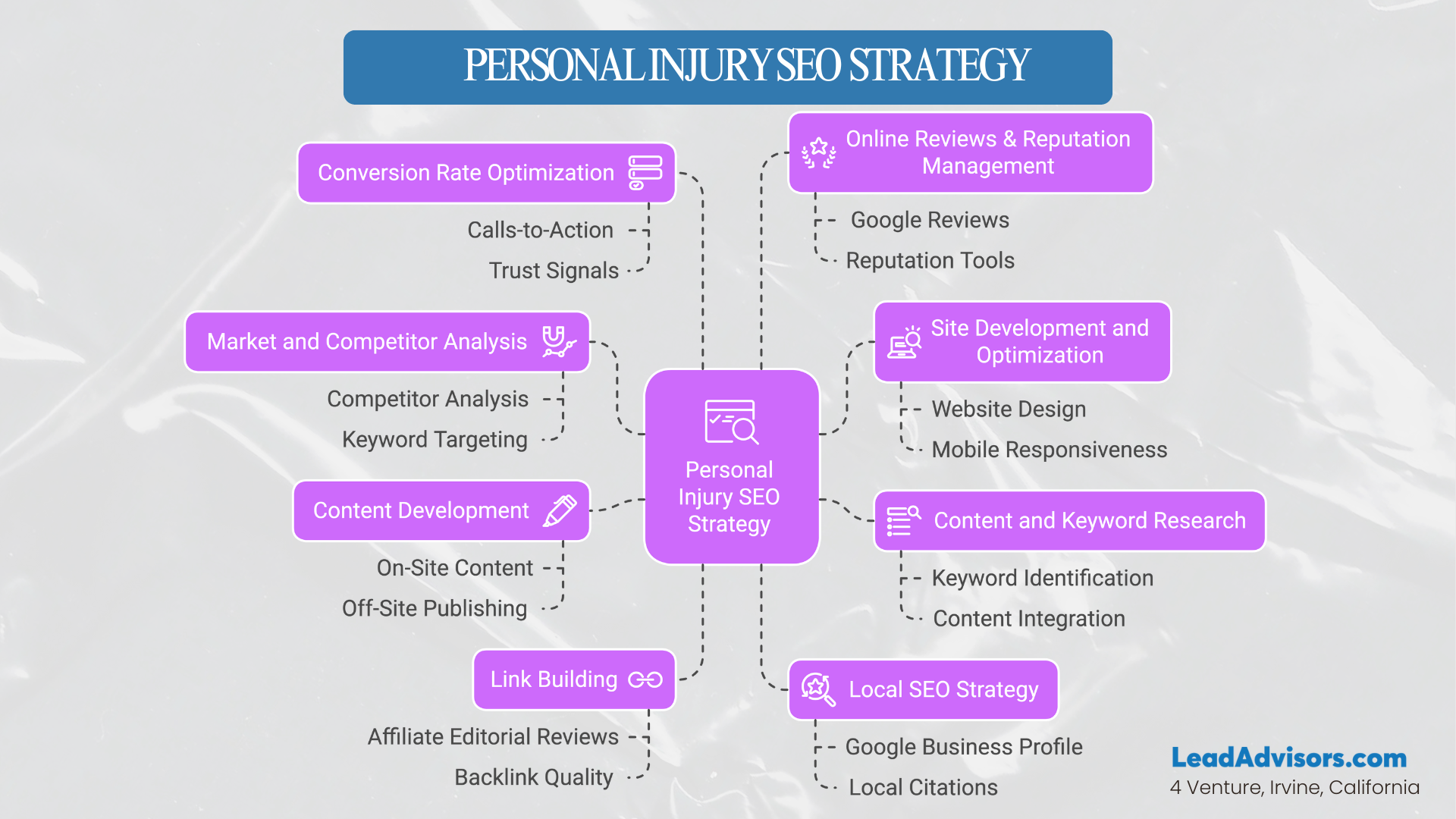
Now, let’s get into the nuts and bolts of it all, because that’s where the real magic happens. If you want to stop chasing leads and start attracting leads, you need a balanced personal injury lawyer SEO content strategy based on the following pillars:
A. Market and Competitor Analysis
Before you touch a single line of code, you’ve got to do your homework. I always tell people to look at the “big dogs” in your specific city. What are the top-ranking firms doing right?
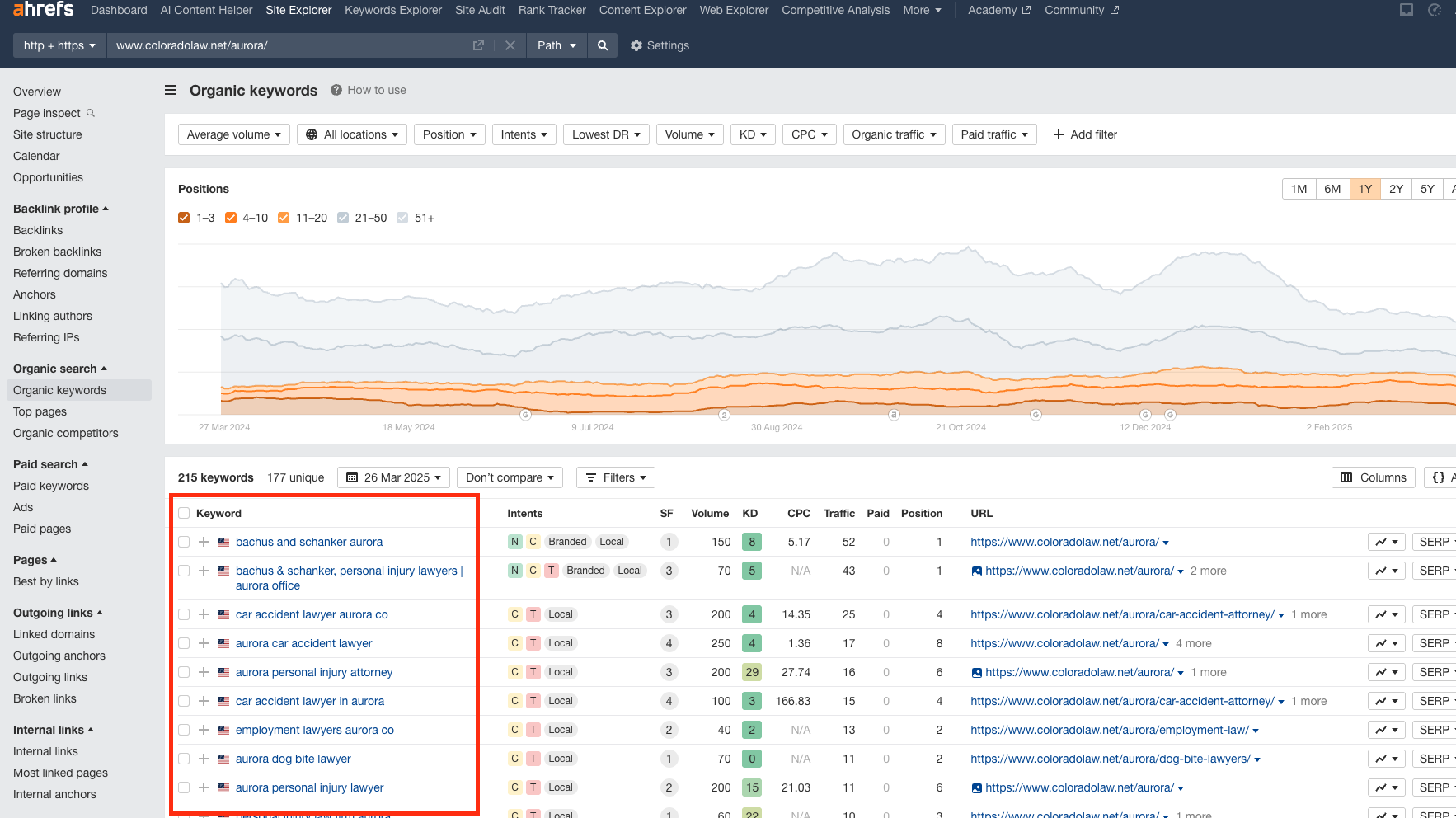
With tools like Ahrefs or SEMrush, a personal injury lawyer SEO expert can identify exactly which personal injury keywords your competitors are bidding on and ranking for. We’re looking for the gaps—the high-intent searches they’ve ignored—where your firm can truly shine.
B. Site Development and Optimization
If your website looks like it hasn’t been updated since 2012, Google is going to know. Technical SEO and UX are non-negotiables.
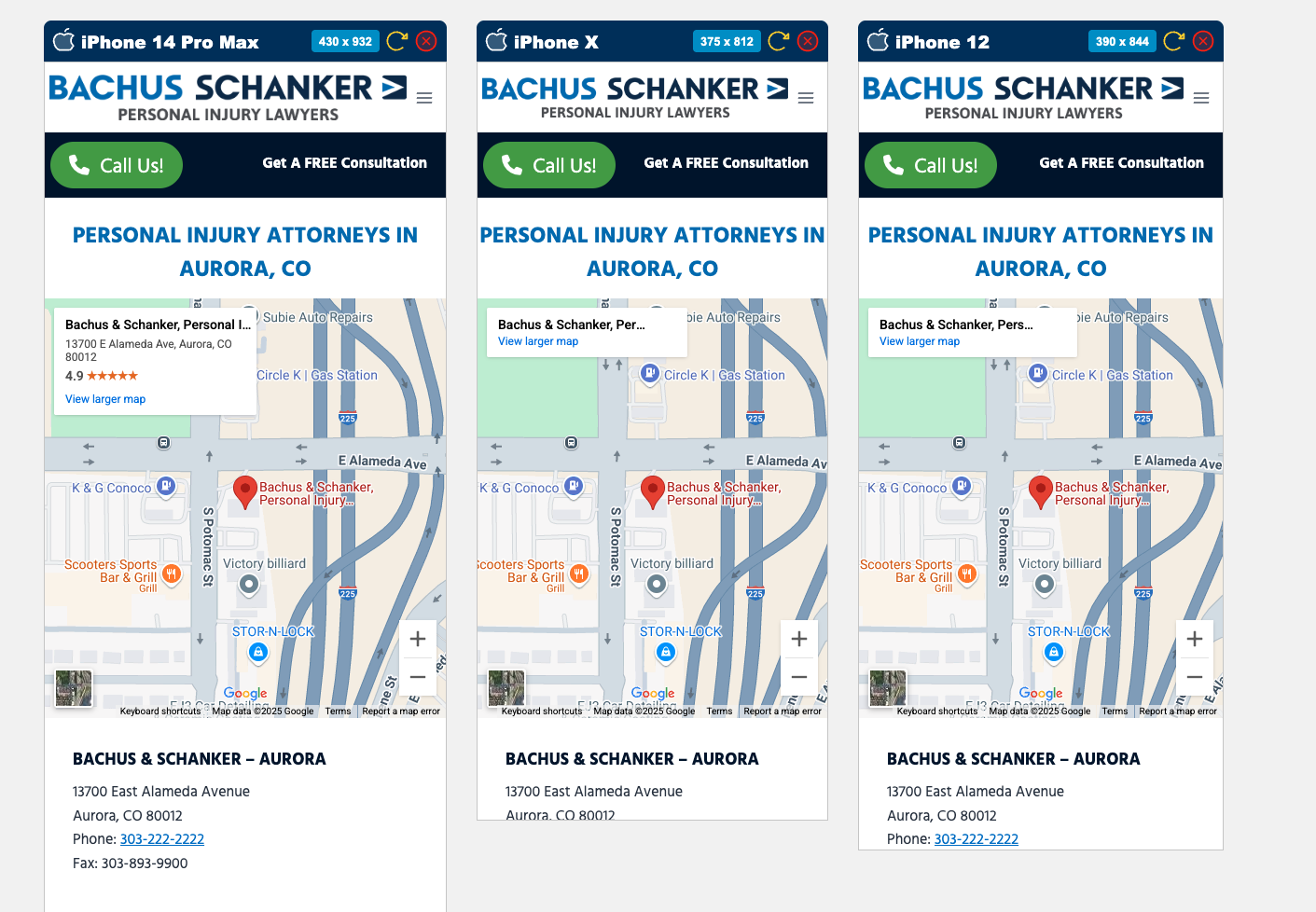
- Mobile-First: Victims of personal injury cases usually search for help on their phones. Your site must be lightning-fast and super easy to use with one hand.
- Click-to-Call: If your phone number isn’t front and center and clickable, you’re losing clients.
C. Content and Keyword Research
This is my favorite part. We use Google Keyword Planner to find what people are actually typing into that search bar. We don’t just target “lawyer”; we find the money terms:
- “Motorcycle accident lawyer [City]”
- “What to do after a dog bite”
- “Average slip and fall settlement in [State]”
D. Content Development
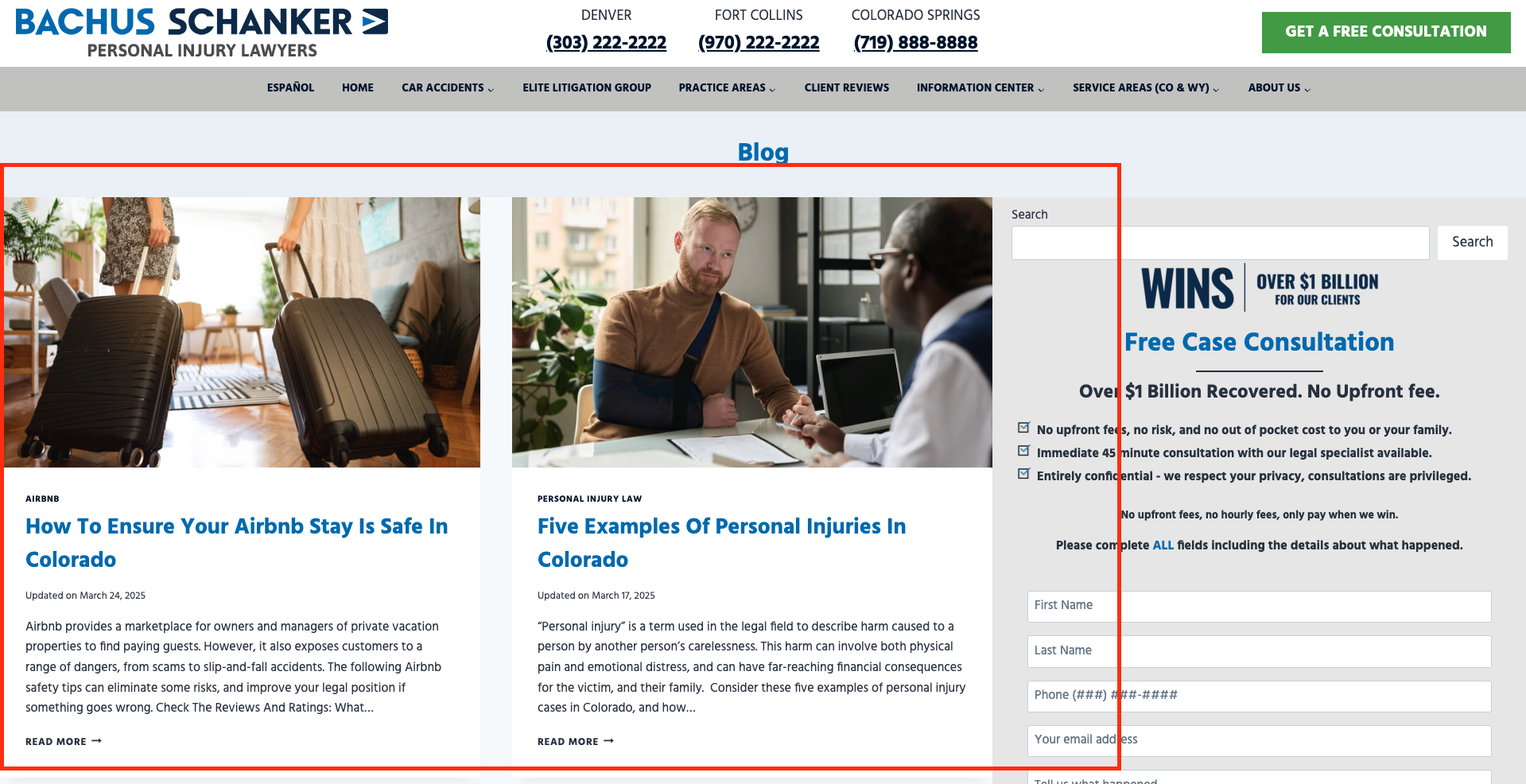
Your website isn’t just a digital brochure; it’s your 24/7 salesperson. Since 96% of people start their legal search on Google, your content needs to answer their questions before they even pick up the phone.
- Service Pages: Detailed pages for auto accidents, wrongful death, and medical malpractice.
- Helpful Resources: An FAQ section that addresses “How much does it cost to hire an attorney?” (The answer is almost always “contingency fee,” but they need to hear it from you!).
- Off-Site Authority: Publishing on high-traffic news sites or legal blogs builds your reputation. This is where guest posts and press releases come in to prove to Google you’re the real deal.
E. Link Building with Affiliate Editorial Reviews
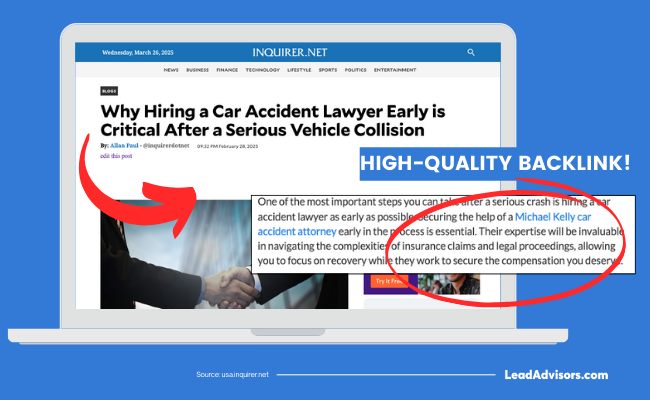
To hit page one, you need relevant links. One of the most effective personal injury lawyer SEO services is securing spots in “Affiliate Editorial Reviews.” Think of these as “Best of” lists on trusted local or legal news sites.
Why it works: It’s a third-party endorsement that drives high-intent traffic and boosts your Domain Authority.
F. Employ Local SEO Multi-Location SEO for Personal Injury Law Firms
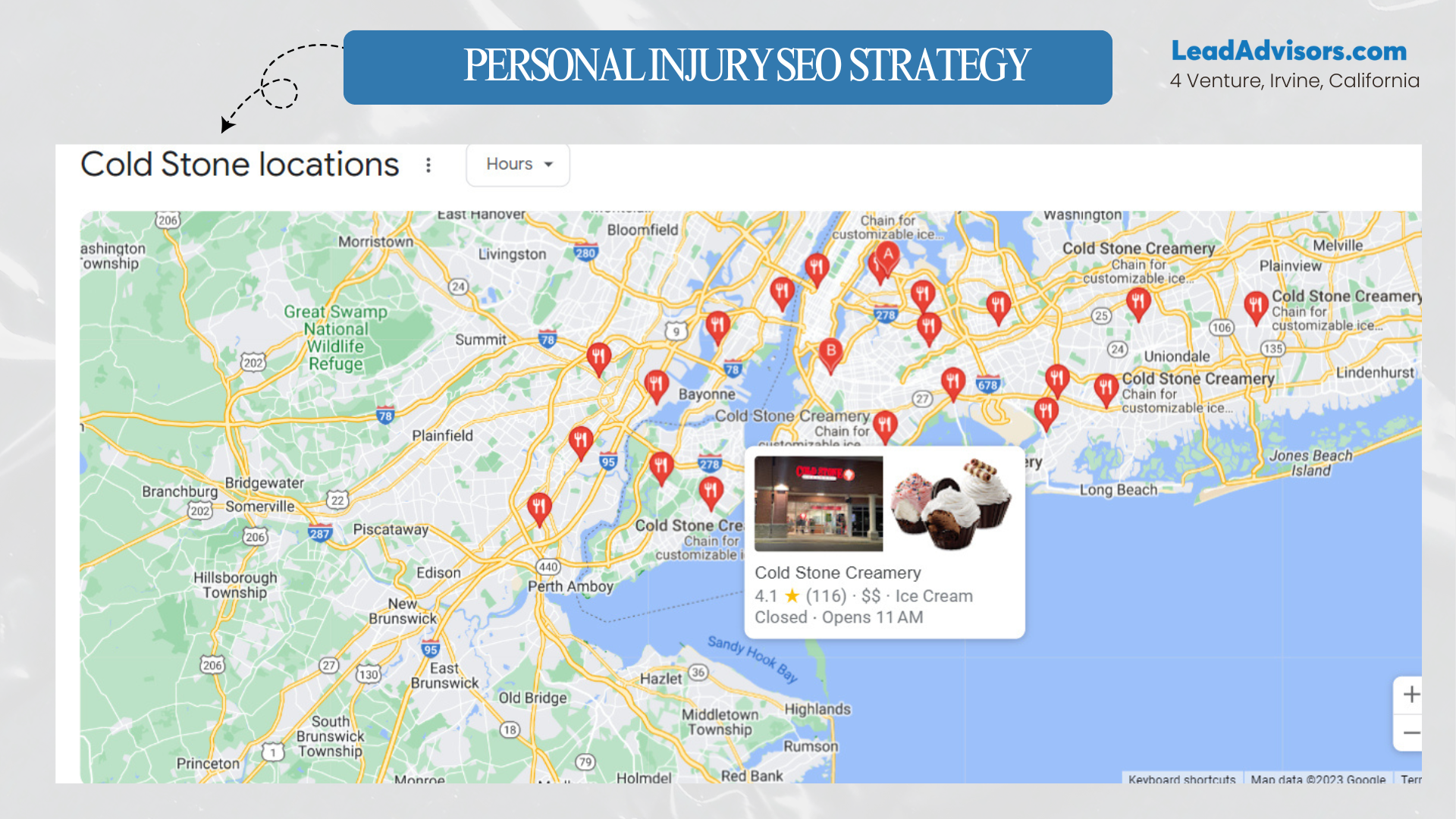
If you have multiple offices, you can’t use just one homepage. You need to use local SEO for personal injury lawyers who target that particular city.
- Location Pages: “Personal Injury Lawyer San Diego” needs to have a separate page with separate content and local personal injury lawyer testimonials.
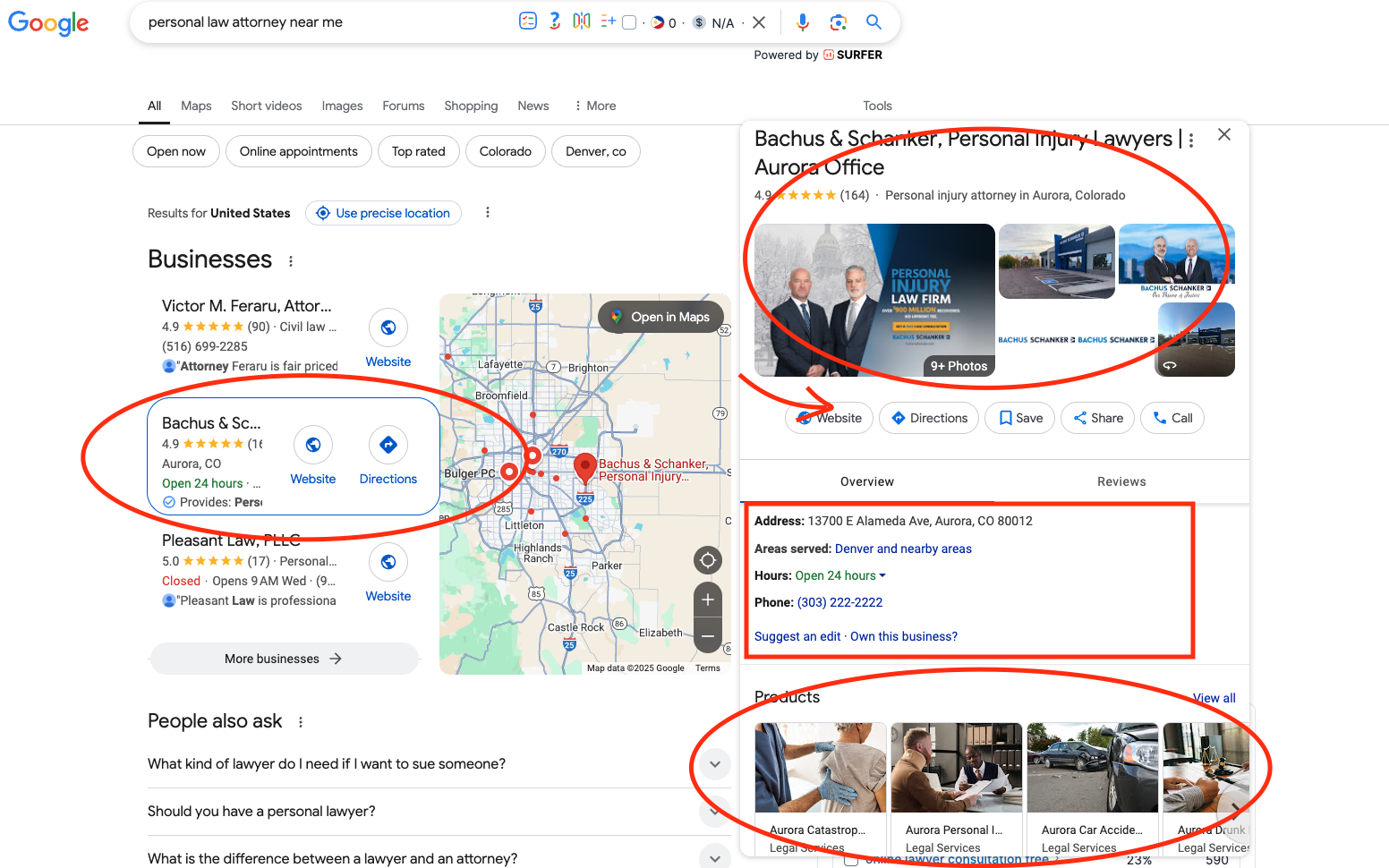
- Google Business Profile (GBP): This is the foundation of local SEO. You must create a verified Google business profile for every physical office, complete with 5-star reviews and office pictures.
G. Conversion Rate Optimization (CRO) for Legal Websites

But ranking is only half the battle. If 1,000 people visit your site and 0 calls, your lawyer SEO is failing.
- Clear CTAs: “Schedule a Free Consultation” is not something you want a visitor to ever miss.
- Trust Signals: Show off your “Super Lawyers” badges, your million-dollar settlement logos, and client video testimonials.
H. Online Reviews & Reputation Management
87% of people want to read online reviews for local businesses. This is your lifeblood in the legal industry.
- The Goal: 4.9 Star Rating with Consistent and Recent Reviews.
- The Strategy: Utilize a tool like Podium and text a review link to your client the moment you hand them the settlement check. This is the happiest they will be with you!
Legal Content Compliance & Ethics for Personal Injury Law Firms
When you’re diving into personal injury lawyer SEO, you’re not just competing to get more clicks—you’re competing to be more ethical. In the world of law, your website isn’t just a marketing tool; it’s a statement to the world about who you are as a lawyer.
Google’s E-E-A-T standards (Experience, Expertise, Authoritativeness, and Trustworthiness) are virtually tailor-made for legal ethics. If you’re misleading people with your content, Google will penalize you—but the State Bar will ruin you.
Here is how to do it in a way that is both compliant and effective:
1. Avoid False Promises
Never use phrases like “We promise you’ll win” or “Guaranteed settlement.” No lawyer can ethically promise a specific result.
Try this instead: “We’ve helped hundreds of injury victims recover the compensation they deserve.” This highlights your experience without making a prohibited guarantee.
2. Know Your State Bar Rules
Legal advertising is a minefield of state-specific regulations. Most states have strict regulations on:
- Superlatives: Using words like “the best personal injury lawyer” or “#1 accident attorney” is likely to get you into ethics trouble unless you have independent, verifiable data to support it.
- Client Testimonials: Some states have specific language requirements if you use client testimonials.
- Practice Area Designations: Be careful with the word “Specialist” unless you are board-certified in that area.
3. Use Disclaimers Thoughtfully
Whenever you are able to “share your big win,” you must manage those expectations. Always include the disclaimer:
“Results may vary. Past performance does not guarantee future outcomes.” This simple sentence protects your law firm and ensures your content marketing is transparent.
4. Protect Client Privacy
It is never safe to share the name, image, or case information of a client without their expressed permission in writing. Anonymous summaries, such as “A $500k settlement for a rear-end collision in Austin,” are safe and good for personal injury lawyer SEO Austin rankings.
Why This Matters
Being high on Google search is great, but facing an ethics complaint is a nightmare. Staying compliant actually helps your SEO by:
- Building Long-Term Trust: Clients can smell “salesy” desperation. Authoritative, compliant content converts better.
- Protecting Your Reputation: Google’s AI is increasingly good at spotting “spammy” or misleading legal claims.
- Ensuring Longevity: Ethical firms don’t get hit by “spam” algorithm updates.
Pro Tip: Always work with a personal injury lawyer SEO company that understands legal ethics. The best marketers don’t just help you rank—they help you stay protected while you grow.
Common SEO Pitfalls Personal Injury Lawyers Should Avoid
At this point, you know how powerful personal injury lawyer SEO can be for your firm. But here’s the truth: no matter how great your strategies are, they can all go down the drain if you’re unknowingly self-sabotaging.
In my time as a personal injury lawyer SEO expert, I’ve seen firms waste thousands on bad advice. Here are the most common—and expensive—SEO red flags you need to avoid.
1. Keyword Stuffing
You’ve heard that personal injury keywords matter, and they do. But trying to “trick” the algorithm by cramming phrases into every sentence makes your content unreadable and alerts Google’s spam filters.
- The Bad Way: “Looking for a car accident lawyer? Our car accident lawyer helps with car accident cases. If you need a car accident lawyer in [City], call us.”
- The Smart Way: Write for humans first. Use natural variations like “accident attorney,” “legal representation,” or “injury claim.” Google is smart enough to understand the context without you sounding like a robot.
2. Duplicate City Pages
If you’re trying to dominate personal injury lawyer SEO in Florida or personal injury lawyer SEO in Oklahoma, you might be tempted to create 20 city pages that are identical except for the city name. Don’t do it.
Google views this as duplicate content and will often ignore all of them. Each location page should mention local landmarks, specific local court info, or regional accident statistics to prove it’s unique.
3. Ignoring Technical SEO
This is the silent killer. Your website might look beautiful, but if the “engine” is broken, it won’t rank.
Watch out for:
- Slow Load Speeds: Every second of delay increases the chance a lead bounces.
- Unsecure Sites: If your URL says “HTTP” instead of “HTTPS,” Google (and your clients) won’t trust you.
- 404 Errors: Broken links signal to Google that your site is neglected.
4. No Mobile Optimization
Over 60% of people looking for an injury lawyer are doing it on their phones—often from the hospital or the side of the road. If your site requires “pinch-to-zoom” just to find your phone number, you’ve already lost the case. Your design must be responsive, with large, easy-to-tap buttons.
5. Forgetting About Analytics
If you aren’t using Google Search Console and Google Analytics, you’re flying blind. You need to know which pages are bringing in traffic and, more importantly, which ones are actually converting visitors into signed cases. Without data, you can’t improve your ROI.
6. Not Updating Old Content
SEO isn’t “set it and forget it.” That blog post from 2021 about “Slip and Fall Laws” might be outdated due to new legislation. Google loves fresh content. I recommend refreshing your top-performing pages every 6–12 months to keep them relevant and authoritative.
Summary Table: SEO Dos and Don’ts
| The Pitfall | Why It Fails | The Fix |
| Keyword Stuffing | Looks like spam to Google | Write naturally for the reader |
| Duplicate Pages | Google ignores “low-value” content | Create unique content for every city |
| Slow Site Speed | High bounce rates from impatient users | Compress images and use fast hosting |
| Ignoring Data | You waste money on what doesn’t work | Set up conversion tracking and Analytics |
Avoiding these pitfalls can save you months of wasted effort. When done right, lawyer SEO brings in high-intent traffic while you sleep. When done wrong? It’s like building a billboard in the middle of a desert—it might look great, but nobody is seeing it.