Let’s be real—running a call center is a wild mix of people management and efficiency hacking. Whether you’re scaling a 200-seat hub, streamlining processes, or deciding to outsource to the Philippines to leverage world-class talent, you’re in the right place.
This guide is your roadmap to building a well-oiled machine where productivity soars and customers stay happy. We’ll explore the strategies and outsourcing solutions that transform chaos into controlled success.
So grab your third coffee of the day. We’re diving into the tools and tactics that make agents actually enjoy their jobs while keeping your brand’s reputation at the forefront.
Ready? Let’s do this.

What Is Call Center Management?

Admit it – running a call center is no piece of cake. You’re managing call center agents, performance tracking, solving customer issues, and making sure everything is run like a well-oiled machine. And some days, it seems you are herding cats. On other days, it’s just pure chaos.
Sounds familiar?
That’s where call center management comes in. It’s what keeps the operation running smoothly, ensuring customers don’t wait forever, agents don’t burn out, and the business stays profitable.
So, What Does Effective Call Center Management Actually Involve?
You might think it’s just about answering calls, but it’s so much more than that. A well-managed call center:
- Reduces wait times – No one likes being on hold for eternity.
- Keeps call center agents happy – Because a motivated team delivers better service.
- Boosts customer satisfaction – A great experience means loyal customers.
- Optimizes processes – The right automated workflows save time and money.
- Tracks performance – Data helps spot issues before they turn into disasters.
Want to understand the impact of outsourcing in call centers? Learn about BPO benefits and how it can cut costs while improving efficiency.
Why does this matter?
Because in a world where customer service can make or break a business, a call center isn’t just a department – it’s the frontline of your brand’s reputation.
But when done right, call center management transforms a stressful, high-turnover environment into a smooth, efficient, and even (dare we say?) enjoyable operation.
It’s not just about taking calls – it’s about building a system where technology, people, and strategy work together seamlessly.
How Do Call Centers Work?
Call centers are where customer service meets strategy. Whether you’re calling in for tech support, trying to cancel a subscription (good luck with that), or getting a sales pitch for something you didn’t even know existed, a call center is behind it.
However, not all call centers operate the same way. Some focus on taking calls, others on making calls, and the smartest ones? They do it all – across multiple platforms, with AI making everything faster and smoother.
So, let’s break it down.
Inbound vs. Outbound Call Centers
Some call centers pick up the phone – others dial out. Here’s the difference:
| Type | What They Do | Example Scenarios |
| Inbound Call Centers | Handle incoming calls from customers who need help, have customer queries, or want to place an order. | Calling customer support because your internet is down (again). |
| Outbound Call Centers | Call Center Agents to initiate calls for sales, follow-ups, or surveys. Often use automated dialing. | Getting a call about a special offer on a credit card you never applied for. |
| Blended Call Centers | Do both inbound and outbound depending on demand. | A tech support rep follows up on a ticket and takes new customer inquiries. |
Have you ever called a company and had to wait forever? That’s often a sign of bad call center management (or just an understaffed team). The best centers are sales-driven teams that focus on effectively managing their pipelines to improve conversion rates.
Multi-Channel vs. Omnichannel Operations
Phones aren’t the only way customers reach out anymore. These days, people expect help through email, chat, social media, and even text messages – but how a call center handles those channels makes a big difference.
| Approach | How It Works | Pros | Cons |
| Multi-Channel Call Centers | Support multiple platforms (phone, email, chat, social media), but each one is separate. Customers might have to repeat themselves. | More ways to communicate. | Frustrating when customers have to re-explain their issue every time they switch channels. |
| Omnichannel Call Centers | Everything is connected. A customer can start on chat, move to email, and then call in – without losing conversation history. | Seamless experience, no repeating information. | Requires solid technology and integration. |
If you’ve ever DM’d a company on Twitter and called them later only to hear, “We don’t have that information on file,” congratulations – you’ve encountered a multi-channel call center.
Omnichannel is the upgrade. It keeps everything in one system, so call center agents know the full story when a customer reaches out. This results in less frustration and better service.
The Role of AI in Modern Call Centers: From Hype to Human Collaboration
Technology is no longer just “changing” how call centers work—it is defining the floor. But in 2026, the real win isn’t just installing a chatbot; it’s mastering the friction of human-AI collaboration. While tools like QAcall.ai are essential for reducing wait times, the true challenge lies in the implementation.
A Manager’s Perspective: The Reality of Implementation
“When we first rolled out AI-powered routing, the biggest hurdle wasn’t the code—it was the agents. There was a palpable fear that the AI was a precursor to layoffs. We had to pivot our training to show them the AI was a ‘Co-Pilot,’ not a replacement. Once they saw it handling the 40% of routine password resets that used to clutter their day, the culture shifted from resistance to reliance.”
Modern AI Use Cases (The Human-Centered Approach):
Predictive Intent Routing: Instead of a “press 1 for sales” menu, AI analyzes the customer’s history and current sentiment to match them with an agent who has the specific “soft skills” to handle their mood.
The Hallucination Guardrail: Generative AI is powerful but prone to “hallucinations” (making up policy facts). We now use Retrieval-Augmented Generation (RAG) to ensure AI suggestions are pulled strictly from our internal, verified knowledge base.
Agentic Co-Pilots: Modern tools provide real-time suggestions during a call, but we’ve learned to include an “Agent Veto” button. This ensures that human empathy always overrules the machine’s logic in high-stress escalations.
Proactive Sentiment Flagging: AI doesn’t just “detect” tone; it alerts supervisors to “Silent Churn” risks—customers who aren’t yelling but are showing patterns of quiet dissatisfaction.
The Bottom Line: AI handles the “fast” stuff so your humans can handle the “hard” stuff. By mixing automation with a human-led strategy, you move from reactive service to hyper-proactive customer success.
Key Call Center Roles and Challenges
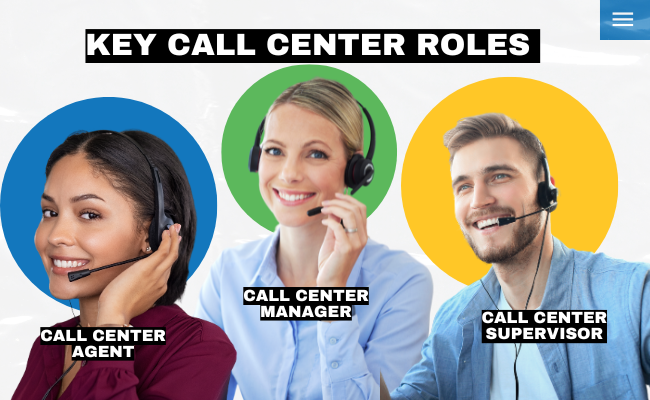
A call center isn’t just a bunch of people on headsets – it’s a team working together to keep operations running smoothly. From managers making big-picture decisions to call center agents handling customer calls, everyone plays a critical role.
But with great responsibility comes great challenges. Let’s break down the key roles and what makes them both rewarding and, at times, downright stressful.
Call Center Manager: The Big Picture Thinker
Call center managers are the strategists behind the operation. They don’t just look at today’s calls; they focus on optimizing processes, improving efficiency, and ensuring the entire team meets business goals.
What They Do:
- Set performance goals and ensure the team meets them.
- Develop training programs to improve agent skills.
- Optimize workflows and implement technology for efficiency.
- Analyze data to improve customer service and call handling.
- Handle escalations that go beyond the supervisor level.
Challenges & Solutions:
| Challenge | Why It’s a Problem | Solution |
| High turnover rates | Constant hiring and training drain resources. | Offer career growth opportunities and incentives to boost retention. |
| Meeting performance targets | Calls per hour, resolution rates, and customer satisfaction must all be balanced. | Use AI analytics and real-time dashboards to track and adjust strategies. |
| Technology upgrades | Outdated systems slow down agents and frustrate customers. | Invest in cloud-based solutions for scalability and automation. |
The best call center managers think ahead, balancing operational efficiency with keeping their team happy and motivated.
Call Center Supervisor: The On-the-Ground Leader
If the manager is the strategist, the supervisor is the coach – guiding agents in real time, ensuring call center performance stays on track, and stepping in when things get hectic.
What They Do:
- Monitor live calls and provide immediate feedback.
- Coach agents to improve their communication and problem-solving skills.
- Handle escalated customer issues before they reach the manager.
- Track key performance indicators (KPIs) like call resolution time and customer satisfaction.
- Keep morale up when the team is under pressure.
Challenges & Solutions:
| Challenge | Why It’s a Problem | Solution |
| Agent burnout | Long hours and high-stress interactions lead to frustration. | Rotate tasks, offer wellness breaks, and provide stress management training. |
| Real-time problem-solving | Calls can escalate fast, requiring immediate action. | Use AI-powered monitoring to flag issues before they escalate. |
| Performance dips | Agents may struggle with engagement or consistency. | Implement gamification – leaderboards, rewards, and recognition programs. |
Supervisors bridge the gap between agents and management, ensuring sharp customer service while keeping their team motivated.
Call Center Agent: The Frontline of Customer Service
Agents are the voice of the company, handling customer inquiries, complaints, and everything in between. Their ability to stay calm, think on their feet, and provide solutions determines the customer’s experience.
What They Do:
- Answer customer questions and resolve issues.
- Follow call scripts while maintaining a natural conversation flow.
- De-escalate frustrated customers and find solutions.
- Process transactions, troubleshoot tech issues, and schedule appointments.
- Meet daily call center performance metrics like call handling time and resolution rate.
Challenges & Solutions:
| Challenge | Why It’s a Problem | Solution |
| Handling angry customers | Calls can get emotional, leading to stress and burnout. | Train agents on emotional intelligence and de-escalation tactics. |
| Maintaining productivity | Long hours and repetitive calls can lead to fatigue. | Encourage short mental breaks and provide ergonomic setups. |
| Keeping up with policies | Constant updates on company policies and procedures can be overwhelming. | Offer bite-sized training sessions and AI-assisted knowledge bases. |
Being a call center agent is one of the toughest customer service jobs, but with the right support, training, and tools, they can handle challenges without feeling drained.
Best Practices for Call Center Management: The 2026 Strategic Playbook
Managing a call center is no longer just about “answering the phone”—it’s about balancing high-tech automation with high-touch human expertise. To succeed, you need to move beyond general advice and embrace a strategy that leverages global talent hubs and cultural nuances.
Hiring the Right People: Why Cultural Nuance Matters
You can have the best tech in the world, but if your team doesn’t resonate with your customers, your CSAT will stall. For many leaders, the decision to outsource to the Philippines isn’t just about cost—it’s about a unique “service-first” DNA that is difficult to replicate elsewhere.
Why the Philippines? The Cultural Advantage
In 2026, “Expertise” means knowing that not all outsourcing is equal. When hiring or partnering in the Philippines, look for these specific “People-First” traits:
The “Hospitality-First” Mindset: Filipino culture is built on Bayanihan (community spirit) and innate hospitality. This translates to agents who are naturally empathetic and patient, even during high-stress de-escalations.
English Proficiency & Neutral Accents: While English is a second language, it is the primary medium of instruction and business. Agents in Metro Manila hubs often possess nearly neutral accents, while “Next Wave Cities” like Cebu or Davao offer a growing, highly educated talent pool with high cultural affinity for Western norms.
Cultural Adaptability: Unlike other regions, the Philippines has a deep familiarity with Western media, holidays, and consumer behavior. This reduces “cultural friction” and allows agents to build rapport through small talk, which significantly boosts Net Promoter Scores (NPS).
Training & Onboarding: The “Agentic” Shift
Throwing a new hire into live calls is a recipe for churn. In 2026, onboarding must be AI-augmented but Human-led:
Microlearning & Simulations: Use AI-driven sandboxes where agents can practice handling “hallucinating” bots or angry customers in a risk-free environment.
Contextual Coaching: Instead of generic role-play, use real-call transcripts (anonymized) to teach agents how to pivot when an AI suggestion doesn’t feel “human” enough for the situation.
Agent Engagement: Beyond the Paycheck
Burnout is the silent killer of call centers. High-performing centers maintain engagement through:
Career Pathing: Especially in the Philippine market, agents value stability and growth. Clear “Agent-to-Team Lead” roadmaps are the #1 way to reduce turnover.
Gamification 2.0: Don’t just track “calls handled.” Use leaderboards for “Empathy Scores” or “FCR Improvement” to reward quality over sheer volume.
Call Center Management Metrics & KPIs to Track
Running a call center without tracking the right metrics is like driving without a speedometer—but in 2026, the car is a hybrid. You need to understand how the “engine” (AI) and the “driver” (the agent) work together.
The Interconnected KPI Matrix
To demonstrate true authority, we must look at how Deflection (AI handling calls) fundamentally shifts traditional metrics.
| Metric | What It Measures | The AI-Impact (2026 Reality) |
| First Call Resolution (FCR) | Percentage of issues resolved on the first contact. | Upward Pressure: AI voice agents now resolve ~80% of routine calls (billing, status checks) before they hit an agent. This pushes human FCR targets higher, as agents only deal with complex escalations. |
| Average Handle Time (AHT) | The duration of an agent’s total involvement per call. | The “Complexity Spike”: Counter-intuitively, as AI handles “easy” calls, human AHT often increases. Why? Because agents are only left with high-emotion, multi-step problems that cannot be rushed. |
| Call Abandonment Rate | The percentage of callers who hang up before connecting. | Downward Pressure: AI-powered “Wait-Time Analytics” and proactive callbacks have made 10-minute hold times a thing of the past. If this is high, your AI routing is failing. |
| Transfer Rate | How often a customer is passed to another person/department. | Optimization Gain: Predictive routing matches a caller’s “Sentiment” and “Intent” to the right agent immediately. A high transfer rate now signals a failure in your AI’s Natural Language Processing (NLP). |
| Cost per Call (CPC) | The total operational cost divided by call volume. | The Hybrid Equation: While AI reduces the volume of human calls, the “Cost per Human Call” may rise due to the higher skill level (and higher salary) required for “Expert-Level” agents. |
Customer Experience: Beyond the Survey
In 2026, Customer Satisfaction (CSAT) is no longer just a post-call star rating. High-authority managers now use:
Sentiment Trend Mapping: Instead of asking “Are you happy?”, AI analyzes 100% of calls to detect “Silent Churn”—customers who are polite but show signs of switching brands.
Effort Scoring (CES): We track how many times a customer had to repeat their issue. If you outsource to the Philippines, for example, the high cultural affinity often leads to a lower Effort Score because agents can anticipate needs through subtle conversational cues.
Agent Performance: The “Cognitive Load” Metric
With AI handling the “easy” work, human agents are under constant high-intensity mental pressure. In 2026, we track Cognitive Load—ensuring that after a particularly grueling 15-minute de-escalation, the system automatically routes a lighter task to that agent to prevent burnout.
Successful Call Center Management: SOPs, SLAs, and Compliance
In 2026, compliance isn’t just about following rules; it’s about protecting your brand’s reputation in a world of high-speed data and AI. When agents follow a clear playbook, they work faster, make fewer mistakes, and provide consistent service.
The Pillar of Governance: SOPs and SLAs
Standard Operating Procedures (SOPs) act as a blueprint. They cover everything from greeting customers to resolving issues efficiently. A solid 2026 SOP should be clear, easy to follow, and updated regularly to reflect changing customer needs.
Similarly, Service Level Agreements (SLAs) define expectations, such as response times and resolution deadlines. In high-volume industries like business process outsourcing, selecting the right BPO partner determines whether these service expectations are consistently met.
2026 Security: Compliance & AI Ethics
Nothing kills trust faster than a data breach. If you outsource to the Philippines, you must ensure your partner adheres to the Philippine Data Privacy Act of 2012 (RA 10173), which has been updated for 2026 to include stricter mandates for “Privacy-by-Design.”
To maintain a secure, compliant center, you must prioritize:
Data Sovereignty: Ensure sensitive personal information (PII) stays within approved jurisdictional boundaries, utilizing SOC 2 and ISO 27001 certified hubs.
AI Ethics & Transparency: Under the latest 2026 global standards, call centers must disclose when a customer is interacting with AI. You need an “Audit Trail” for every decision an AI co-pilot suggests to an agent.
The “Clean Desk” Policy 2.0: Beyond physical security, modern Philippine hubs now use Zero-Trust Architectures, where agent access is limited strictly to the data needed for the active call.
Continuous Compliance Training: Regulatory rules for HIPAA, PCI-DSS, and GDPR are evolving. Regular “Micro-refresher” courses keep agents sharp and aware of the latest phishing and “Prompt Injection” threats.
Without these guidelines, chaos takes over—calls get mishandled, fines are issued, and the whole operation suffers. A secure call center isn’t just about following the rules—it’s about building a fortress of trust around your customers.