Restaurant SEO is the practice of optimizing your website for better visibility in search engine results pages. In 2026, it will require having a verified Google Business Profile, high-speed mobile performance, and “Menu Schema” that enables search engines to read your dishes as data.
Let’s face it: being in the restaurant industry is tough. To be competitive in 2026, you need more than just amazing food; you need an amazing restaurant search engine optimization strategy.
In an industry where 94% of consumers use search engines to determine their dining plans, having an excellent restaurant website SEO strategy is what will fill your dining room or leave it empty.
Why SEO is Your Most Profitable Employee
In 2026, SEO for restaurants is the primary driver of discovery because:
- Mobile-First Intent: 76% of consumers searching on a phone to find a nearby meal end up visiting within 24 hours. Local SEO catches consumers at the moment when they are hungry.
- AI & Voice Search: We ensure our restaurant is recommended by the AI assistant.
- Zero-Click Results: We ensure our restaurant information and best dishes are displayed in Google, so consumers can select our establishment at a moment’s notice.

What Is Restaurant SEO?
Simply put, restaurant SEO is making sure that your restaurant pops up first in search engine results when potential customers hungry for a meal are looking for a place to eat. Rather than relying on word of mouth or leaving it to fate, restaurant SEO will help you get your business featured on top of search engine results pages of major search engines such as Google, Bing, and even AI search engines.
Search engines determine the ranking of your restaurant by taking into account several factors, such as site speed, responsiveness, and use of relevant keywords like restaurant. For instance, your online menu should be extremely user-friendly, and the SEO of your restaurant should communicate that you are a local restaurant with a solid footing in your community.
SEO vs. Traditional Ads
Unlike traditional ads like billboards or social media ads, restaurant SEO focuses specifically on customers who are looking for a place to eat. It’s not about random likes; it’s about clicks that convert into reservations and online orders.
I’ve seen this firsthand: A restaurant owner spends thousands of dollars on flyers with no results. But after switching to restaurant SEO, we could see exactly how many customers clicked on their restaurant’s listing and chose to tap “Get Directions” with their smartphones. That’s what restaurant SEO can do for your business.
With professional SEO services for restaurants and your restaurant’s unique identity, you can create a powerful engine that works tirelessly to fill your restaurant with customers.
Why SEO Matters for Restaurants in 2026
If you are not dialing in your Google SEO, you are losing money. In 2026, the difference between a packed restaurant and an empty table is no longer about marketing or advertising. It is about whether or not you have perfected your digital footprint. Here are the reasons why restaurant SEO is still the best marketing strategy:
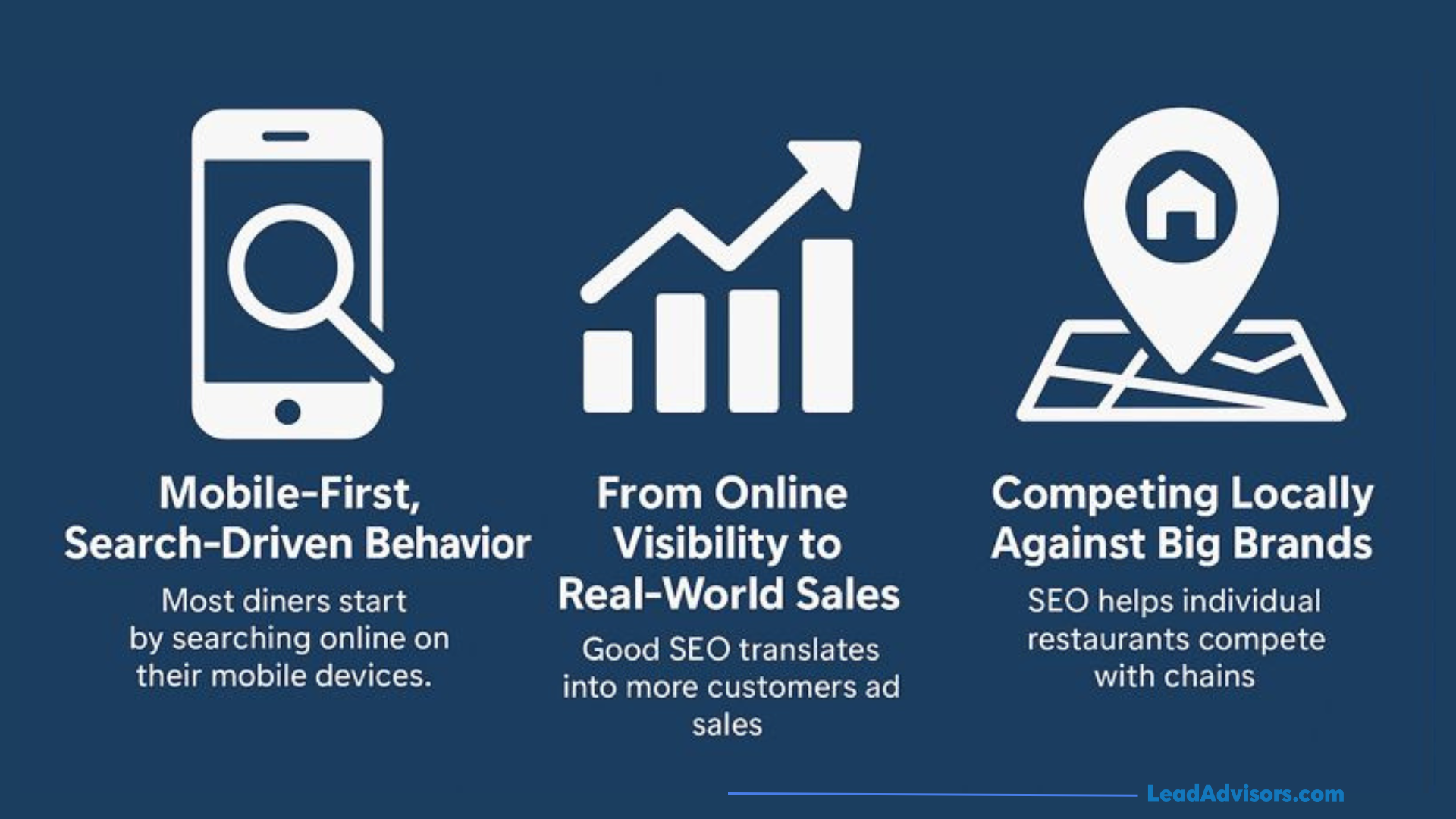
Mobile-First, Decision-Now Behavior
The typical individual spends fewer than 10 minutes picking a place for their dinner. Queries such as “best Italian restaurant near me” mainly come from mobile users who want to be in your restaurant within the next hour. If you haven’t optimized your website for these quick, decision-making customers, you’re letting them slip away to your competitors.
Visibility to Real-World Sales
Unlike food delivery services that charge a high commission on every sale, restaurant SEO is an “owned” channel. This means that once you have perfected it, you don’t have to worry about losing sales because of third-party commissions.
- Fact: In 2026, 76% of local mobile searches lead to a store visit within 24 hours. This is a direct line from a Google search to a seat at one of your tables.
Beating the Big Chains
Having a smart SEO plan for a local restaurant is the great equalizer. A small bistro with a Google Business Profile, relevant keywords for restaurants, and glowing reviews will beat a multi-chain restaurant any day. Google favors relevance and proximity over the size of the business. You have the home-field advantage.
The “AI Search” Shift
Restaurant SEO will now involve talking to AI by 2026. Consumers will increasingly ask Gemini or Siri, “Where do I find a quiet brunch spot serving gluten-free meals?” If your website isn’t set up right, you’re not even included in the conversation.
Local SEO for Restaurants – The Key to Success
When a local diner searches for “restaurants near me,” the top three search engine results get the lion’s share of the business. This is the local restaurant SEO “Map Pack,” and if you’re here, you’ll have a packed restaurant.
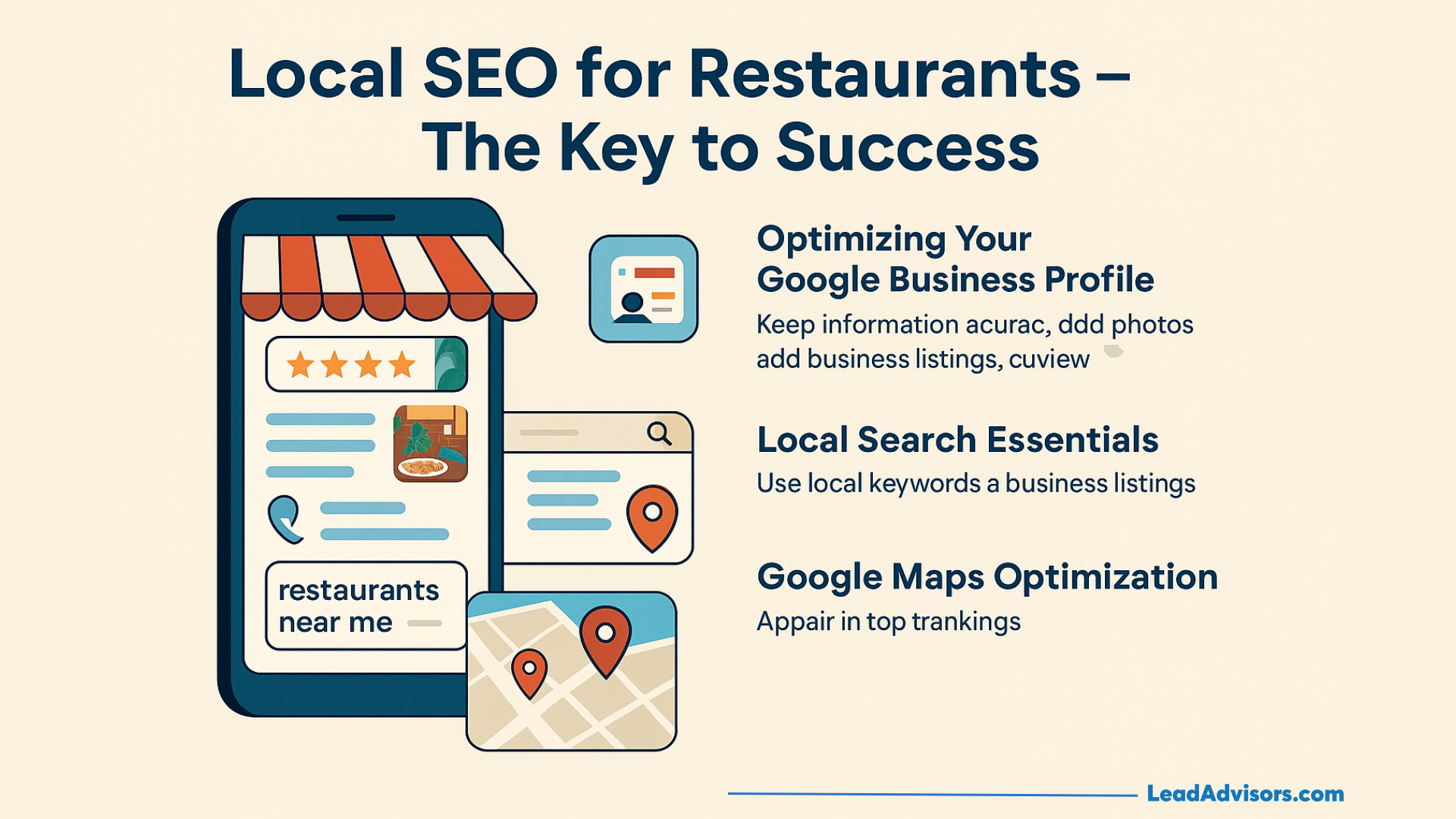
1. Your Google Business Profile (GBP)
Your Google Business Profile is your digital storefront. It’s the foundation of local restaurant SEO.
- Keep it Current: Your restaurant’s address, phone number, and hours of operation must be 100% correct.
- The “Vibe Check”: Restaurants with professional food pictures get 35% more clicks than those without. So, flaunt your signature dishes and your restaurant’s atmosphere.
- Direct Links: Be sure to add direct links to your restaurant’s software for restaurants and reservation pages.
2. Google Maps Optimization
Google Maps actually ranks its results based on three main factors: Proximity, Relevance, and Reputation. Make Yourself More Targeted: If you just call yourself a restaurant, that’s too broad a term. Better come up with more specific ones, like “family restaurant” or “vegan cafe”, to be more precise about the search query.
Velocity: It’s not just about the number of reviews; you want a constant flow of reviews. Search engines see a constant flow of reviews as a sign of a thriving business.
3. Local Search Essentials
Be Consistent: Your Name, Address, and Phone Number must match across all platforms: Google, Yelp, TripAdvisor, etc.
I’ve seen it happen: I’ve witnessed firsthand the importance of local SEO for restaurants. One of my restaurant clients had an old phone number listed in a local directory. Google got confused, and the restaurant’s ranking dropped. Once we corrected the restaurant’s local SEO listing, its ranking was back up in no time.
| Strategy | Goal | SEO Benefit |
| GBP Updates | Accuracy | Higher “Map Pack” Ranking |
| Review Replies | Trust | Increased “Review Velocity” |
| Local Keywords | Relevance | Better match for specific cravings |
On-Page SEO for Restaurant Websites
Your restaurant’s online presence, your virtual dining room. If that’s cluttered, customers are going elsewhere before they even get a chance to peruse your menu. On-Page SEO for restaurant websites ensures that both Google and hungry customers can navigate your site easily.
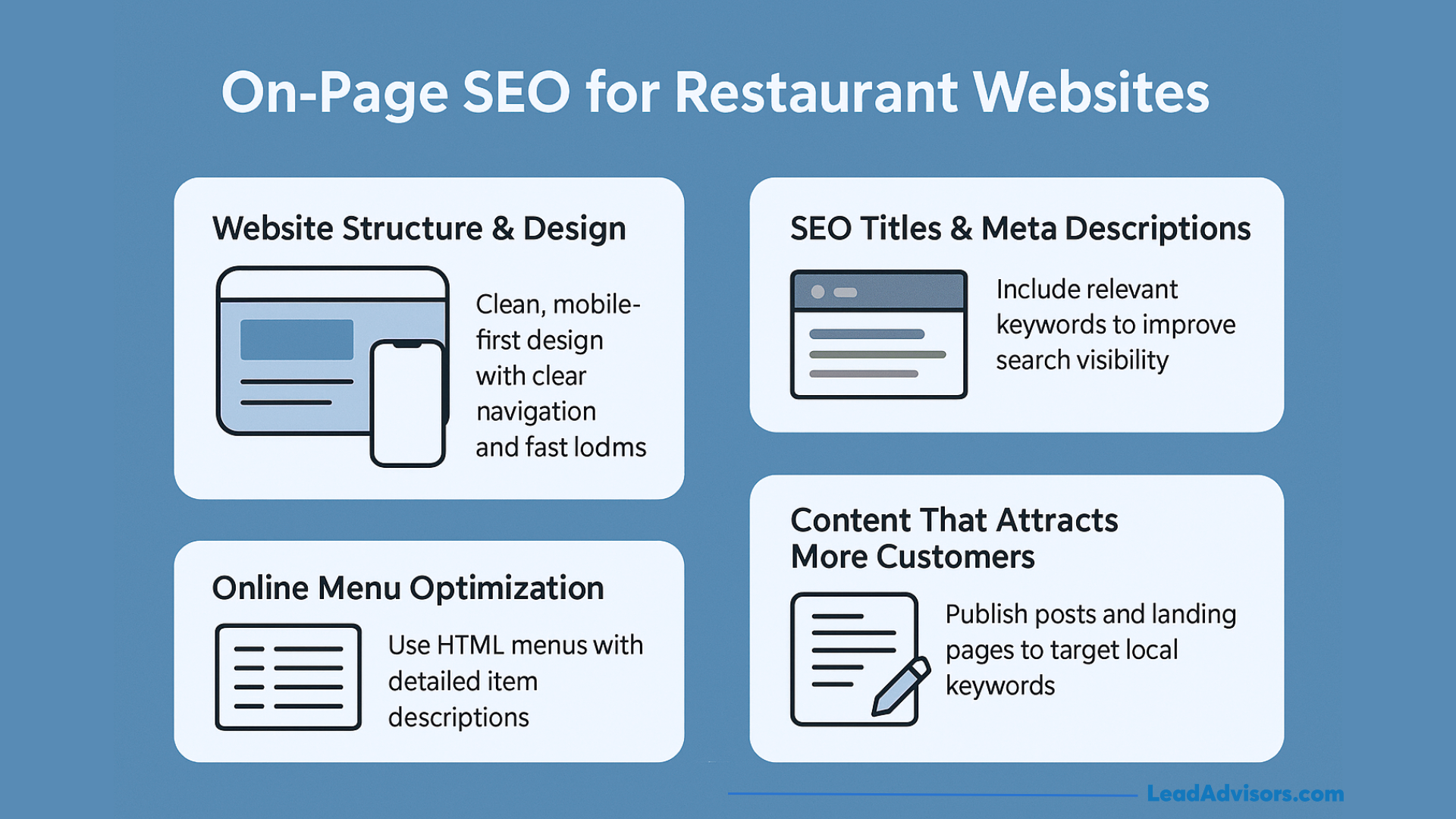
1. Mobile-First Structure & Design
Come 2026, Google will essentially judge your restaurant’s online presence based on its mobile version. Ensure that your site’s design is clutter-free, loading speed is fast, and that clicking buttons with your thumbs is easy.
- The Essentials: Must appear on each of your web pages: hours of operation, address, and a clear call-to-action for booking a table.
- User Experience: Customers must be able to find your phone number within two seconds. If they can’t, they’ll move on to the next restaurant’s online presence.
2. SEO Titles & Meta Descriptions
Your online sandwich boards. Ensure that each of your web pages has a unique title that includes restaurant-related keywords.
- Example: Instead of using “Home,” use “Authentic Italian Restaurant in Denver | Family-Friendly Dining.”
- Meta Descriptions: These are essentially advertisements that appear in search engine results. Write these as you would an ad: “Enjoy handmade pasta and local wines in the heart of Denver. Book your table online today!”
3. Kill the PDF Menu
This is probably the slip I get the most often. PDFs are clunky for Google to “read” and an absolute nightmare for mobile users.
- The Fix: Place your menu in HTML text and follow proper SEO guidelines for your restaurant’s menu URL structure.
- The Pro Move: Add JSON-LD Menu Schema. This will allow Google to display your dishes, prices, and dietary labels (like Vegan or GF) in search results.
4. Content That Connects
Updating your content regularly sends a strong signal to Google that you’re still open for business. Here are some ideas for content that can attract restaurant-specific keywords:
- Seasonal Specials: “5 Summer Cocktails at Our Rooftop Bar.”
- Local Guides: “The Best Places for Post-Game Pizza in [Your Neighborhood].”
- Specialty Landing Pages: If you offer catering, for example, you can have a dedicated page for it, like “Catering Services in [City].”
Building Authority with Content & Backlinks
Getting a high rank isn’t just about a nice website. It’s about demonstrating to Google that you’re a local authority. For restaurant SEO, local authority is based on two key elements: your content (what you say) and the people who say something about you (backlinks).
Smart Keyword Research & Strategy
Attracting customers means using the exact restaurant keywords people are searching for on their phone.
- Target Buying Signals: Instead of using the keyword “food,” use more specific keywords such as “best Mexican restaurant in Brooklyn” or “late-night pizza delivery.”
- Freshness Matters: Google favors fresh websites. Adding new articles about the latest restaurant specials, chef interviews, or local holiday events keeps your website fresh, relevant for SEO, and interesting for customers.
Backlink Building: Digital “Word of Mouth”
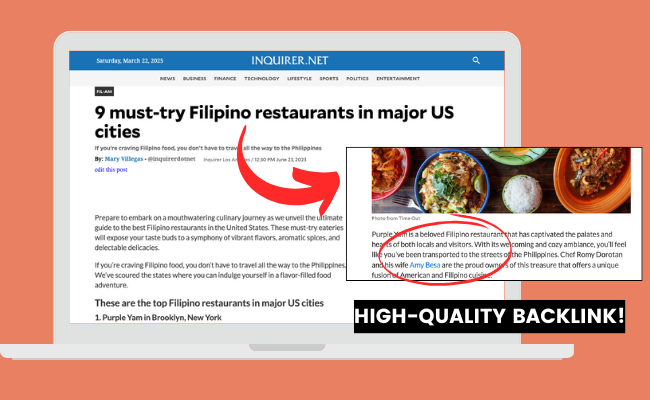
A backlink is a website that links to your website. Google considers this a vote of confidence for your website. The more backlinks you have, the higher your ranking and the more traffic you get.
- The “I Tested This” Secret: You see, the best-performing backlinks for restaurant SEO are from local websites that have a “Best of [City]” type of article or blog post listing the best restaurants in the area.
- How to get these high-converting backlinks:
- Ask local food bloggers for a preview of your new menu items.
- Join local business associations.
- Host a charity event and get a high-authority backlink from the local news website.
3. The Social Media “Halo Effect”
Getting more likes on Instagram doesn’t directly influence your ranking, but social media can have a halo effect on your restaurant SEO. A popular TikTok video of your signature dish can drive branded search traffic (people searching for your restaurant name on Google). This tells search engines you’re a trending restaurant with high authority, thus improving your SEO ranking over time.
Pro Tip: If a local foodie or local influencer tags your restaurant, ask them if you can get a link to your website in the bio or Linktree.
Restaurant Technology & Online Ordering SEO
Google is no longer just reading your page; it’s watching your page in 2026. That means search engines are favoring restaurants that have a great digital experience. If your restaurant’s tech is clunky, your search engine ranking—and your reservations—will suffer.
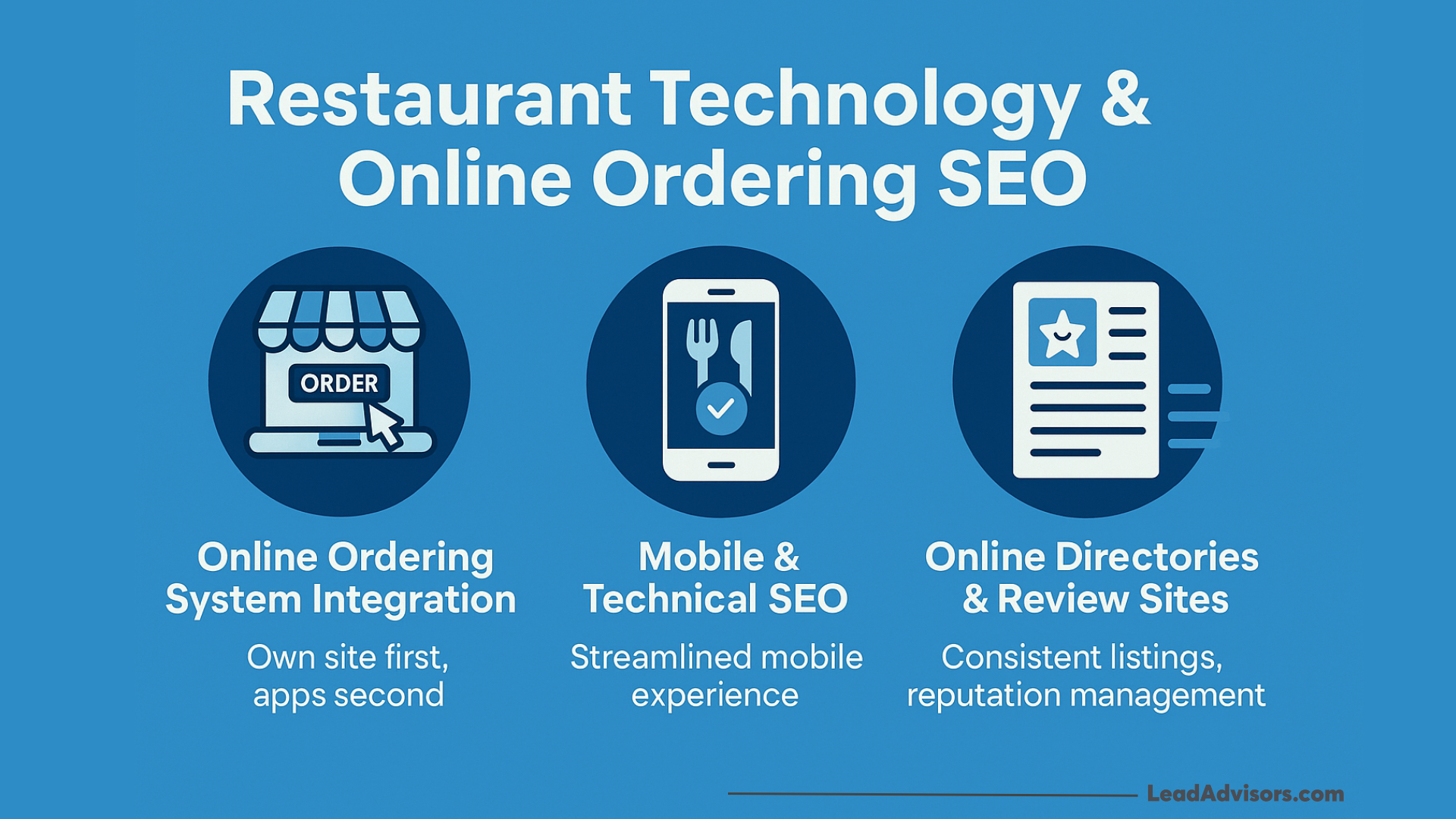
Direct Online Ordering vs. Third-Party Apps
While third-party apps like UberEats or DoorDash are useful for exposure, they will actually hurt your restaurant’s website SEO if you rely too much on them.
- The SEO Trap: By using an app to order from your restaurant, the “authority” and the traffic go to the app’s website, not yours.
- The Solution: Use an ordering software for restaurants that directly interfaces with your domain. Not only will you retain 100% of the customers’ data, but Google will also reward you for having a “highly functional” website.
- The Stat: Restaurants using direct ordering see up to 20% more repeat customers because they own the relationship with the guest.
Mobile Performance & Technical SEO
Mobile optimization is no longer a nice-to-have; it’s a need-to-have. After all, 80% of restaurant-related searches are performed on the go, so your website needs to be speedy.
- Core Web Vitals: Google’s speed tests. By 2026, your Largest Contentful Paint (LCP) needs to be below 2.5 seconds. Slower than that, and 53% of mobile users will leave before even viewing your menu.
- Interactive Menus: Your restaurant’s ordering software needs to be mobile-friendly. If users have to zoom in to view your restaurant’s specials, you’re going to see a lot of bounces.
Online Directories & Review Sites
Having your information consistent across the web will unlock local SEO for your restaurant. Your Name, Address, and Phone number all need to match across the web.
- Aggregators: Yelp and TripAdvisor often rank high in search results. Make sure your Yelp listing links back to your main site.
- Trust Signals: Google’s AI now reads reviews to determine your restaurant’s “vibe.” So, if people are mentioning your creamy carbonara, you’re more likely to rank for those searches.
| Tech Feature | Why It Matters for SEO |
| Direct Ordering | Keeps traffic on your site; builds domain authority. |
| Fast Load Times | Reduces bounce rates; improves search ranking. |
| Click-to-Call | Increases mobile conversion rates significantly. |
Tracking SEO Results for Your Restaurant
Running an SEO campaign without monitoring is like cooking blindfolded – you don’t know if you have enough seasoning until it is too late! To successfully grow your business, you need visibility on whether your SEO on Google is actually working and if those clicks are actually turning into customers.
1. Using Google Analytics 4 (GA4)
Google Analytics is the best free solution for any restaurant owner. With it, you can see exactly how people find you online and what they do when they get there.
- Track the “Big Three”: Track what you care about, like clicks on your “Book a Table” button, requests for directions, or orders from your online ordering system for your restaurant.
- Source of Traffic: Where is traffic finding you from – is it from someone searching for you “near me” or from someone clicking on you from a food blog that lists restaurants in your area? Knowing this will help you determine where you should focus your advertising dollars.
2. How to Check Your Search Engine Ranking
While traffic is great, ranking for the right restaurant keywords is even more important. Use tools such as Google Search Console, Ahrefs, or Semrush to check your ranking for keywords such as “best brunch in NYC” or “family-friendly cafes.”
- Monitor Your Trends: Should your ranking for “organic pizza” drop, you might want to revisit your restaurant website SEO content or even your menu schema.
- Local Visibility: Keep an eye on your “Map Pack” performance. If you aren’t in the top three, you might need to increase your review velocity or clean up your NAP consistency.
My Experience: I had a restaurant SEO client who had a lot of traffic but no reservations. After reviewing the analytics, I discovered the Menu page was taking 8 seconds to load on mobile. I fixed the issue, and reservations doubled the following night. The data often tells a different story than your assumptions.
3. Connecting SEO to Revenue
Using your analytics software, you can even set up your Events to measure the value of your SEO. For instance, if you find that 10% of your website visitors to your Reservations page end up eating dinner at your restaurant, you can finally put a number on the value of your local restaurant SEO.
Advanced Restaurant SEO Strategies
But once you have that down, it is time to think about leveling up, so you can go beyond those simple fixes. In 2026, for the best restaurant SEO, it is all about being omnichannel, which means being everywhere that your customer is, from an AI chatbot to TikTok.
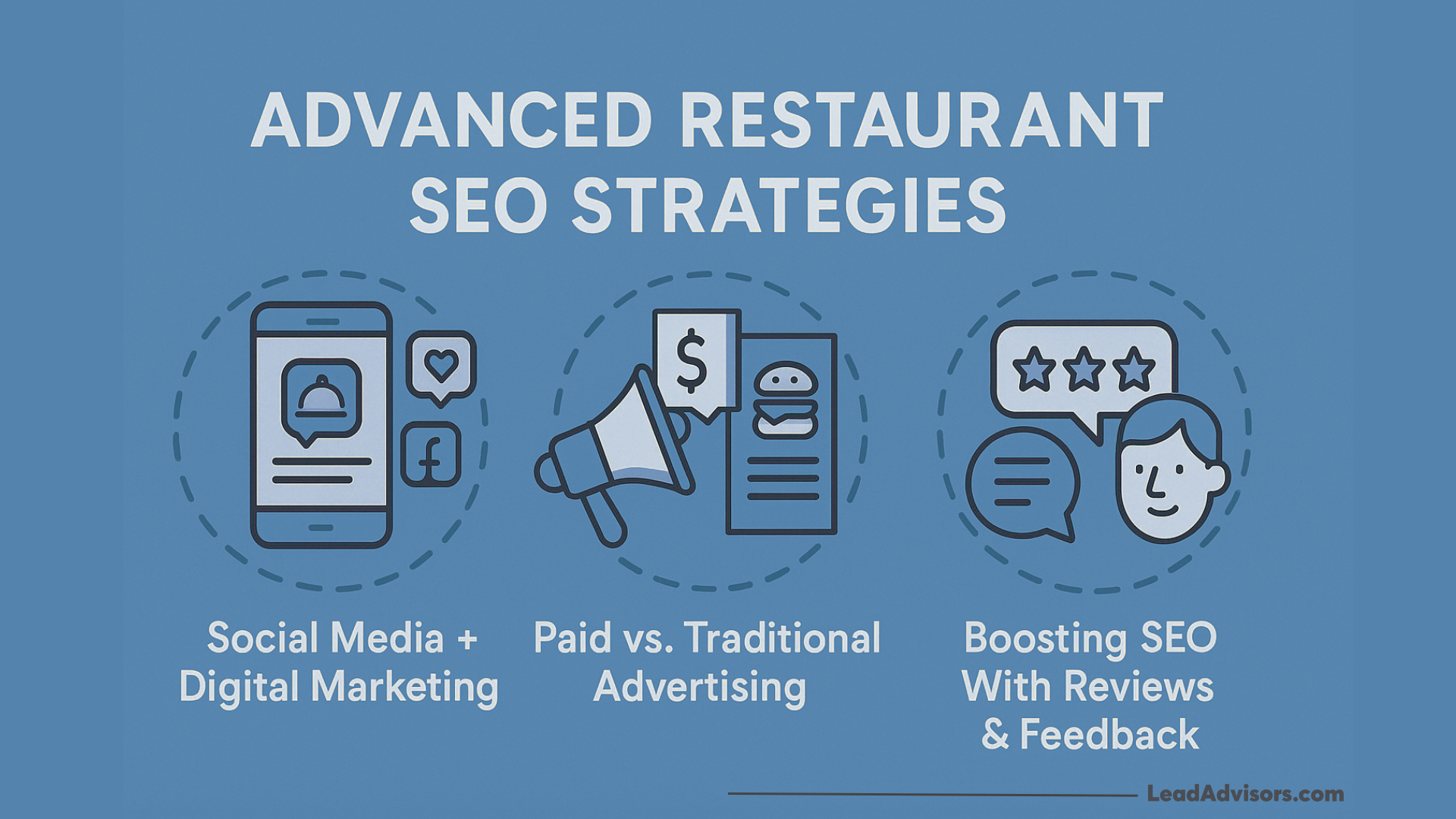
1. Social SEO: The New Search Engine
You don’t just post pretty pictures on social media anymore. With TikTok and Instagram, these have become search engines for Gen Z and Millennials.
- The Stat: 61% of Gen Z would rather use an AI search or social app than Google.
- How to Win: Add restaurant keywords to your bio, caption, and even text that appears on videos. If someone is searching for something like “best rooftop bars” online, they can see your optimized videos appear in their search results.
2. Boosting SEO with the “Review Powerhouse”
Reviews are the fuel for your local SEO in 2026. Google no longer cares about the number of reviews; instead, it focuses on Review Velocity (the rate at which you are gaining new reviews) and Sentiment.
- The 4.8 Threshold: The top restaurants have a rating of 4.8 or higher. Be careful not to drop below 4.8, as you risk falling out of the coveted Map Pack.
- The Response Benefit: Businesses that respond to 75% or more reviews have a 2.3 position ranking benefit in search engine results. This tells Google you are an active business and care about your customers.
- AI Citations: If someone asks an AI assistant like Gemini for a restaurant suggestion, the AI assistant will cite your reviews and say something like: “People over at your restaurant really love the food here… ‘creamy carbonara’ and the ‘cozy atmosphere’!”
3. Voice & AI Search Optimization
There are over 8.4 billion voice assistants in use today. This means people are now searching full questions like: “Where can I find a kid-friendly cafe with outdoor seating near me?”
- “Answer-First” Content: Create a FAQ section on your website that answers these kinds of questions directly.
- Zero-Click Success: Proper restaurant SEO means Google’s AI summary (SGE) will show your hours, top dishes, and a prominent “Book Now” button even if the user does not click your website.
4. Paid Ads + SEO: The Hybrid Strategy
SEO takes time, but combining SEO with Google Ads creates a powerful double whammy for driving traffic to your restaurant!
- Immediate vs. Lasting: Run paid Google Ads for events like Valentine’s Day and New Year’s while your SEO works its magic for your everyday menu items.
| Advanced Tactic | 2026 Impact | Why It Works |
| Social SEO | High Discovery | Captures the “Visual Search” generation. |
| Review Response | +2.3 Rank Positions | Proves business activity and legitimacy. |
| AI Optimization | Zero-Click Visibility | Puts your menu in AI-generated answers. |
Real-Life Restaurant SEO Examples
The proof is in the pudding, and the pudding is the numbers. When the numbers are crunched, the impact is undeniable. The right restaurant SEO strategy fills the seats, whether the restaurant is a quaint bistro or a burgeoning chain.
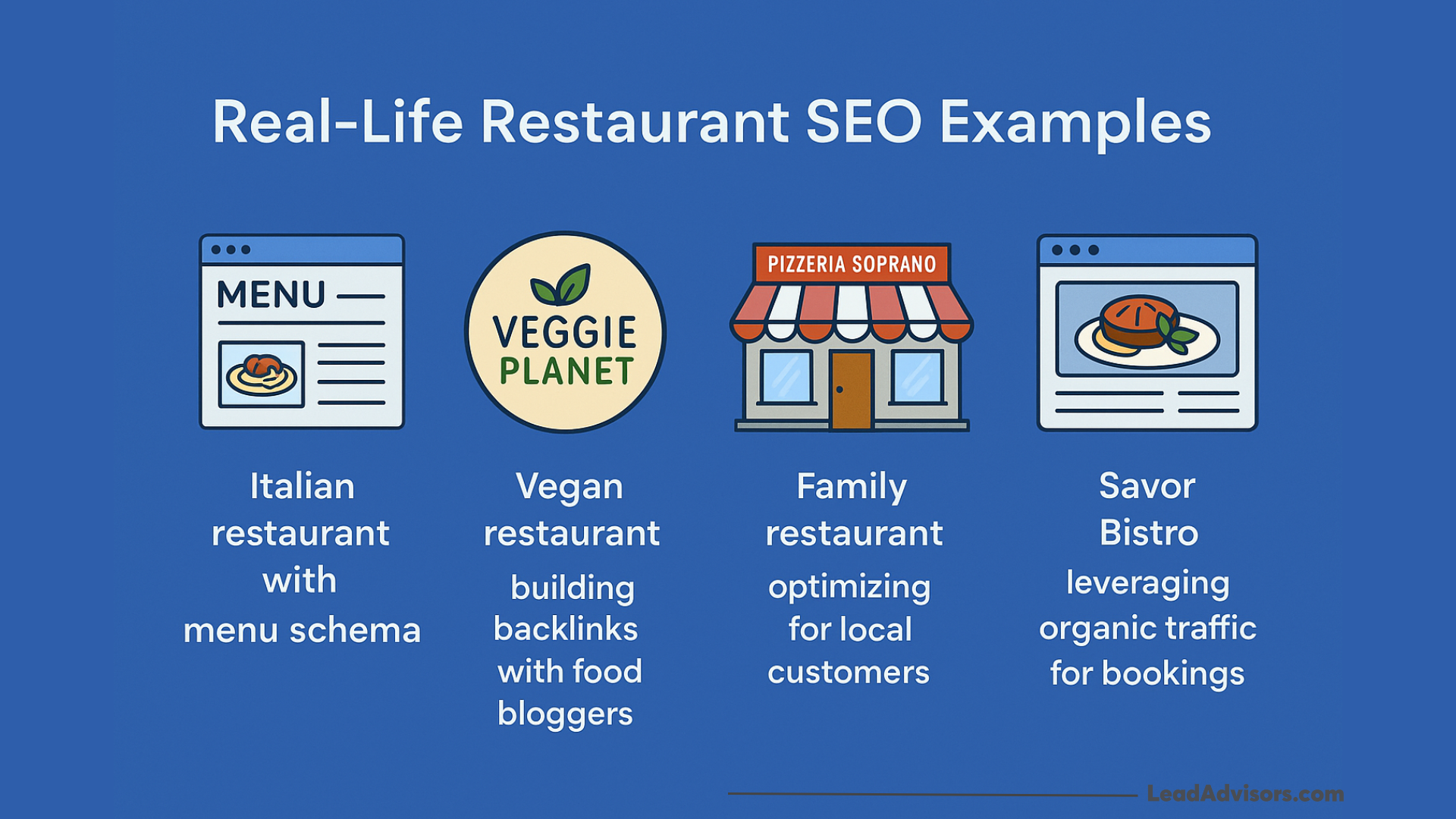
1. The Power of “Menu Schema”
An Italian restaurant in the local community changed its menu from a PDF to an HTML menu with JSON-LD Schema.
The payoff? They saw a 22% increase in search engine click-through rates from search engine results, simply by listing the menu offerings to users.
The restaurant saw the actual menu options come up in the search engine results, and users could preview the offerings without ever having to go to the website.
2. Winning with Local Backlinks
Veggie Planet, a vegan cafe in Mississauga, Canada, worked with local food bloggers and influencers to create backlinks.
The payoff? They saw the restaurant come up at the top of the search engine results, not just for the cafe but for users looking for vegan food in the local community.
3. Local Intent Over “Random Traffic”
Pizzeria Soprano decided to stop focusing on random traffic and instead focus on local search engine optimization for their pizza place. They optimized their content for neighborhood-specific queries like “pizza delivery in [Neighborhood Name].”
They also optimized their Google Maps listing. The results were impressive: though their overall traffic decreased slightly, their conversion rates went up by 29%, while their revenues went up by 26%.
4. Content that Drives Reservations
Savor Bistro is an upscale restaurant that decided to utilize restaurant search engine optimization to establish its authority in its niche. They created blog content that included interviews with their chefs and “behind-the-scenes” looks at their signature dishes.
The results were impressive: when combined with mobile-first website optimization, their website traffic climbed steadily up the ranks. In an ultra-competitive market, their online bookings went up significantly without any ad spend.
The lesson learned is that you don’t have to spend much on advertising; even small changes can make a big difference, like improving your menu structure or collecting more positive reviews.
Restaurant SEO Tips and Checklist
You don’t have to break the bank or completely redesign your site to start seeing results. From my experience, small changes often have a bigger impact than sweeping changes for restaurant SEO. Here are some quick wins to get you started:
- Freshness is Key: Make sure to update your Google Business Profile with fresh images of the day’s specials or holiday hours.
- Talk Like a Local: Include targeted keywords in your content, such as “best brunch in Brooklyn” or “family-friendly cafe in Austin.”
- The Review Ask: Ask customers to review your business to improve local SEO results and instantly establish trust.
- Ditch the PDF: Convert your menu to an HTML page to improve SEO. Add JSON-LD schema to the page to include pricing and ingredient information.
- Speed it Up: Run a free analysis using Google PageSpeed Insights to measure the SEO health of your site. If your site is slow, you’re losing customers.
Your 2026 Restaurant SEO Strategy Checklist
Pick three to tackle this week. Even small changes can increase your SEO strength and drive more customers to your restaurant.
[ ] Claim & Verify: Ensure your Google Business Profile is claimed and 100% complete.
[ ] NAP Consistency: Double-check your Name, Address, and Phone number match across Yelp, TripAdvisor, and your website.
[ ] Menu Audit: Ditch the PDF menus and follow restaurant SEO best practices for your menu page’s URL structure.
[ ] Review Management: Respond to your last five reviews (good and bad) to prove to Google you’re actively engaged.
[ ] Local Content: Create a new blog post or add an “Our Story” page with keywords relevant to your local restaurant competition.
[ ] Backlink Outreach: Contact a local blogger or a local association that could potentially link back to your website.