I would like to know from you: when was the last time you purchased a product online without first checking the reviews of other people? I will give you some time to think.
If you are like me—and to be honest, like most of the consumers of today, you probably don’t know. The reason for this is that online reviews have become our life jacket in a world where we cannot touch, feel, or try products before buying them.
The point is: we are living in an era of unlimited choices. Just think about any online store. There you will find at least hundreds of variants for one product. It is quite overwhelming, isn’t it? That’s where reviews are useful. They can eliminate all the noise and still give the opportunity to decide with confidence.
However, what most businesses fail to recognize is that your reputation is no longer just something that happens to you. It is actually something that you can deliberately engineer. And taking the first step towards understanding why online customer reviews are so important is building real trust with your customers.
Let’s dive in.


What Online Reviews Are (and Why They Matter)
Okay, so what exactly are we referring to when we mention “online reviews”?
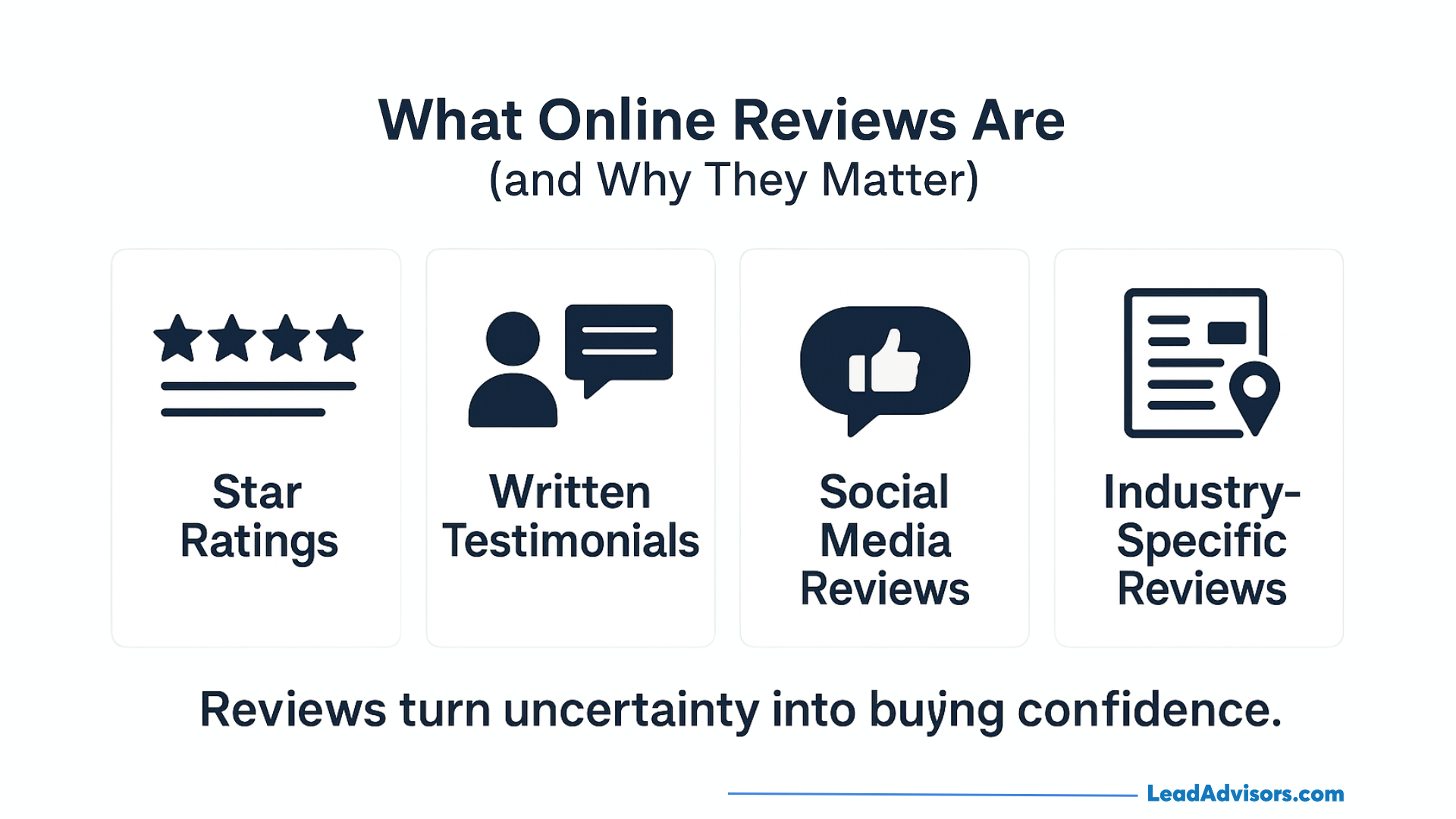
We could define them as digital word-of-mouth. Customer reviews are the comments that real users make after their experience with the product or service. They can be of different types:
- Star ratings – Those easy 1-to-5 ratings that are everywhere
- Written testimonials – Personal stories, detailed and focused, of someone’s experience
- Social media reviews – Comments and posts exchanged across platforms
- Industry-specific reviews – For example, Yelp for restaurants or TripAdvisor for hotels
What really gets me is the fact that our brain is designed in such a way that it seeks social proof. When we are dubious about a purchase, we instinctively want to know the opinion of others. It is the herd behavior that makes us follow the majority.
And this is the point: uncertainty makes buyers ask for others’ experiences more than ever. We cannot touch or try out products through the internet, thus those who have already done it are the ones we rely on.
So, are reviews really indispensable? Reviews are the means that help buyers move from being uncertain to confident and eventually buying the product.
The 9 Core Reasons Online Reviews Matter (Complete Framework)
Let me walk you through why reviews have become non-negotiable for any business trying to succeed online. I’ve broken this down into nine solid reasons—and trust me, each one packs a punch.
1. Reviews Provide Social Proof That Drives Purchasing
Here’s the thing: we tend to trust strangers more than we trust brands. It may sound a bit unfair, but it’s a fact.
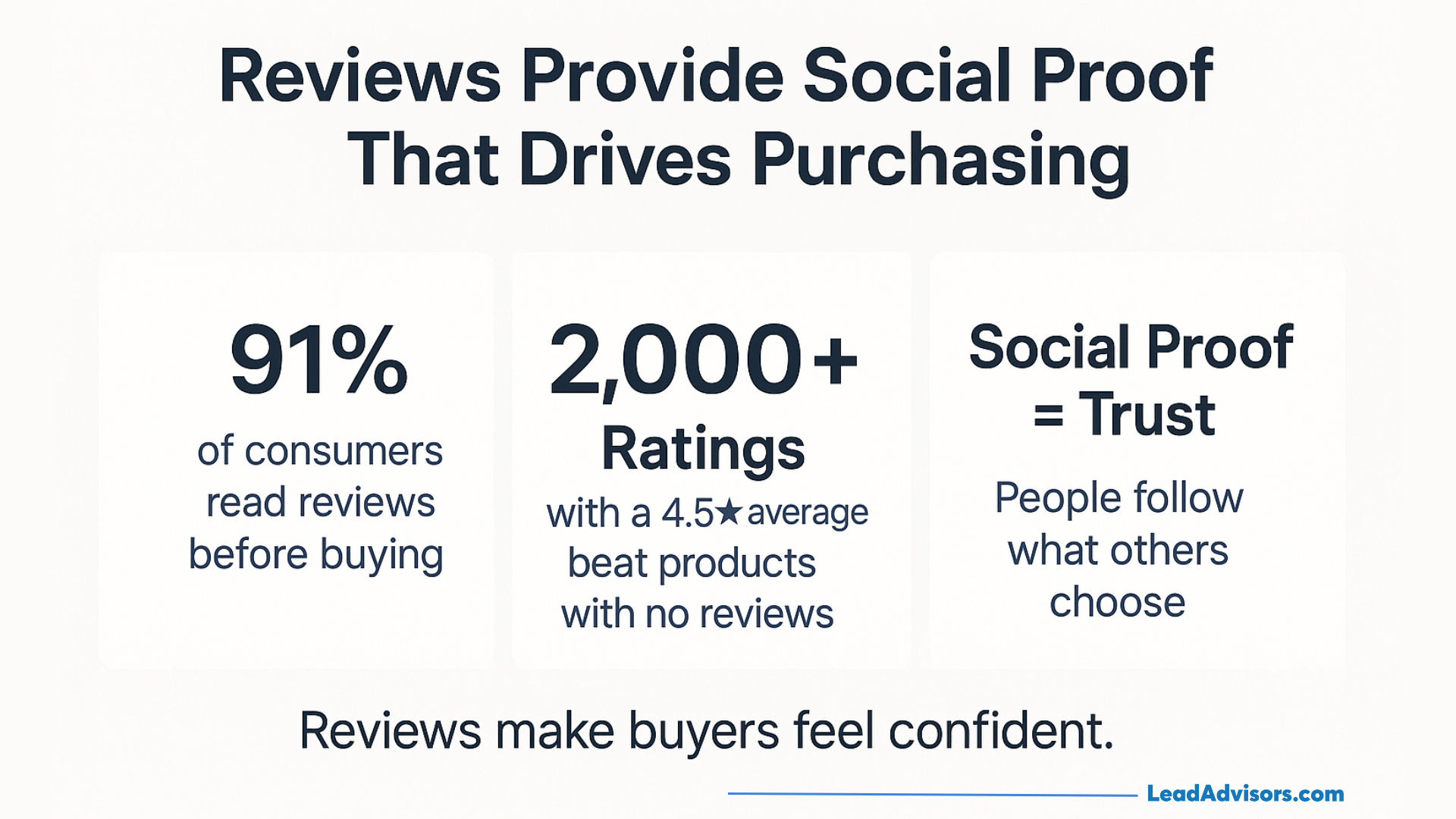
As per BrightLocal’s research, 91% of consumers refer to online reviews before making a purchasing decision. That’s almost everybody! So, when prospects see that a hundred or even a thousand people have bought from you and left a positive review, their trust in you skyrockets.
Put yourself in their shoes. When going through product pages, you come across one with 2,000 ratings averaging 4.5 stars while the other has no reviews—what’s the one you’re clicking? That’s right.
This is social proof at work. Our brains are wired to follow the crowd because, from an evolutionary point of view, the crowd is usually the safest option.
2. Reviews Build Trust and Credibility for Your Brand
Let me be honest with you: a company without reviews is not trusted by anyone anymore.
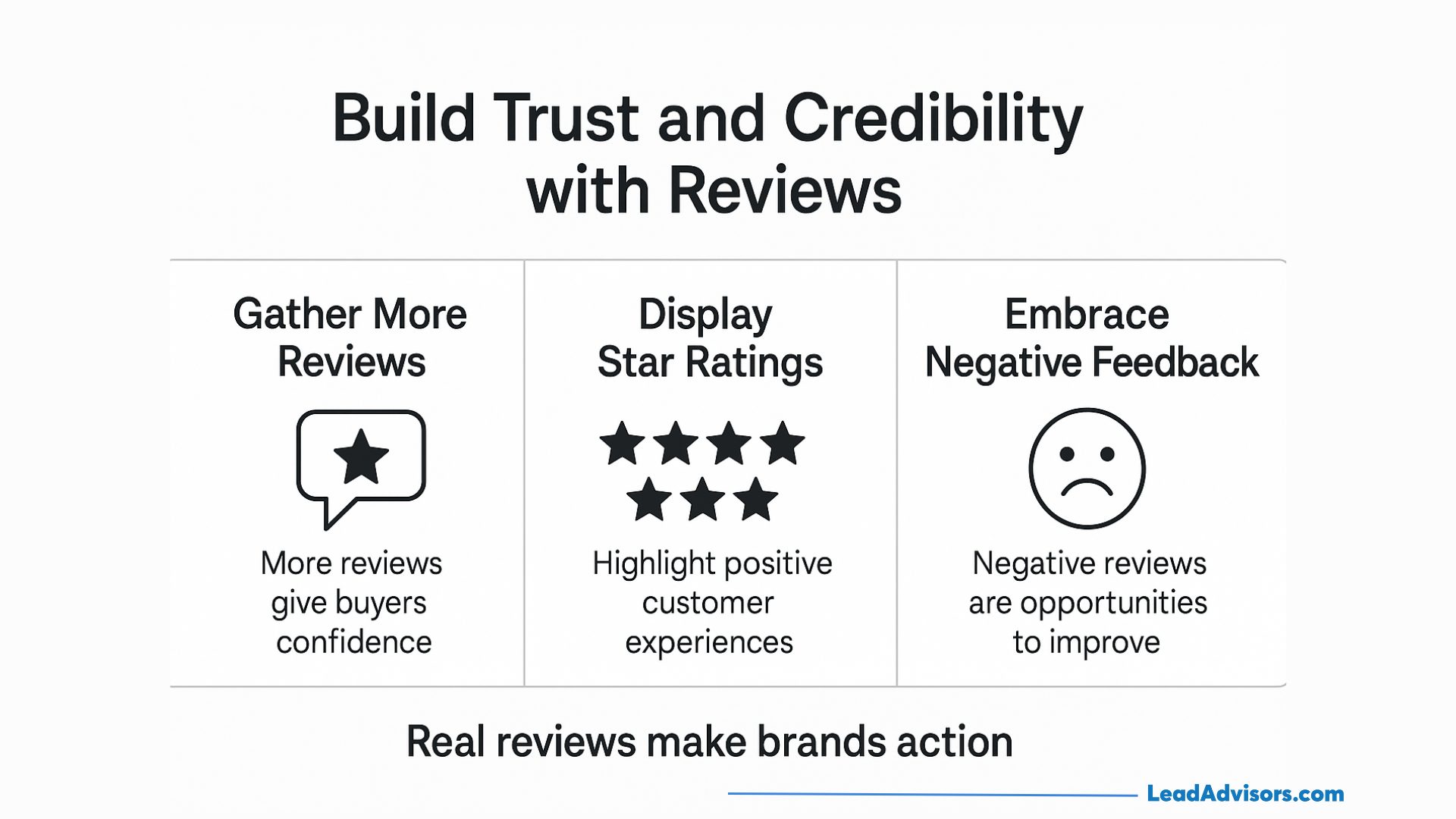
Star ratings influence perception very quickly. A study by the Spiegel Research Center revealed that products with customer reviews are 270% more likely to be bought than products without reviews. That’s nearly three times more!
Nevertheless, what most people are shocked to find is that negative reviews are not their opponents. Actually, the absence of negative feedback can make buyers uneasy. They think, “Are these reviews fabricated?” The presence of positive online reviews, along with some helpful criticism, in fact, creates even more trust as it looks like a real interaction.
3. Reviews Make Decision-Making Faster & Easier
We all know that feeling of looking at 50 different options and not being able to decide, right? Psychologist Barry Schwartz refers to it as the “paradox of choice”—too many choices actually disempower us.
Customer reviews on the internet are the main reason why we get out of this paralysis. When I am shopping, and I see products that have been rated highly and have a lot of feedback, I can make a decision in a few minutes instead of hours. Reviews provide us with the assurance of pressing “buy” without doubting ourselves for several days.
4. Reviews Boost Your Visibility on Search Engines
One thing that many business owners overlook is that Google really loves fresh review content.
Search engines give higher rankings to websites and businesses that have had recent, up-to-date customer feedback. The reason is that reviews are like signals that your company is real, it is still running, and it is trusted by real people.
This, therefore, means that it is a very big deal for local businesses, in particular. Google will check your ratings and the number of reviews you have when somebody searches for “best coffee shop near me.” Thus, the more reviews you have, the better your rankings will be in local search results.
However, there is yet another layer which most people are not aware of, and that is: reviews create natural backlinks and user-generated content, which, in turn, lead to overall SEO enhancement. It can be compared to the free marketing you get which, at the same time, elevates your site’s authority.
5. Reviews Expand Your Reach Beyond Your Own Website
Think of your company website as the tiniest fraction of the whole internet. What about reviews? They are everywhere.
What if we list the platforms where consumers are searching and reading reviews?
- Google My Business
- Yelp
- Trustpilot
- Amazon
- TripAdvisor
- Industry-specific sites
Every platform is like having a store in another district. When customers look for your products, your reviews appear on different review sites, thus giving you the exposure you could never achieve with ads alone.
6. Reviews Directly Increase Conversions and Revenue
How about we talk money? Because that is what really matters for the existence of your business, isn’t it?
The figures are absolutely crazy here:
- Companies with reviews experience 67% higher conversion rates (PowerReviews)
- Conversions can be increased by 25% from just a 0.1-star change(Womply)
- If you have five or more reviews, you are 270% more likely to make a sale (Spiegel Research Center)
Reviews are the most effective at the bottom of the funnel—when a person is just about to give their credit card details. That is the time when doubt usually shows up. But what if a person sees a positive review from another buyer? That is definitely the push that makes a customer out of a mere site visitor.
7. Reviews Guide Customers Through Their Buying Journey
Reviews can be considered as a map. Echoing the decisions at each phase of the customer journey, they help to lessen the risk that is still felt.
When a person is only finding out about your brand, reviews allow them to understand if you are real. When they are making a comparison of you with the competitors, detailed feedback helps them see your difference. And when they are buying, those star ratings get them the final push.
I have seen this with my own shopping habits. I will look up products, read what reviewers say about quality, check if customer service is responsive, and then I will decide based on that collective wisdom.
8. Reviews Help Your Business Improve
This is the part where the negative side of the review turns out to be the most valuable resource for your business.
Customer feedback in any form—positive or negative—is essentially your free market research. A single sentence that customers from different platforms highlight as an issue is your indication to change it. Possibly, your shipping is taking too long. Possibly, your product description is not as clear as you think. Possibly your restaurant food is excellent, but the service is slow.
Wise companies treat reviews as a sound system for their products and services to improve. They are receiving up-to-the-minute information about what is successful and what is not without spending any money on focus groups or surveys.
9. Reviews Are a Free, Always-On Marketing Asset
To round it up with the most important thing: reviews are free and offer you everything in return.
Once a review is submitted by a customer, it is available online and henceforth acts as a marketing channel for you 24 hours a day, 7 days a week. In contrast to paid promotions that have to be stopped when you run out of budget, reviews continue to attract customers, remain trustworthy, and hence lead to increased sales forever.
Have a look at the long-term compounding effect. A good review made today can have an impact on the purchasing decisions of hundreds of people over the next five years. This is visibility for free and without the need to keep paying.
That is the total structure. These nine reasons precisely explain why online reviews have become the cornerstone of trade in the digital age. If you choose to ignore them, then you are pretty much invisible. If you decide to work with them, then you have a trust-building machine that is on autopilot.
The Problem: Modern Review Challenges Brands Can’t Ignore
Fine, we have established that reviews are necessary. However, this is the point where things become complicated.
Reviews of surroundings are not as easy as they used to be. Companies have to deal with challenges that can be disadvantageous to them if they are not cautious. I will explain to you the real situation.
- Fake reviews are everywhere. Most likely, you have already come across such reviews, which are too flattering, 5-star ratings using very general language made by accounts without any kind of history. In a report released by the Federal Trade Commission, it was stated that fake online reviews have been causing consumers to lose billions of dollars annually. The massive amount of counterfeit comments has forced consumers to be very suspicious. As a result, your really good reviews may also be questioned due to the fact that some fake reviews have been dominating the scene.
- Review fatigue is real. We get hit with that many reviews on that many different platforms that it is becoming tiring. Consumers are no longer willing to wade through 500 customer reviews; instead, they want a smaller number of better-quality signals that will genuinely guide them in making a decision.
- Review platforms are becoming pay-to-play. There are a lot of sites that now give preference to companies that pay, so that your real reviews can be overshadowed by the ones of the companies that have bigger marketing budgets. This is resulting in a world that is not fair for everybody.
- Algorithm dependency makes everything unstable. For example, you have no control over the way Google shows your reviews. Since algorithms change all the time, your whole online reputation is exposed to these scary changes that you cannot control.
- Brands lack control over third-party narratives. If reviewers decide to write their opinion on some external platforms, you are completely dependent on them. What if a person writes a bad review, and you solve the problem, but still, that review is going to be there eternally?
This is where editorial brand reviews become essential.
In contrast to random customer reviews that can be found anywhere on the internet, editorial reviews provide brands with what they most crave: a controlled, trusted, authoritative narrative. Rather than customers writing reviews of your company by chance and hoping that they will be positive, you can have expert-written content on high-authority sites that show your brand in the exact way that it needs to be shown.
It is a completely different thing as a result.
Introducing Brand Editorial Reviews — And Why They’re Now Essential
Alright, let’s talk about the game-changer most businesses don’t even know exists yet.
What are editorial brand reviews?
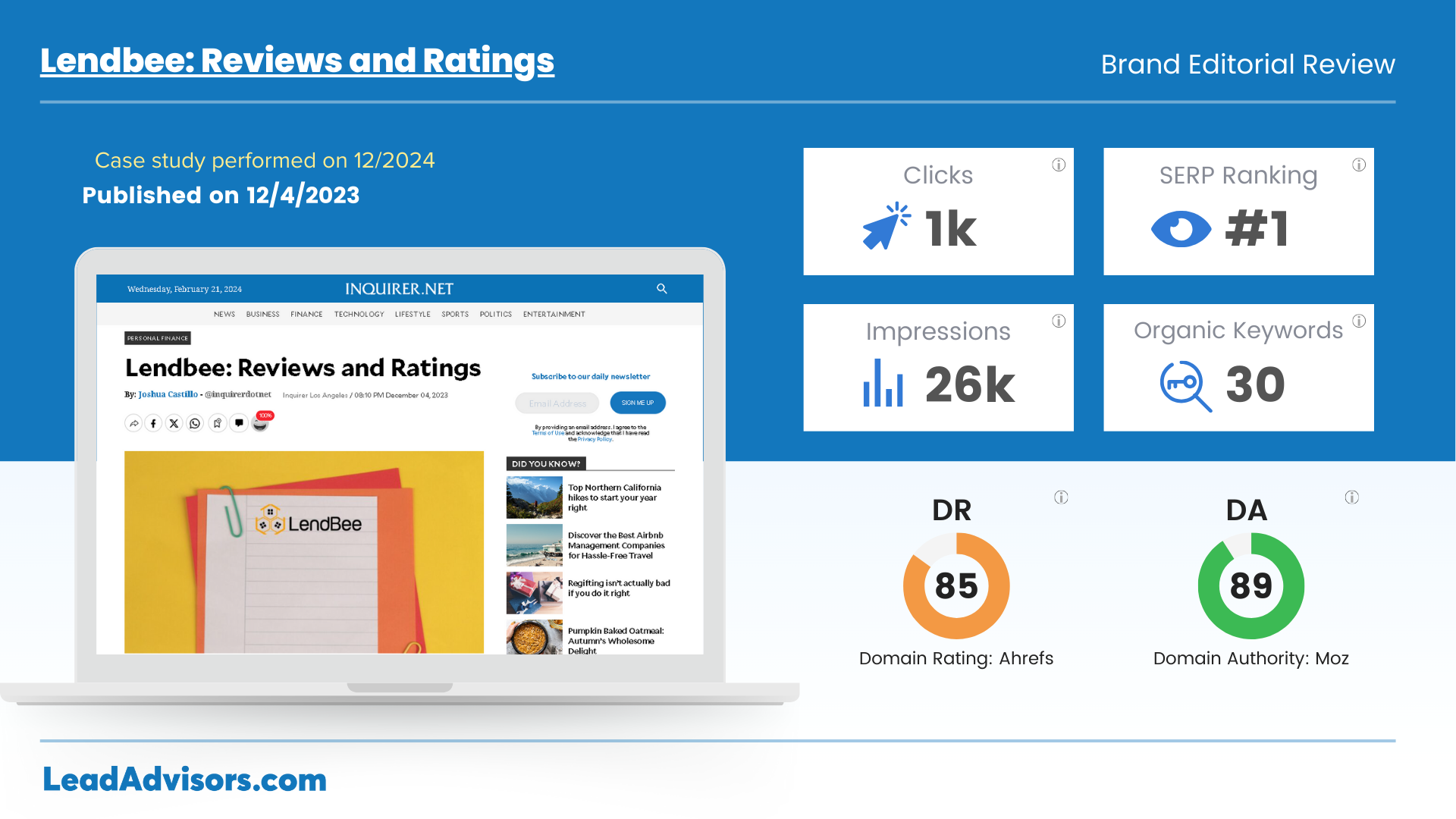
Essentially, they are supercharged versions of normal reviews. These are comprehensive, expert-written evaluations of your brand or product that appear on high-authority sites. They are not just a single “I liked this” type of statement—rather, they are detailed pieces that combine a journalistic approach with clever marketing.
Are you wondering what the best part is? They are made primarily for search engines and long-term visibility. If everything is carried out correctly, they will retain their position for years and keep sending you qualified shoppers who are ready to buy.
Customer Reviews vs. Editorial Reviews: What’s the Difference?
Let me show you this comparison so you can see exactly why editorial reviews pack more punch:
| Factor | Customer Reviews | Editorial Reviews |
| Authority Level | Regular users sharing opinions | Expert writers on trusted sites |
| Depth | Brief, surface-level feedback | Comprehensive analysis with context |
| SEO Value | Minimal individual impact | High-authority backlinks, keyword rankings |
| Trust Signal | Social proof from peers | Third-party credibility from established publishers |
| Traffic Quality | Random visitors | High-intent buyers actively researching |
| Funnel Position | Works at all stages | Strongest at the decision-making stage |
See the difference? Customer reviews tell people what to expect. Editorial reviews tell them why your brand matters.
Types of Editorial Reviews You Need to Know
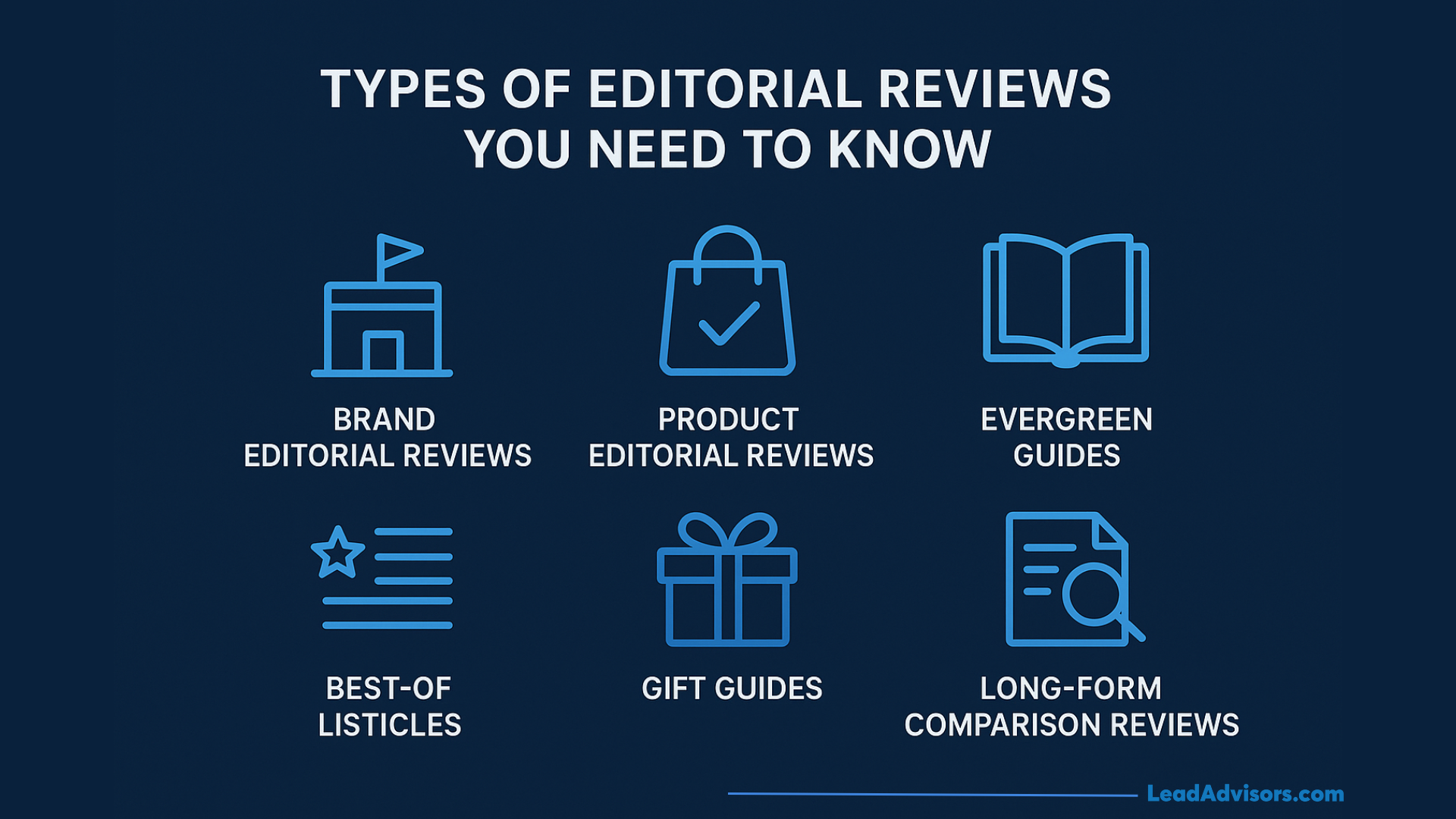
Editorial content of different types is not the same in quality. These are the formats that really have an impact:
- Brand editorial reviews – Exploring your company story, values, and what makes you different in detail
- Product editorial reviews – Providing a thorough description of the specific items, along with the honest pros and cons
- Evergreen guides – “Ultimate guide to [your category]” articles that include your brand
- “Best-of” listicles – The “10 Best [Product Type] in 2025” that users are always looking for
- Gift guides – Festive content that recommends your products as gifts for certain holidays or events
- Long-form comparison reviews – Detailed review comparing your product with competitors one by one
Different formats have different functions in the buyer’s journey. The main thing is to know which ones are right for your business and where your potential customers are looking.
Why Editorial Brand Reviews Are More Powerful Than Customer Reviews
Allow me to be completely honest with you: if I had to decide between 100 customer reviews and one amazing editorial review on the right site, I would always go with the editorial review.
They are the most trustworthy signal – even more than ads or user content.
They’re the highest trust signal—better than ads or user content.
It is quite different when a reputable publication talks about your brand as opposed to an ad or a random person’s opinion. Third-party confirmation is accompanied by this instant trust, which is quite inherent. Consumers generally believe the publishers more than the companies that are trying to sell them something.
As per Nielsen’s research, 92% of consumers trust earned media (like editorial content) more than any other form of advertising. The reason is that editorial reviews offer a combination of emotional storytelling and logical reasoning, thus providing the buyers with both the facts and the feelings that lead to purchasing.
They’re an SEO powerhouse.
That is the moment when things become really fascinating for your business.
Editorial reviews on high-authority domains are one of the greatest ways to create backlinks to your site. Google interprets such links as ‘votes,’ and thus, they call it a direct boost to your domain authority. Eventually, it leads all your product pages to be ranked higher in the search results.
And it doesn’t stop here. Such reviews get ranked most of the time for buyer-intent keywords like “best [your product]” or “[category] reviews”. In case a user is actively searching those terms, they are very close to a purchase, and your editorial review is the one that shows up to them at the perfect moment.
Just imagine: rather than competing for ranks on your own site, you are harnessing the SEO might of the trusted publishers that have taken years to establish their authority online.
They expand your visibility massively.
If an editorial review is published, you are not merely getting one article—you are gaining access to the entire audience that the publisher already has.
These platforms are already followed by thousands (sometimes millions) of people who completely trust the recommendations. So, you are somewhat taking their reputation and their traffic. Moreover, many publishers, along with sharing the content on their own different channels—like email newsletters, social media, partner sites—are doing a great job of distribution, which you could never achieve on your own.
And the fact that this visibility is made possible at any time is the real surprise: this article will continue to be available in search engines for years, thus constantly bringing new customers to your brand.
They convert higher than any other review type.
Conversion rates are what we should really focus on here because that is the area where editorial reviews have the most impact.
If a user is coming to your site because of an editorial review, then this is definitely not a case of cold traffic. The user has, even before coming to your brand, read a detailed analysis of your brand. And understands what you sell, why it is important, and how it differs from the alternatives. Such a user is therefore a warm, informed, and significantly more likely buyer.
The context is, however, still very important. Editorial reviews, in fact, do not merely enumerate the features; they explain the benefits, deal with the customer’s concerns, and rave about the reasons why your brand is the best investment. That is why companies, on a regular basis, experience higher conversion rates from editorial review traffic than from their usual online traffic.
They deliver long-term value, not just quick wins.
This is my favorite part: editorial reviews are like assets that keep functioning for you indefinitely.
In contrast to ads, which vanish once you stop paying for them, or customer feedback, which gets buried under newer reviews, editorial content keeps its rankings and thus keeps attracting sales year after year. That is the compounding effect—just one excellent review today could be the deciding factor in thousands of purchasing decisions over the next five years.
It is being seen all the time without any additional cost. And as that piece gets more readers and backlinks, its authority keeps increasing, thus, it becomes even more valuable with time.
How Editorial Reviews Solve the Biggest Brand Challenges
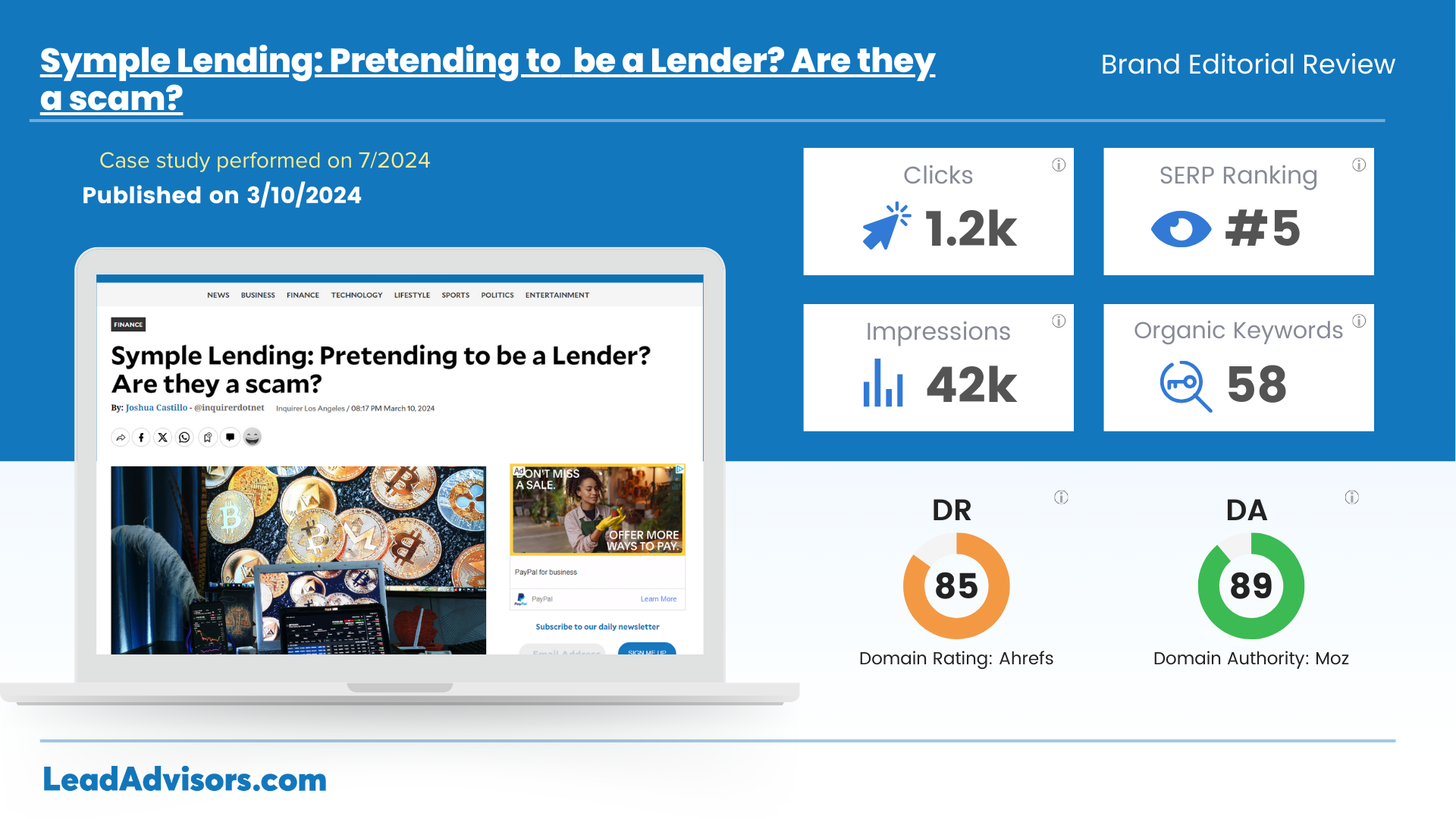
What kind of stuff is it that always bothers business owners? Let me tell you—it is the same things that I keep hearing very often.
I will demonstrate to you the way editorial reviews act against the problems that are probably giving you sleepless nights.
- Problem: Low visibility in a crowded market
It may be said that when you have a battle with dozens (or hundreds) of similar brands, the result of which is that you do not get noticed, it is getting harder and harder. Editorial reviews break through that noise by locating your company on the sites that have a lot of visitors and where, thus, your target shoppers are already looking. You are not disputing for attention—you are going to buyers where they are already searching. - Problem: Standing out when everyone looks the same
It is a common problem for the majority of businesses to fail in showing their difference. An editorial review is the tool that performs this work for you. It not only defines your brand in the surroundings, but also tells your distinct worth and provides the idea of selecting you to the readers by a whole new voice, a quite new but very trusted one. - Problem: Building trust with people who’ve never heard of you
This matter is majorly for companies that are new or small businesses that are coming into markets that are already established. When a publisher that is trusted features your brand, you gain some of their trust without making any extra effort. It is similar to getting a personal recommendation from a person whom customers already trust. - Problem: Spending too much on ads with diminishing returns
Costs for advertising are going up continuously, and people are getting more and more skilled in avoiding ads. One of the effects of editorial reviews is that they help you to use less paid advertising. After their publication, they become a source of organic traffic that does not have to be renewed from your marketing budget every month. - Problem: Capturing high-intent shoppers who are ready to buy
Typically, marketing is designed to attract a large number of people with the hope of finding someone interested. However, editorial reviews function in the reverse manner – they bring in people who are thoroughly researching products in your category. Such individuals are not mere casual browsers; they are actually comparing different options and are on the verge of deciding which to buy. - Problem: Increasing conversions without slashing prices
Consumers frustrated with a lack of trust usually require a discount in order to make the purchase with less risk. However, if the customers come because of an editorial review that has already been confirmed by quality, then they can hardly resist buying at full price. The conversion of sales is at a higher level without customers being educated that they should only buy when there are promotions. - Problem: Recovering from negative reviews or reputation damage
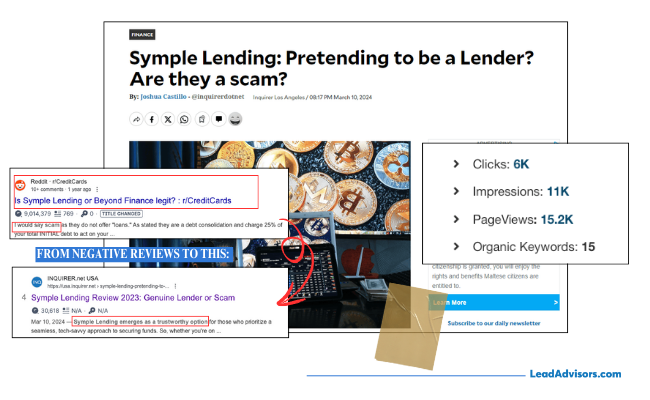
Let me tell you something that a majority of people are not aware of: bad customer reviews removal is not in your hands, but their outranking is. Purposeful editorial reviews generate new, positive content that, as a result, makes the old negative feedback less visible in search results. After a while, the very first thing that new customers will see is reliable content reflecting your strong points, rather than the one angry reviewer from three years ago.
How Editorial Reviews Enhance the Entire Customer Buying Journey
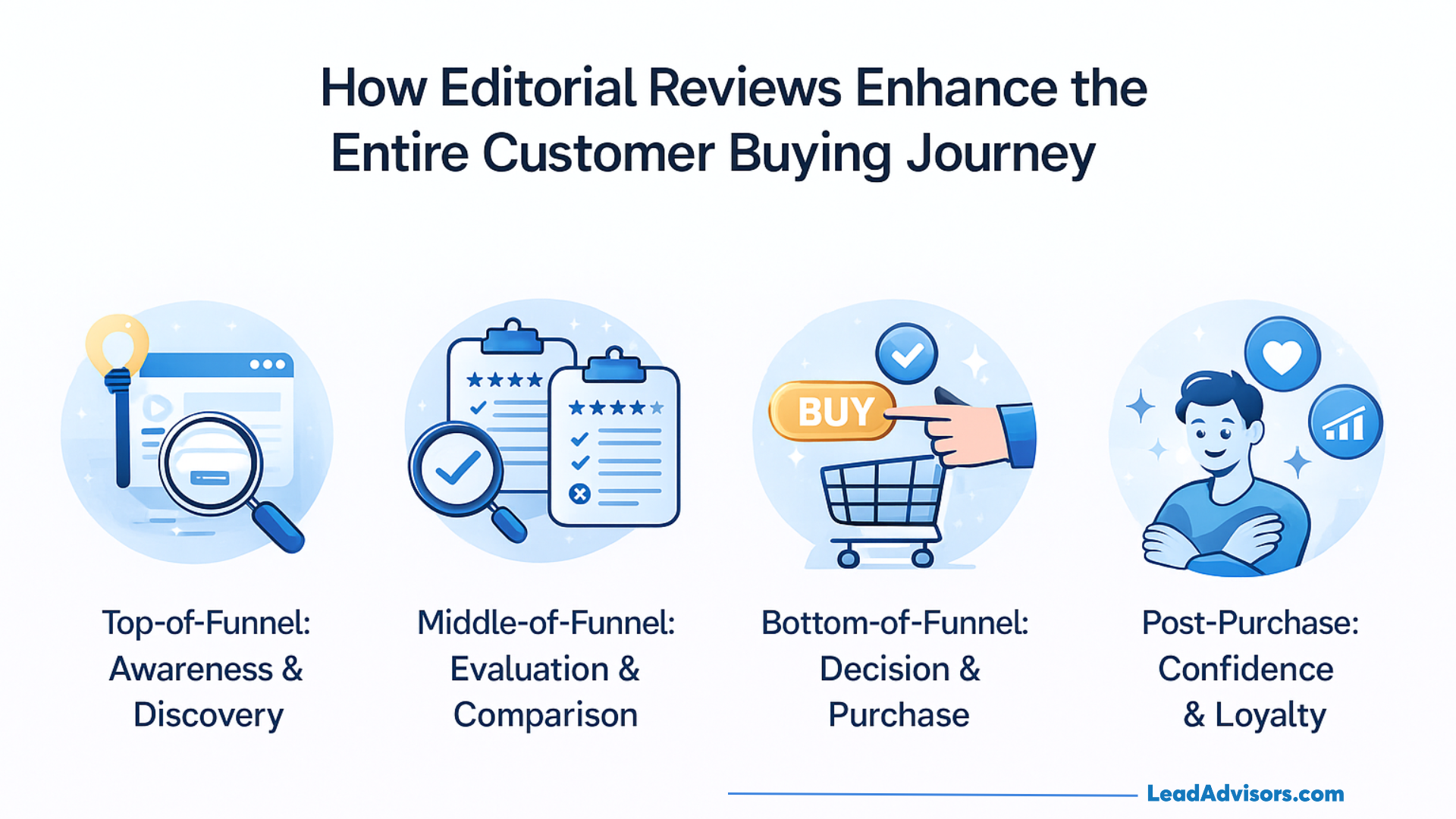
Most businesses fail to see one thing: editorial reviews are not only effective at a single stage in the buying process. Actually, they lead customers along the whole journey— from “I’ve never heard of you” to “I just bought, and I’m telling my friends.”
Allow me to show you how each stage works.
Top-of-Funnel: Awareness & Discovery
First of all, think of a person typing “best sustainable skincare brands” or “top project management tools for teams” in a search engine. At this point, they are not looking for your company directly—they are simply finding out what is available.
Editorial reviews are the means through which your brand is presented to those people who need what you offer but haven’t figured out that you exist. Being a high-authority source on trusted sites gets your name in front of thousands of the most qualified leads during their research stage. Instead of breaking their attention with ads, you are showing up organically in the content they are already consuming.
Middle-of-Funnel: Evaluation & Comparison
They now have the knowledge about you. However, they are also thinking about three or four other competitors. This is the point where most decisions to buy are made or lost.
One of the most powerful tools that help in this stage is editorial reviews, and the main reason is that they can provide the needed depth for the decision-makers to effectively evaluate. They dissect the features of the products, give the pros and cons in a straightforward manner, and demonstrate how your product stacks up against the alternatives. When a person comes across an unbiased editorial review that presents your brand in a good light, it helps that person to be able to make a decision without the feeling of being pushed by a sales pitch.
I can tell that this is the case with my own shopping behavior—specifically when I am in a situation where I have to compare different options, I am very keen on looking for detailed editorial content because I feel that star ratings and brief comments are not enough.
Bottom-of-Funnel: Decision & Purchase
This is the moment of truth. The buyer is about to make a purchase; however, they still have this last-minute doubt. “Is this really the best option?”
Editorial reviews are the one that gives the final push by combining social proof with professional validation. A reader feels secure to hit the “buy now” button when they see that a trusted source has gone through the company in detail and recommends it. On top of that, a lot of editorial reviews offer direct links to your product pages, which makes the purchase process very easy.
Consequently, conversion rates become higher, and there are fewer abandoned carts because you have already prevented those last-off objections.
Post-Purchase: Confidence & Loyalty
This is a step that the majority of people forget: what to do after someone makes a purchase from you.
At times, new customers can be plagued with buyer’s remorse, and thus they may second-guess their decision. But when they happen to see that same editorial review again—or even share it with friends—it reassures them that they were the right ones making the choice. In a way, it confirms to them that buying from you was the best option, and hence, they are more inclined to become repeat customers.
Moreover, people satisfied with their purchase and having found you through editorial content, are very likely to go out of their way and leave their own positive reviews, thus creating a self-reinforcing circle that, gradually, increases your goodwill over time.
How to Get Editorial Brand Reviews (Step-by-Step)
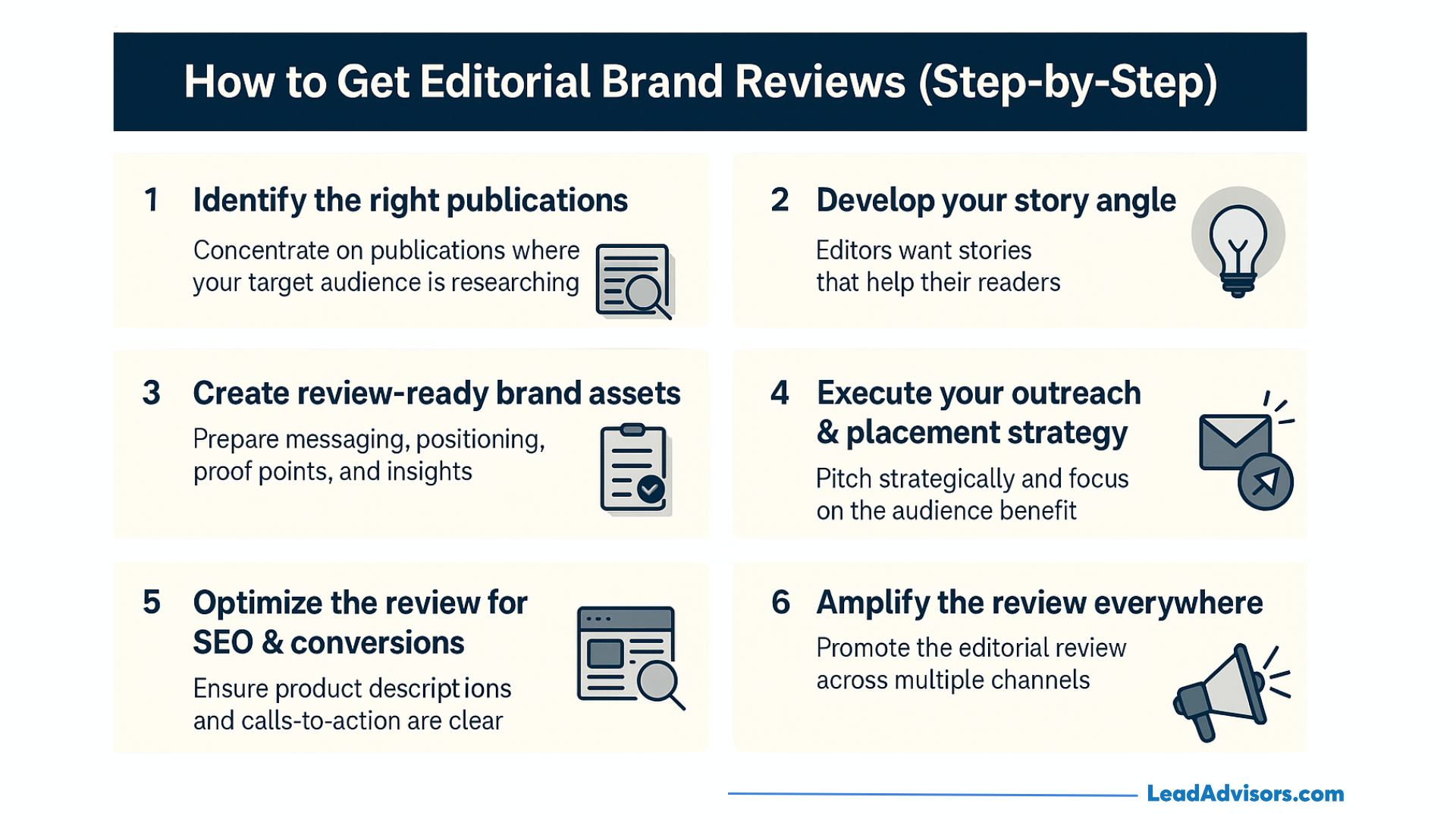
You might be wondering: “This sounds perfect, but how do I actually pull this off?”
That’s a good question. Let me outline the exact steps of the process through which your brand can be featured in editorial reviews that have a positive impact on your business.
Step 1: Identify the right publications
Not every website is valuable for your time. You should concentrate on publications where your target audience is already spending time researching.
First, try to figure out: Where do my customers go for advice in my industry?
If it is a tech product, it might be TechCrunch or CNET. If it is a restaurant, it could be local food blogs or Eater. If it is consumer products, then think of BuzzFeed, Good Housekeeping, or niche review sites.
Identify three factors: niche relevance (do they cover your category?), authority (does Google rank them highly?), and audience fit (are their readers your ideal buyers?).
Step 2: Develop your story angle
The truth is: editors are not interested in publishing ads that look like articles. What they want are stories that help their readers.
It is necessary for you to determine what makes your brand fascinating besides just “we sell good stuff.” What kind of problem do you solve that no one else does? What is the story of your beginning? Why would their audience be interested in you in particular?
Consider what sets you apart from others. Perhaps you are the eco-friendly option in an industry that is harmful to the environment. Maybe you are targeting a market that has been neglected. Maybe your product is the only one that has a certain feature. That is your angle.
Step 3: Create review-ready brand assets
Before you contact anyone, prepare your internal work. Publishers require certain information in order to write effectively about you.
Put together:
- Clean messaging about what you do and who you serve
- Product positioning that highlights your key benefits
- Data and proof points (sales numbers, customer stats, growth metrics)
- User insights (testimonials, case studies, real customer stories)
Writers will find it very simple to develop interesting pieces by using your brand if they do not have to interact with you for an infinite amount of time, and you have these materials at their disposal.
Step 4: Execute your outreach & placement strategy
Here is the real pitch. It is not about sending mass emails and hoping that something will work—it is strategic.
Your pitch should tell how your readers will benefit from knowing about your company. Concentrate on the help that the audience will get, not on how you will get the coverage. In case the publication is affiliated with programs, let them know that you are willing to be a partner—it gives them another reason to feature you.
Quite a few companies, along with publisher networks or PR agencies, maintain relationships with editorial sites. Thus, if you have a budget, this can be a quick way to get your placement.
Step 5: Optimize the review for SEO & conversions
The moment a review is in the writing process, it is necessary to figure out its structure for the greatest effect.
Include the closest search terms through the publisher with whom you collaborate that your possible customers really use. Be certain that there are product descriptions that are clear, comparison points if they are applicable, and obvious calls-to-action that direct the readers to your site.
The aim is not only to get the article published but also to make sure that it is ranked high by search engines and that readers are converted into buyers.
Step 6: Amplify the review everywhere
Do not rely solely on the organic traffic to come and see the review. Really promote that editorial review.
Sharing it is a great way to promote it. Use social media channels to spread the word. Bringing it front and center in your email newsletters is another great way to feature it. If you want to add credibility to your ad campaigns, then use it as a trust signal. Influencers or affiliates can help you reach more people if you work together.
Each time you extend that review, you are increasing its power to be seen by more people, which is the main goal of your brand.
Why Partner With Us for Brand Editorial Reviews
Look, I am going to be honest with you, you don’t need rocket science to get editorial reviews, but to do it strategically, you need to have expertise, relationships, and a proven system.
That is the way we operate.
Our Unique Value Proposition
It is not that we just randomly throw your brand name at different sites and hope that something will work out. In fact, here is what you get when working with us:
- Access to high-authority publishers – We have established relationships with top-tier sites in a multitude of industries
- Review formats designed for SEO + conversion – Our editorial reviews become visible to buyer-intent keywords while convincing the readers to make a purchase
- Strategic placement (not random mentions) – We figure out which publications your target customers trust and where they are actively checking
- Multi-review content strategy – A single review is nice; a concerted effort across multiple platforms is what really gets you to take over your industry
- Data-driven platform selection – We look at the lead generation and sales data to figure out the exact place where your brand must be featured
- Full-funnel impact – The reviews we make are customer attractors, brand promoters, and sales closers
Case Studies & Proof
Let me show you what’s possible when editorial reviews are done right:
| Campaign Type | Result |
| Brand Editorial Success | Sustainable fashion company: 340% increase in organic traffic, page 1 rankings in 4 months |
| Product Review Conversions | Electronics brand: $180,000 revenue from a single editorial review in the first year |
| Evergreen Listicle Domination | Home goods company: 5 “best of” placements, consistent first-page Google rankings |
| Gift Guide Seasonal Wins | Wellness brand: 215% Q4 sales spike, 40% from editorial placements |
What Sets Us Apart
Simply put: we are not just making content. We are designing exposure for your brand.
It is not about random reviews. It is about strategic brand positioning that grows gradually. So, basically, every mention that we get for you is interlinked with the previous ones, thereby creating a network of authoritative content that positions you as a leader in your market.
In contrast to ads, which cease to be effective when you stop paying, our editorial placements result in a sustainable, compounding impact. The reviews you get with our assistance today will continue to bring in the traffic, build trust, and generate revenue for a long time to come.
How to Get Started With Brand Editorial Reviews
Would you like to present your brand to a highly-intent buyer through trusted editorial placements? This is exactly how we do it.
Our Simple Onboarding Process
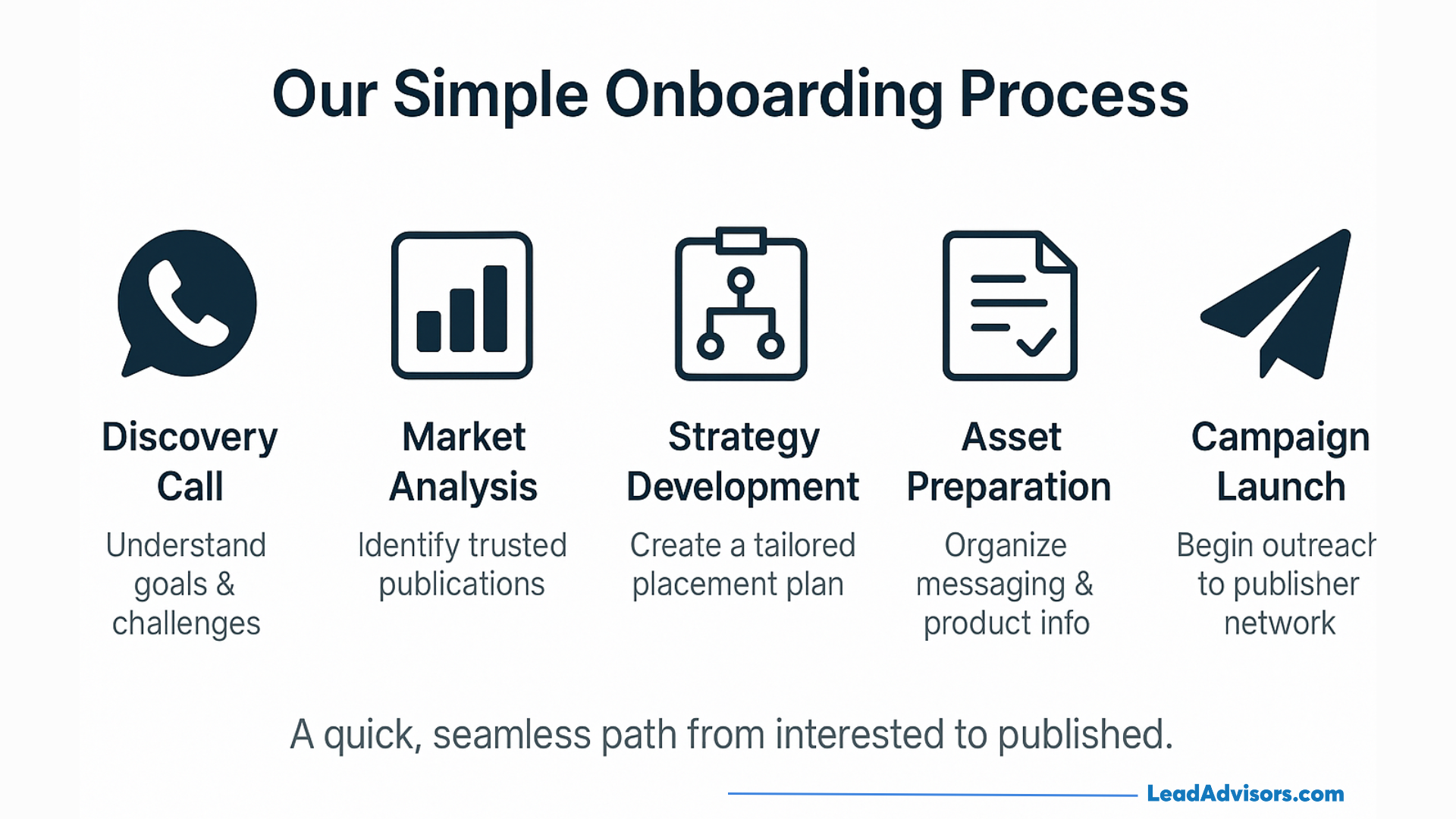
Starting is almost unbelievable, how simple it is. The path is like this:
- Discovery call – We talk about your business objectives, target audience, and the problems that you are facing
- Market analysis – We investigate which publications are the most trusted by your customers and where your competitors are getting featured
- Strategy development – We draft a plan that is tailored to your needs and identifies the best placement opportunities for your brand
- Asset preparation – We assist you in organizing the messaging, product information, and the key points that make you different
- Campaign launch – We start the outreach to our publisher network, thus putting the word out
There aren’t any complicated forms. You don’t need to sit through endless meetings. It’s just a straightforward process that gets you from “interested” to “published” in a very short time.
Placement Possibilities
What we can do for your brand to be featured is based on your industry and goals. Here are the places:
- High-authority review sites in your niche
- Industry-specific publications and blogs
- Lifestyle and consumer magazines (online editions)
- “Best of” ranking articles and comparison guides
- Gift guides and seasonal buying guides
- Long-form editorial features and brand spotlights
We get you the best fit with the publications where your prospective buyers are not only looking but are also ready to make their purchasing decisions.
Timelines You Can Expect
I am pretty sure you must be asking the question, “When will I get to see the results?”
Here is the timeline that you can be quite sure of:
- Initial placements: 4-8 weeks from campaign start
- SEO impact visible: 2-3 months as articles get indexed and start ranking
- Traffic growth: Steady increase over 3-6 months as multiple reviews compound
Don’t forget that editorial reviews are not a quick-fix tool. They are a long-term investment that eventually will have a great effect. The very first review is still going to have an impact, but it is when you have more and more placements that the compounding effect becomes really strong.
Growth Projections
We might as well list the expectations that usually take place based on our work with similar brands:
- 3-6 months: Branded search traffic between 100-300% with product keywords getting better search rankings
- 6-12 months: Huge organic traffic growth, ad dependency lowered, editorial referrals resulting in higher conversion rates
- 12+ months: Being a brand authority in your niche, continuous sales coming from evergreen editorial content, and a stronger overall online reputation
We vary the exact figures depending on industry, competition, and how aggressively we pursue placements, but the trajectory is always upward.
Ready to Start Your Brand Editorial Review Strategy?
You should stop relying on customer reviews that are unpredictable and ads that are expensive and disappear the moment you stop paying.
Why don’t we create a sustainable visibility engine that puts your brand as the most trusted one in your market? Editorial reviews will become your long-term assets—traffic, credibility, and sales—which are not directly accessible after their publication but will keep on functioning.