Most sales floors’ buying leads are having conversations with 12% to 15% of what they purchase. The rest go unworked, uncontacted, or cold within hours of arriving. Live transfer leads solve a different problem than traditional lead generation: they are not a better form fill.
They are a different model entirely, built around pre-qualification, real-time handoff, and a transfer that arrives at the sales floor already confirmed for intent, eligibility, and readiness to talk.
In this guide, I’ll explain how live transfer leads work, the different types, the tools to use, staying compliant, and boosting ROI.
Looking for ready-to-buy leads? Start here.

What Are Live Transfer Leads?
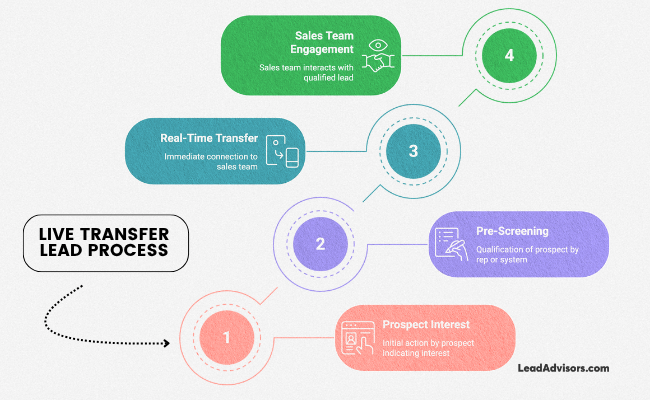
Let’s break it down. Live transfer leads are real-time, qualified prospects who connect to your sales team over the phone, right as they’re showing interest. No delays, no chasing. A real human, with real intent, is routed directly to you while the conversation is hot.
Unlike traditional internet leads that sit in your inbox or CRM until someone decides to follow up, live transfers skip the wait. You’re instantly on the line with someone who’s already asked for info, been screened, and is ready to talk.
For operators managing a sales floor of 10 to 80 closers, the argument for live transfers is not about convenience. It is about the contact rate, the cost per qualified transfer, and whether the pre-qualification layer is built correctly before any transfer reaches a closer.
A transfer that arrives without confirmed intent, eligibility, and a balance threshold wastes the closer’s time as much as a cold call would. The model only works when the infrastructure behind it is structured correctly. That is what this guide covers. For a full breakdown of how to structure, source, and scale a managed campaign, see the best live transfer campaign guide.
Here’s how they stack up against the usual suspects:
- Cold form leads: These folks filled out a form… sometime last week. Now, they might not even remember doing it. You’re starting from scratch.
- Email opt-ins: They downloaded your freebie, but that doesn’t mean they’re ready to buy insurance or even hop on a call.
- Shared marketplace leads: These are sent to multiple agents, and it’s a race to call first, while the prospect gets overwhelmed with pitches from other agents.
With live transfer leads, you get a direct line to someone pre-screened and primed for a conversation. It’s faster, more personal, and more productive for your sales process.
Benefits of Live Transfers Over Traditional Lead Gen
If you’ve been working with form fills, email lists, or shared leads, you know the struggle: low pick-up rates, missed timing, and prospects who forgot they signed up. That’s where live transfer leads truly shine.
Here’s a quick breakdown of why they’re such a valuable opportunity:
| Benefit | Traditional Lead | Live Transfer Lead |
| Speed | Hours/days to reach | Instant connection |
| Contact rate | 15–35% | 30%+ with managed pre-qualification layer |
| Conversion rate | 3–5% | 15–30% |
| Exclusivity | Often shared | Usually exclusive |
| Lead quality | Low-intent | High-intent |
| Sales rep experience | Frustrating | Way more efficient |
It’s not just about speed; it’s about quality conversations with interested prospects who are actually ready to listen and take action. Your sales team won’t waste precious time chasing voicemails or sending “just checking in” emails.
See how a managed live transfer campaign is structured differently from a standard vendor relationship.
The contact rate problem is why this model exists. Most sales floors running traditional lead generation, form fills, shared leads, and cold lists reach 12% to 15% of what they buy. The remaining 85% go unworked or cold. A properly managed live transfer campaign with a structured pre-qualification layer and multi-channel warm-up pushes that above 30%. Live transfers are not a faster form of fill. They are a different infrastructure built to solve a contact rate problem.
Types of Live Transfer Leads
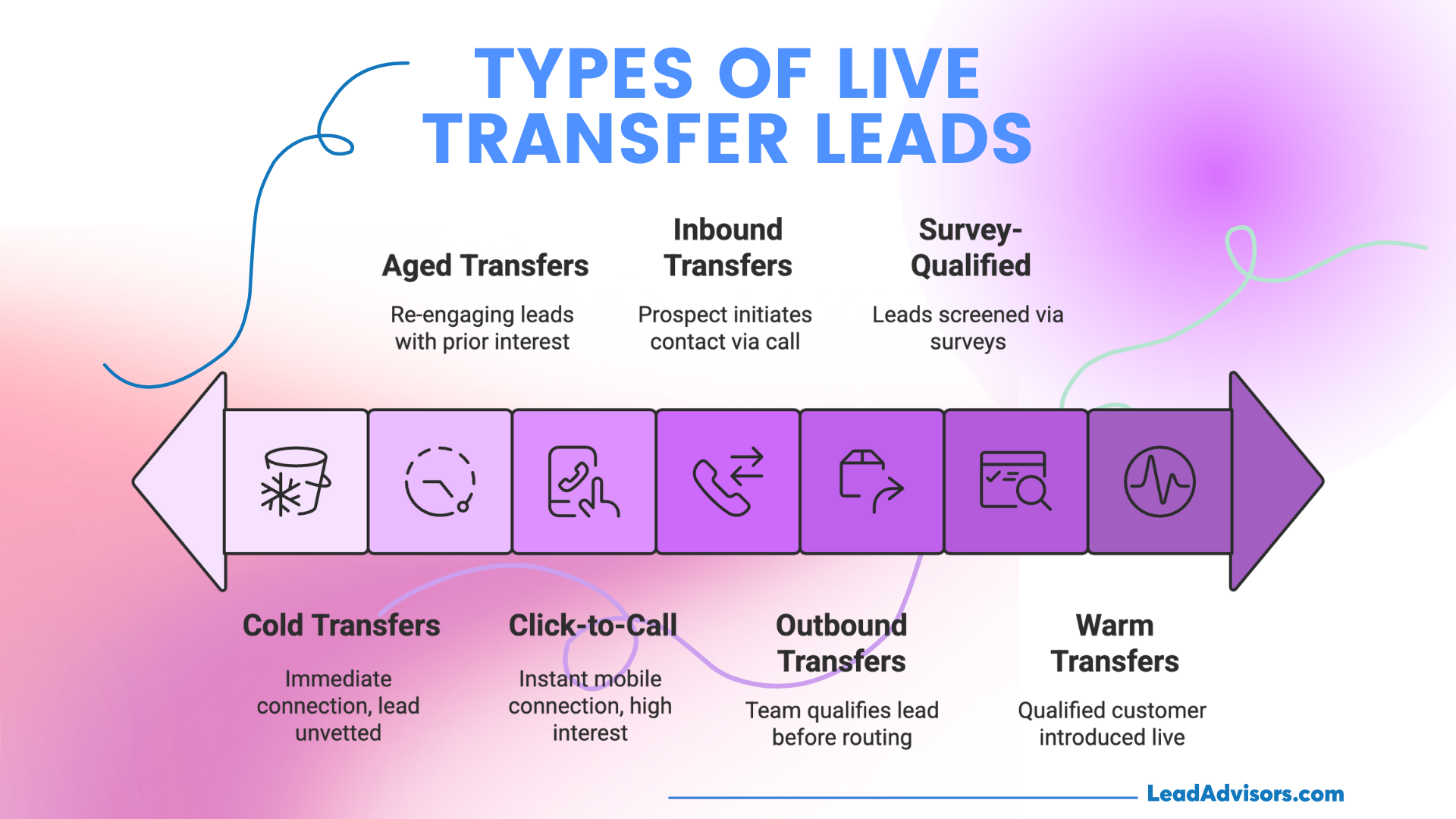
Not all live transfer leads are created equal; some are piping hot, others need a slight warming up. Knowing the difference can make or break your sales process.
Read More: Lead Qualification: 7 Types of Live Transfer Leads That Actually Convert
But here’s the quick version:
- Warm Transfers: The dream scenario. A potential customer has been qualified, and you’re introduced while they’re still on the line.
- Cold Transfers: Less prep, more hustle. You’re connected immediately, often before the lead has been vetted.
- Inbound Transfers: These are live calls from prospects who initiated contact (think ads or landing pages with a “call now” CTA).
- Outbound Transfers: They are run through your offer on a form or a call, and then your team connects with them on a live transfer.
- Click-to-Call: A feature that’s built from a mobile-first mindset that enables people to tap and call directly from an ad or site. Real-time, high interest.
- Aged Transfers: Not brand-new, but still valuable—these leads showed interest previously and are being re-engaged.
- Survey-Qualified Transfers: Leads screened through surveys, often in insurance or finance niches, before being routed to you.
Each one serves a different purpose depending on your business model and sales team bandwidth.
Best Industries for Live Transfer Campaigns
Not every business needs to jump on the live transfer train, but for the right industries, it’s a total game-changer. These are the sectors where real-time conversations with interested prospects lead to higher conversions, faster closes, and happier sales teams.
Debt Relief & Tax Settlement
Debt Relief companies use debt live transfer leads to connect directly with consumers actively seeking to resolve their financial burdens. These high-intent calls regularly convert at 15% to 30%, a massive leap from the 2.9% average most industries see. Companies running tax live transfers follow the same model, connecting prospects dealing with IRS debt to licensed resolution specialists in real time.
Health & Life Insurance
Companies like State Farm and Prudential rely on live transfer insurance leads from online ads to instantly connect people with licensed insurance agents. While standard conversion rates sit around 5–7%, some agents close more than 40% of these live calls thanks to the immediate interaction.
Solar & Home Services
Brands like Sunrun and Vivint Solar use call centers to route pre-qualified homeowners to reps in real time. Most home services average 3–5% conversions, but live transfer campaigns that target motivated homeowners often double those numbers.
Mortgage & Real Estate
Rocket Mortgage connects with buyers moments after they’ve been pre-qualified. That speed helps them close deals faster, improving typical real estate conversion rates of 3.8% to 6.6% and making the most of every lead. See the full breakdown in our Mortgage Live Transfers guide.
Legal Services (Mass Tort, SSDI)
Westpark Communications helps law firms capture every claimant through 24/7 live transfer intake. For cases potentially worth $50K to $150K, catching leads at the right moment increases the chance of signing them, far surpassing the usual 3–5% industry averages.
Addiction Treatment & Rehab
American Addiction Centers (AAC) connects individuals seeking help with admissions staff via live transfers, sometimes within seconds of the initial call. This approach boosts intake rates, helping facilities reach 5% to 10%+ conversions in a deeply sensitive space.
B2B (MCA, Loans, SaaS)
Rapid Finance and Salesforce use live transfer campaigns to engage decision-makers when interest is shown. Business loan merchant cash leads are a strong fit for this model, the pre-qualification layer screens for minimum revenue, time in business, and funding urgency before any transfer reaches a closer.
While traditional B2B efforts convert around 2–3%, live transfers can lift those numbers by up to 7.9x and shave a week off the sales cycle. Teams using live transfers alongside B2B appointment setting workflows report the strongest pipeline velocity.
High-ACV Local Services (Medical Alert, Security Systems)
Life Alert and ADT Security rely on live transfer leads to connect safety-conscious customers directly to reps. While high-ticket services like these typically close at 4–6%, real-time connections help push those numbers even higher by reaching people when urgency is fresh.
Read More: Best Live Transfer Campaigns
Live Transfer Leads by Vertical — Go Deeper
The industries above give you the overview. If you are running a campaign in a specific vertical, the setup requirements, pre-qualification standards, and compliance considerations differ. These guides cover each vertical in full:
- Debt Live Transfer: Ultimate Guide for High-Intent Debt Leads
- Tax Live Transfers: High-Intent IRS Debt Leads in Real Time
- Mortgage Live Transfers: 100% Contact Rate, Guaranteed
- Live Transfer Leads by Qualification: 7 Types That Actually Convert
- Best Live Transfer Campaign: How to Structure, Source, and Scale
How to Qualify a Live Transfer Lead in Real Time
Here’s the thing about live transfer leads: you don’t get a second chance. Once the call connects, it’s go time. That’s why success is all about two things: speed and structure. What to do about it. If you can’t run the play when a live call comes in, you risk losing out on a lead and wasting part of your budget.
So, how can you ensure your team nails it?
As outlined in most call center training guides, preparing agents to manage high-intent calls still depends on thorough onboarding.
Sample Script for Pre-Qual Reps (Before Transfer)
These folks are the gatekeepers. They warm up the prospect, confirm intent, and make sure it’s worth your closer’s time.
Example script: “Hi, this is Dana from [Agency Name]. I noticed you were looking for help with [Debt/Insurance/Solar]. Just to confirm, are you still interested in speaking with a licensed expert today?”
Follow up with 2–3 quick qualifiers:
- Are you the decision-maker?
- Are you currently insured/employed/own a home?
- What’s your monthly budget or timeline?
If the interest is real → transfer the lead.
Sales Rep Checklist on Connection
When the transfer lead hits your line, your rep should:
- Confirm identity and intent (“Thanks for holding, I hear you’re looking into X?”)
- Reinforce the worth to cement what the first rep has opened.
- Ask 2–3 more questions to customize the pitch.
- Soft qualify for offer fit, budget, and timing.
- Set the next step: book, quote, or close.
Use CRM Triggers to Stay Sharp
Once the call is over, your CRM should automatically:
- Score the lead based on responses
- Segment by product/service interest
- Tag for follow-up or re-engagement campaigns
When to Disqualify
Not every lead is worth your team’s time, which is a valuable commodity. If they’re not a basic fit (wrong geo, no budget, no authority), disqualify fast and politely. This keeps your sales process lean and your reps focused on qualified leads.
Top Lead Qualification Frameworks for Live Calls
When you’re working with live transfer leads, there’s no time to guess. You need a clear structure to guide the conversation, qualify quickly, and determine whether this prospect is a fit or a pass.
Framework | Best For | Key Question to Ask |
BANT | Warm leads | “What’s your budget range?” |
CHAMP | Inbound or Cold | “What’s the #1 issue you need help with?” |
SPIN | Inbound leads | “What happens if you don’t fix this soon?” |
BANT: Best used on warm debt settlement or insurance transfers where the prospect has already been pre-screened for basic eligibility. Budget and timeline questions confirm whether the closer should invest full-time in the call or move toward a quick qualification close.
CHAMP: Best used on inbound or cold transfers where intent has not been fully established. Leading with the challenge question surfaces urgency faster than opening with the budget.
SPIN: Best used on transfers where the prospect is interested but not yet feeling the pressure to act. Situation and problem questions establish the gap. Implication and need-payoff questions create the urgency that the closer needs to move the call forward.
Where Live Transfer Leads Come From (Sourcing Channels)
Understanding how leads are sourced helps you gauge lead quality, intent, and how to tweak your pitch when you finally connect.
Paid Ads (Meta, Google, Display, TikTok)
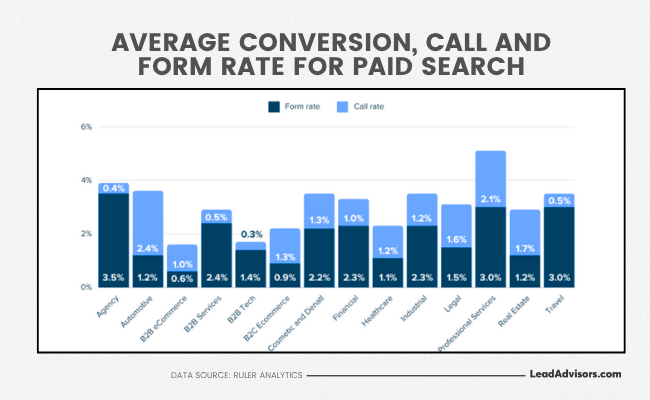
Meta, Google Search, TikTok, and YouTube are among the ways advertisers can efficiently reach high-intent prospects. Whether it’s a search ad for “best insurance near me” or a video on TikTok with a tap-to-call button, these campaigns consistently generate inbound calls that are more likely to convert. The trick? Connecting cutting-edge creatives with seamless call flow that results in an instant lead transfer to your rep.
Affiliate Networks (Vetted Partners Only)
Connecting with affiliates is a good way to scale live transfers, especially in highly competitive industries such as insurance, B2B SaaS, and debt relief. These trusted partners manage the traffic, qualification, and hand-off, giving your sales staff more time to close. The catch here is quality control; make sure your partners follow your compliance standards by only routing qualified leads.
In the debt vertical specifically, pay-per-call affiliate networks are structured so the buyer only pays for transfers that meet stated criteria, minimum balance confirmed, state eligibility cleared, and intent established. This removes the volume-without-quality problem common in shared lead marketplaces. Vetted affiliate partners in this model are accountable to the criteria match rate, not just call volume.
SEO + Native Editorial Content
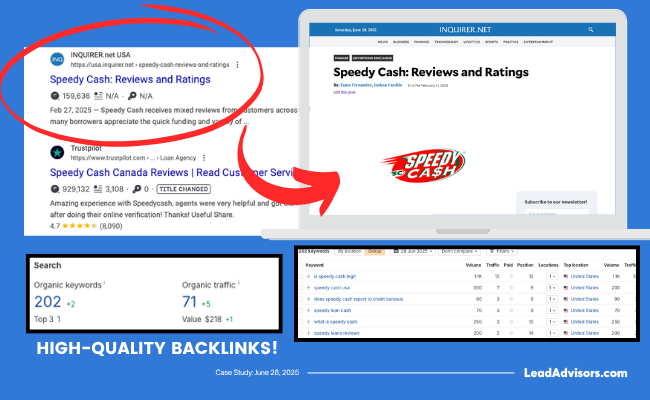
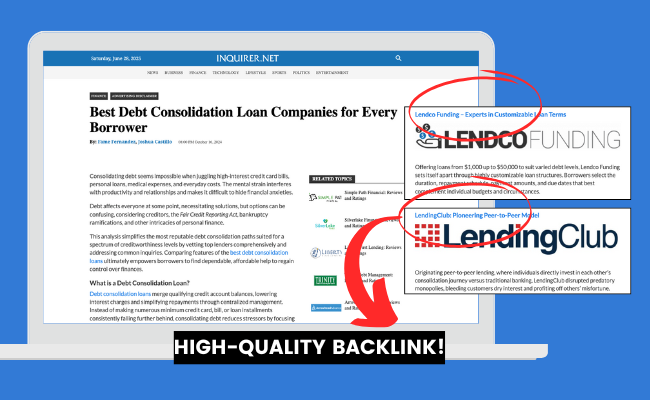
Search-optimized blog posts, review articles, and comparison pages are gold mines for live transfer leads. When someone is actively researching “best debt relief companies” or “top solar providers,” and lands on your affiliate editorial review, they’re already halfway sold. These warm internet leads are educated, pre-qualified, and ready to speak with a pro.
Direct Mail → Phone Call → Transfer
Direct mail is not dead, especially in industries where trust is paramount. Mailers offering strong offers, a toll-free phone number, and urgency-infused language spur recipients to pick up the phone. Once on the line, they are qualified and transferred live to your sales centers. This channel is especially successful in insurance, mortgage, and solicitation, as a personal touch still has value.
Radio/TV Ads → 800#

Those “Call now!” daytime radio or TV commercials can generate a deluge of calls, especially for urgent or emotional services like addiction treatment, legal claims, or security systems. When the caller dials that 800 number, they’re routed through a call center, prescreened, and transferred to the correct agent. This channel is a good fit for older demographics or groups less likely to click on a digital ad.
Email & SMS Campaigns
Re-engaging leads from previous funnels? Focused email and SMS campaigns, complete with a strong CTA (something like “Call now for your free quote” or “Speak with an agent today”), can rekindle those contacts. When done right, they can generate quick wins from customers already familiar with your brand.
Live Transfer Campaign Setup: What You Control
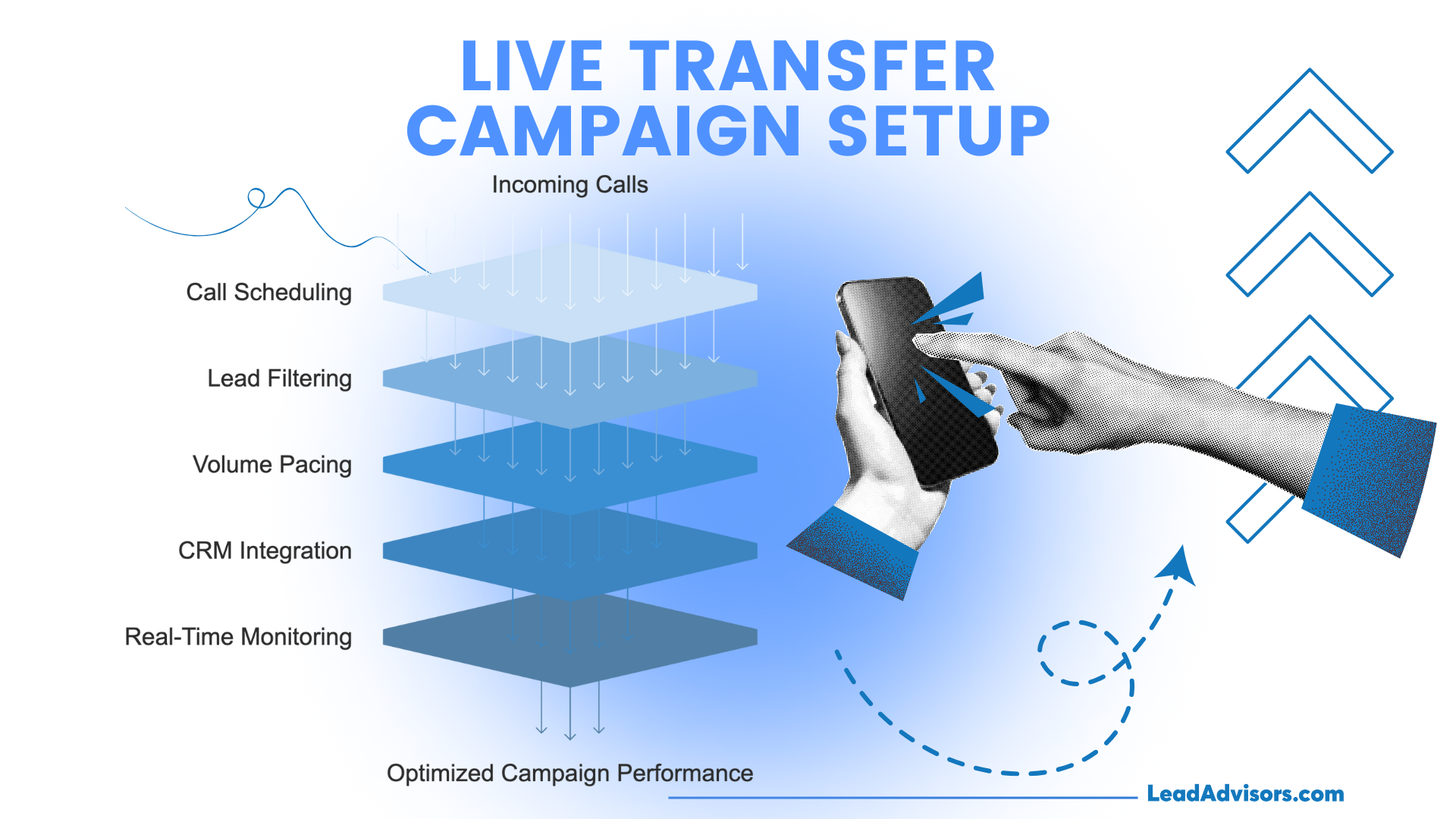
Running a live transfer campaign means gaining control. You can refine everything from the timing of calls to the quality of the leads to reflect your team’s working pattern and conversion targets.
Here’s what you can manage on your end:
- Call Scheduling
You can choose when calls come in based on your team’s availability. You can also control by time zone, working hours, and rep shift schedules to avoid missed opportunities.
Speed-to-connect note: Speed-to-connect, the time from lead intent to live agent conversation, is one of the most predictive metrics in transfer campaign performance. Contacts made within five minutes of a prospect showing interest convert at rates up to 21 times higher than those reached after 30 minutes. Campaign scheduling should be built around minimizing this gap, not just around agent availability. - Lead Filtering
Target only the qualified leads that matter. Filter by location, income, debt amount, product type (like auto vs. health insurance), or other key criteria. - Volume Pacing
Decide how many live transfers you want per hour or day. Run a slow drip for consistency, or a high-volume blitz to hit aggressive sales targets. - CRM Integration
Automatically sync every transfer lead to your CRM. Trigger workflows like scoring, tagging, segmentation, and automated follow-up tasks. - Real-Time Dashboards
Track real-time performance, call activity, conversions, agent response times, and other metrics, so you can optimize during campaigns.
How LeadAdvisors Structures a Managed Live Transfer Campaign
Most live transfer vendors are accountable to one metric: transfer volume. LeadAdvisors is accountable to contact rate and qualified transfer outcomes. That is the structural difference between a vendor relationship and a managed campaign.
The BPO Contact Strategy Campaign model works like this: the client provides the lead data or the campaign criteria.
LeadAdvisors provides the dialing agents, the pre-qualification scripting, the multi-channel warm-up layer, SMS pre-touch, email confirmation, chat AI follow-up, the QA infrastructure, and the daily reporting. The campaign is managed end-to-end, including supervisor coverage and a feedback loop between the dialing floor and the sales floor.
For operators comparing this to a standard transfer vendor, the difference shows up in the numbers. Unmanaged outbound campaigns in the debt and financial services space run at 8% to 14% right-party contact rate. Managed campaigns with the full infrastructure layer consistently reach 30% and above.
Run a 7-agent pilot for 30 days. See the contact rate move before committing.
Compliance, QA & Legal Best Practices
Maintaining compliant, secure, and high-quality campaigns protects your business and keeps you on the right side of the law.
TCPA Compliance (Inbound & Outbound Transfers)
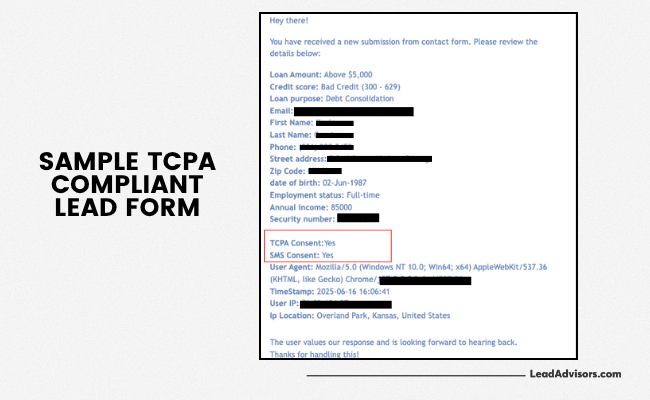
Consumer approval is required before your team gets a live call. This involves ensuring that you have legitimate opt-in verbiage, logging proof of opt-in (IP and timestamp), and frequently auditing your lead sources. Whether you’re calling out or accepting transfers, TCPA violations can add up to thousands of dollars per call.
Call Recording Laws by State
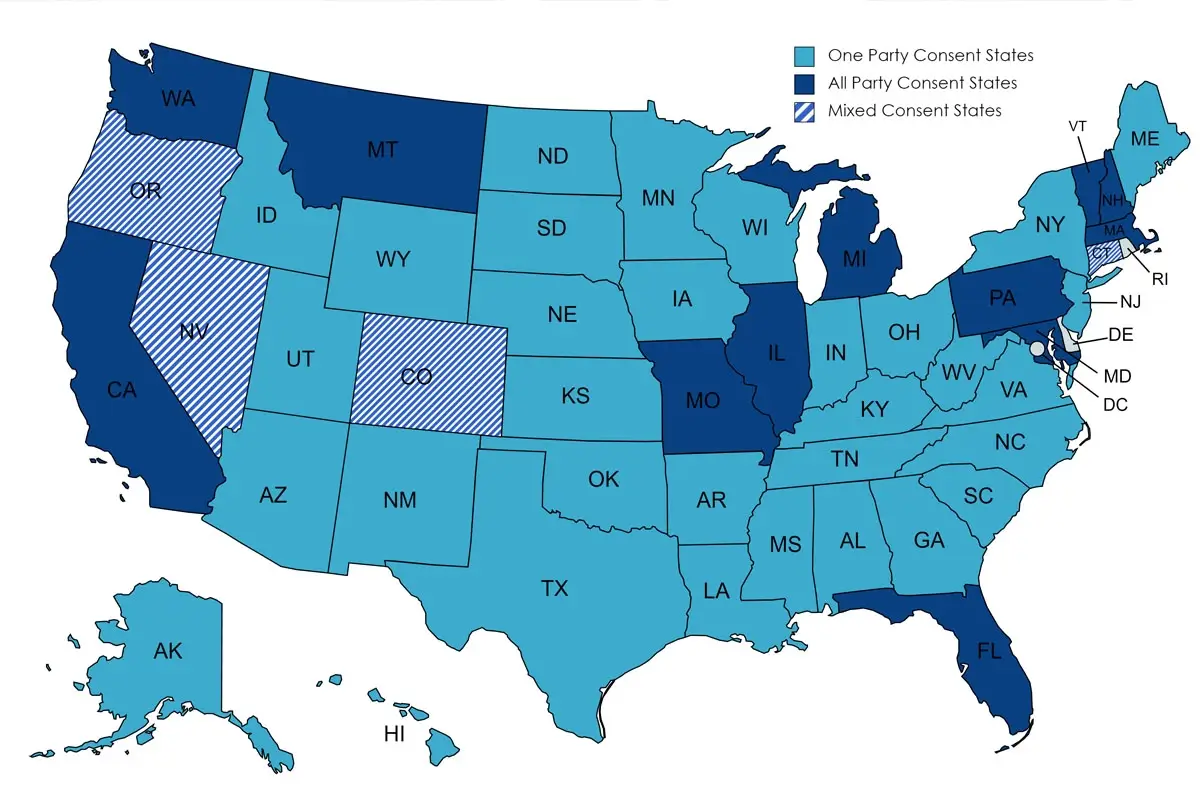
Some states require one-party consent, while others require consent from all parties involved. For live transfers you are recording, your script must include the most accurate legal language for the caller’s state. It’s one line, but it can save you a legal headache later.
Quality Monitoring with Tools like QAcall
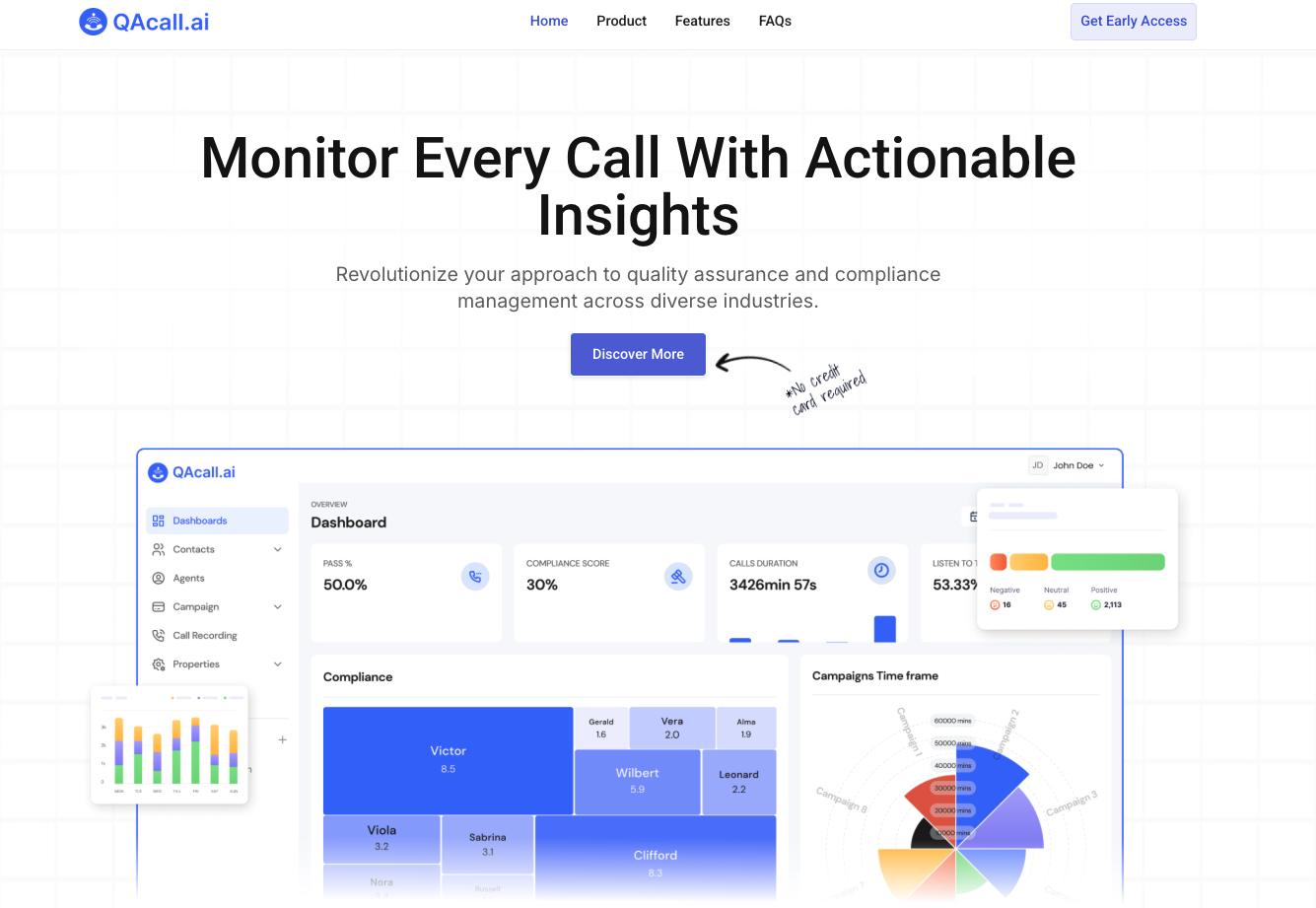
Implementing a structured call center quality assurance program is what separates campaigns that improve over time from those that plateau. QAcall and similar platforms help ensure your live transfers stay compliant and effective. Look for:
- Sentiment scoring to catch frustrated or disengaged callers
- Missed script detection to identify where agents skip required phrasing
- Call tagging by agent or outcome to track trends
- CRM syncing to log, route, and segment leads instantly
Data Security & Industry Compliance (PII, HIPAA)
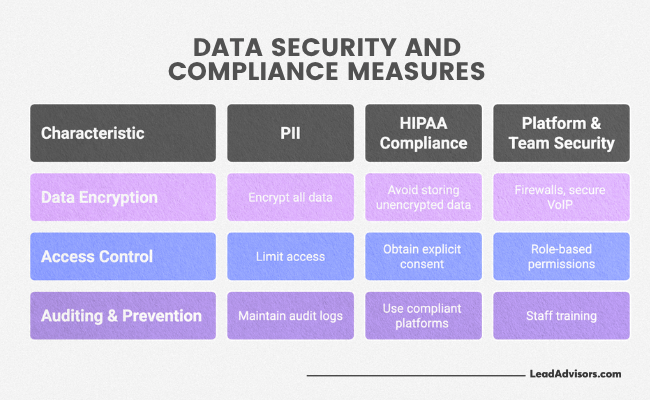
If you deal with sensitive information, such as Social Security numbers, health information, or payment information, you want your systems to be mission-critical. That may involve the encryption of lead data, permission limiting exclusively to approved team members, and compliance with HIPAA regulations if you work in insurance or healthcare.
Pricing Models & Conversion Benchmarks
When you purchase live transfer leads, not all price models are the same. The right setup for you will be determined by what you want to accomplish, the number of people on your team, and your comfort level handling live inbound phone calls.
| Pricing Model | Pros | Considerations |
| Per Transfer | Pay only when you get a qualified lead on the line | You’ll need clear filters to avoid unqualified or unready prospects |
| Per Minute | Lower cost to start; pay as you go | You risk paying for long, unproductive calls if the lead isn’t serious |
| Hybrid | Flexibility to scale and test | Works best if you set clear KPIs and conversion goals |
On average, live transfer campaigns convert between 15% to 30%, depending on the industry and lead quality. Tracking completion rate alongside contact rate and cost per qualified transfer gives operators the clearest picture of real ROI. That’s a major upgrade from the 3–5% average you’ll see with traditional internet leads or shared form fills.
With great scripts, responsive agents, and good filters, you can absolutely hit, or even exceed, that range.
Running a sales floor of 10 or more agents? A managed live transfer campaign is structured differently from a standard vendor relationship, with a pre-qualification layer, QA infrastructure, daily feedback loops, and multi-channel warm-up included. See how a managed campaign is built.
Recommended Tools for Running Live Transfer Campaigns
You could have the best live transfer leads in the world, but if you don’t have the infrastructure in place to funnel, route, and track them, you could fall right on your face (quickly!). Here’s a toolkit to run smoother campaigns, keep your team sharp, and get the most out of every call.
| Tool Type | Recommended Software | Purpose |
| QA & Compliance | QAcall, HeyCX | Track call quality, record phone calls, and maintain TCPA/state compliance. |
| CRM | HubSpot, Salesforce | Track lead source, outcomes, follow-up steps, and deal progress |
| Call Routing & Dialers | Ringba, Convoso, Five9, HeyCX | Real-time lead routing, scripting, rep handoffs, and load balancing |
| Call Scripting | HeyCX | Create campaign-specific scripts and guide reps with real-time workflows |
| Analytics | Google Analytics, HeyCX | Track agent performance, call outcomes, and campaign-level insights |
| Automation | Zapier, Twilio, HeyCX API | Automate lead-to-call handoffs, tagging, notifications, and CRM syncs |
How to Get Started (Step-by-Step)
Operating a live transfer lead campaign may sound complicated, but if you follow the right steps, you can make it work, even if you are starting from scratch. Here’s how to construct a campaign that puts you in touch with qualified prospects in real time.
1. Identify Your Audience and Intent Triggers
Begin by defining who you want to talk to. Are they homeowners with high electric bills or individuals who are actively looking for health insurance? Your campaign should center around that ideal customer profile, and the actions they take that indicate they’re ready to buy (submitting a form, clicking a CTA, dialing an 800 number).
2. Choose Your Qualification Criteria
Not all leads should reach your sales team. Decide which filters are important: location, income level, credit score, amount of debt, and type of insurance needed. Clear qualifiers mean only the highest-intent prospects are passed to your agents.
3. Set Call Times, Pacing, and Lead Filters
Define when and how often you want live calls routed to your team. Do you want a few inbound transfers trickling in during slow hours or a fast burst during peak sales windows? You control pacing, availability, and lead filters to match your team’s workload and goals.
4. Integrate Your CRM and Call System
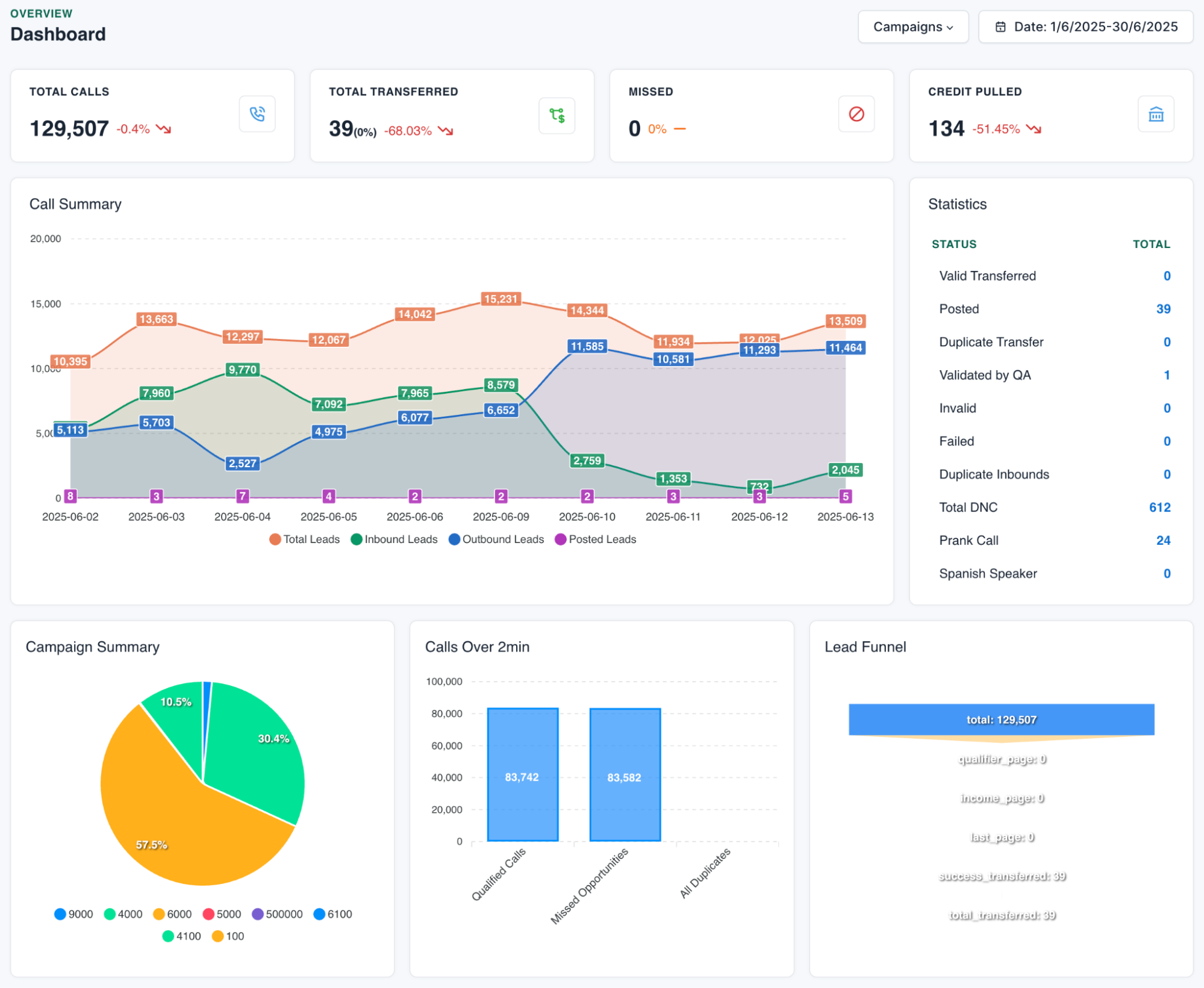
Integrate your CRM (HubSpot, Salesforce) with your dialer or call platform (Ringba or HeyCX). That way, you can monitor each lead by tagged campaign and automate follow-up to avoid dropping the ball.
5. Launch Your Campaign
When you’ve got your filters, scripts, reps, and routing rules all in place, it’s time to go live. Ready your sales reps, fire up your QA tools, and let your team know exactly how a successful transfer looks.
6. Monitor and Optimize
Watch the performance from day one. Review call recordings, score leads directly in your CRM, tag call outcomes, and adjust scripts as necessary. Leverage QA tools to identify trends and consistently iterate on how your team processes live transfer leads.
Live transfer leads offer speed, efficiency, and real-time interaction with prospects who actually want to speak to you. Done right, they simplify your sales process, save your sales reps time, and put you in front of the exact people seeking what you offer.
But success with live transfers requires the right tools, clear qualification frameworks, well-trained reps, and a campaign strategy built for real-time impact.
Schedule a Free Live Transfer Strategy Session