In a high-pressure call center, your sales pipeline is your operational heartbeat. While standard sales reps manage a few deals, call centers handle hundreds of concurrent interactions, requiring a move from reactive troubleshooting to predictive revenue management.
A healthy pipeline answers critical questions:
Capacity Planning: Do we have the headcount for a 5-minute response time?
Agent Velocity: Who is moving leads to “Proposal” fastest?
To achieve this level of efficiency, many firms choose to outsource to the Philippines, leveraging a talent pool known for high “Cognitive Empathy” and CRM literacy. This strategic move ensures your pipeline remains fluid, reducing “Stage Age” and maximizing speed-to-lead for superior conversion rates.

What is Sales Pipeline Management?

Beyond just tracking deals, active pipeline management serves as a diagnostic tool for your business’s health. By moving from a static view to an active management style, your leadership team can execute these higher-level strategic measures:
| Strategic Measure | Pipeline Data Utilized | Operational Impact |
| Precision Forecasting | Historical conversion rates per stage. | Stabilizes cash flow and justifies marketing spend. |
| Friction Identification | Average time spent in the “Qualification” stage. | Pinpoints where scripts or IVR systems are failing. |
| Performance Coaching | Individual agent “stagnation” rates. | Moves away from generic training to targeted intervention. |
Pro Insight: In a call center, the “Health” of your pipeline is directly tied to speed-to-lead. A lead that sits in the “New” stage for more than an hour has a 10x lower conversion rate. Your pipeline management software should trigger automated alerts the moment a deal exceeds its “Stage Age” limit.
What Happens if a Company Doesn’t Have a Pipeline?
Having no sales channel puts your business at risk. Specifically, your customer service representatives may get in the way of your employees and affect the customer satisfaction score. They might act against policy and frustrate customers’ call center experience.
An organized approach and effective call center management allow you to resolve these issues before they worsen. Also, it enables you to streamline the sales process, have a system for organizing customer inquiries, and track your key performance indicators.
Better returns, higher agent productivity, customer satisfaction ratings, and conversion rates.
Efficient customer service channels make call center agent training easier. Specifically, it informs call center reps on their knowledge base of performing well in their roles and using positive language for excellent customer service. It increases call center agent performance.
Overall, a healthy sales channel and refining call center best practices let you find ways to improve your company and call center service. Your business always has room to grow. The channel helps you find more!
Sales Pipeline vs. Sales Funnel
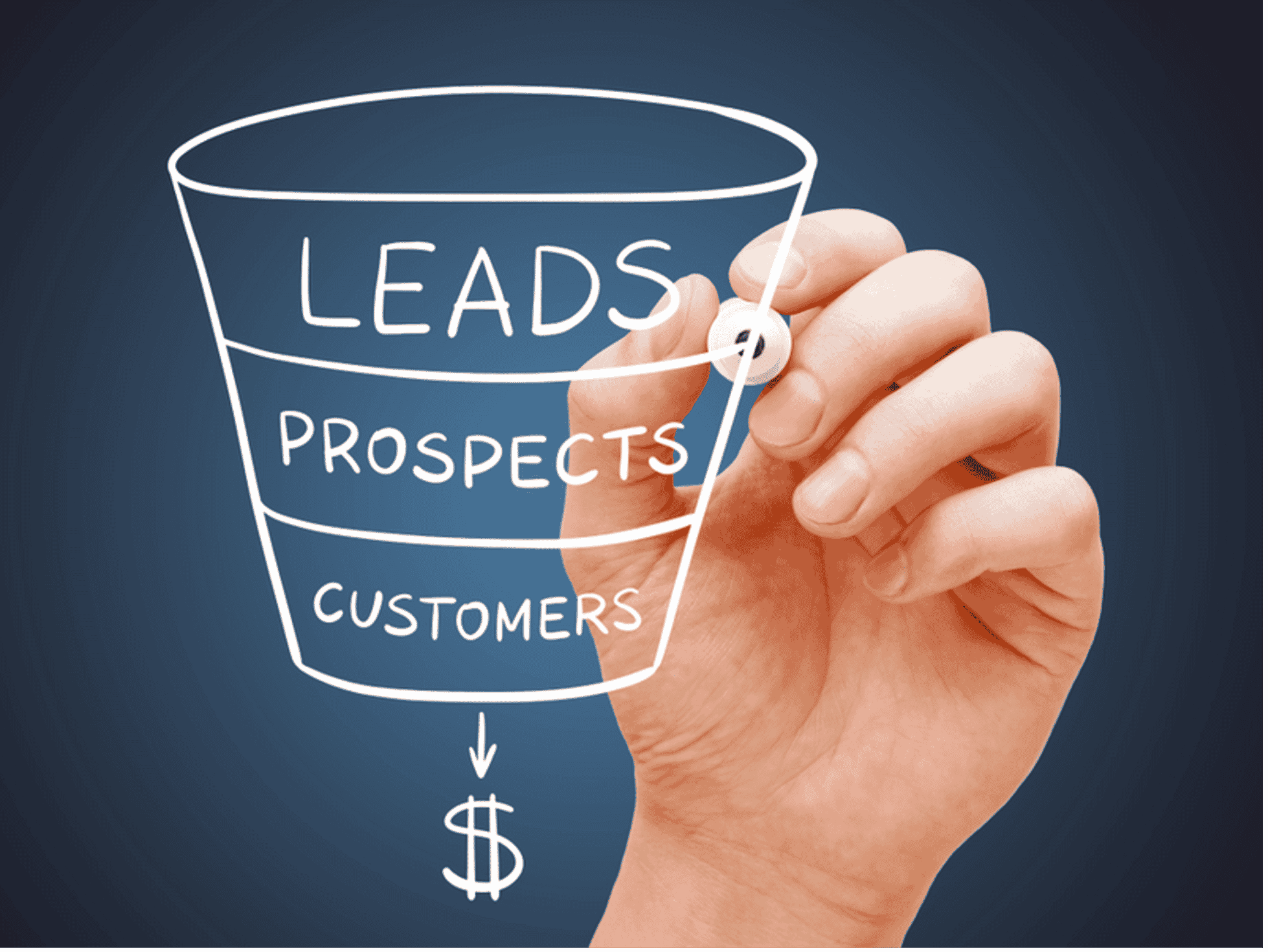
It is a common mistake to use “Sales Funnel” and “Sales Pipeline” interchangeably. However, in a call center environment, understanding the nuance between them is the key to optimizing Average Handle Time (AHT) and Conversion Rates.
The Sales Funnel (The “Why”): This represents the customer’s psychological journey. It tracks the external perspective—how a lead moves from being a stranger to a brand advocate.
The Sales Pipeline (The “How”): This represents the call center’s internal workflow. It tracks the tangible actions your agents take (the calls, the emails, the demos) to push that lead through the funnel.
Strategic Alignment: Mapping the Journey
To maximize ROI, your call center operations must align the “V-shaped” funnel with your linear pipeline stages.
| Customer Stage (Funnel) | Agent Action (Pipeline) | Call Center Priority |
| Awareness | Lead Generation / Inbound Intake | Speed-to-Lead: Reducing wait times to capture initial interest. |
| Interest | Qualification | Discovery: Using scripts to identify pain points and budget. |
| Desire | Consultation & Proposal | Value Proposition: Using empathy and product knowledge to solve problems. |
| Action | Sale / Closing | Efficiency: Handling objections and streamlining the payment/sign-up process. |
The 2026 Perspective: In modern call center management, the “Funnel” tells you where your marketing spend is working, but the “Pipeline” tells you where your agent training is failing. If you have a high volume of leads in the “Interest” stage (Funnel) that never move to “Consultation” (Pipeline), the issue isn’t your product—it’s your initial outreach strategy.
Why the Distinction Matters for Your Data
A business gets a customer from Point A to B by ensuring the Pipeline actions are intense enough to prevent “leakage” in the Funnel. Without a defined pipeline, your call center agents are just “taking calls” rather than “managing deals.”
Stages of a Sales Pipeline
A call center pipeline focuses on actionable movement. While you may choose to outsource to the Philippines for cost-efficiency, the following five stages remain the universal blueprint for conversion:
Lead Generation & Intake: This is where marketing meets operations. In 2026, Agentic AI often handles the initial “Lead Scraping” and SMS outreach to ensure your human agents only touch warm prospects.
Automated Qualification: Beyond simple surveys, this stage now uses Intent Scoring. By analyzing customer data and initial interactions, you can verify if a lead has the authority and budget before an agent picks up the phone.
High-Empathy Consultation: This is the “Human Phase.” Agents use the knowledge base to address specific pain points. The goal is to move from “answering questions” to “recommending solutions.”
Strategic Proposal: More than just a price quote, this stage involves delivering personalized marketing content. The pipeline velocity here depends on how quickly your CRM generates a contract after the call.
Closing & Retention: The process doesn’t end at the “Buy” button. Modern pipelines include a “Post-Sale” stage to cement customer loyalty and trigger upsell opportunities, turning single transactions into long-term revenue.
Operational Note: Your industry may require sub-stages like “Technical Review” or “Compliance Check.” The best pipelines are modular—add or remove steps to match your specific sales cycle.
What is Pipeline Management for a Call Center

We will focus on how your call centers should handle sales channels and call center management practices.
Contact center agents’ role is mainly in the Consultation stage. After all, they are the contact centers that speak one-on-one on phone calls with your clients and apply all the knowledge base they learned from call center training for positive customer interaction and customer satisfaction.
- Call center agents may serve as your marketing teams.
- They listen to customer concerns.
- The agents may also conduct surveys to understand clients further.
You must get the best customer service agents for your company. Also, you have to guide your call centers in handling sales. Here’s how to do it.
Hiring
In a high-volume sales environment, “general customer service skills” are no longer enough. To maintain a healthy pipeline, you need agents who can navigate the tension between empathy and closing. When we analyzed high-performing outbound teams, we found a direct correlation between specific psychological traits and pipeline movement. For example, agents who scored in the top 10% for Cognitive Empathy—the ability to understand a caller’s logic, not just their feelings—moved leads through the “Consultation” phase 20% faster than those with high “Affective Empathy” (who often got stuck in long, unproductive conversations).
Key Traits to Screen For:
The “Next-Step” Mentality: Does the applicant naturally move a conversation toward a resolution, or do they wait for the caller to lead?
Micro-Resilience: The ability to maintain “Positive Language” scores immediately following a “Hard Refusal.”
CRM Literacy: Pipeline health depends on data integrity. If an agent views “logging the call” as an afterthought, your sales forecasts will be perpetually inaccurate.
Call Center Team Training

Generic training is a pipeline killer. If your agents are simply reading scripts, they aren’t managing a pipeline; they are acting as an IVR with a pulse.
The “War Story” Insight: We recently observed a call center where 40% of leads were “stalling” at the Proposal stage. The issue wasn’t the price; it was that agents were failing to handle the “Silence Gap” after quoting. By implementing Scenario-Based Coaching—where agents practice the 30 seconds after the price reveal—the team saw a 12% increase in immediate closing rates within one month.
The “Pipeline Integrity” Audit Checklist
Use this monthly checklist to ensure your call center isn’t just “busy,” but is actually productive.
[ ] The 24-Hour Lead Audit: Are there any “New” leads that haven’t been touched in over 24 hours? (Target: 0)
[ ] The Stage Age Test: Identify leads that have been in “Consultation” for more than 2x your average sales cycle. Are these real opportunities or “Pipeline Fluff”?
[ ] Sentiment/Outcome Alignment: Compare call recordings labeled “Positive Interaction” against their actual pipeline movement. Are agents being “too nice” but failing to ask for the sale?
[ ] Data Hygiene Check: Verify that “Next Follow-up Dates” are set for 100% of open deals. A deal without a date is a deal that’s already dead.
[ ] Script-to-Stage Mapping: Does your script change based on the pipeline stage? (e.g., The “Qualification” script should focus on pain, while the “Consultation” script focuses on the solution.)
Expert Tip: Move your training away from “How to use the software” and toward “How to use the software to move the deal.” An agent who understands that a missing phone number in the CRM stops a lead from moving to the next stage is an agent who maintains your company’s profitability.
Motivating
During work, you must maintain a positive presence and employee engagement. Be a social leader who promotes optimism and change.
Ensure everyone follows the same customer service goals and blueprints of customer satisfaction metrics.
Also, look out for small details. Yet, you should avoid micromanaging workers. That way, they’ll gain the confidence to serve customers.
If you find issues with an agent, give constructive feedback on their call center performance.
Moreover, develop a coaching culture. You may want to start a buddy system, so workers learn from each other for better customer interactions.
Call Center Management

As we said, you should let employees do their work. Yet, you must have a system for determining priorities. It will help your call centers provide a contact center solution, resolve issues quickly, and avoid negative customer experiences.
What’s more, this could help them adapt to unexpected situations in handling incoming calls. Ensure you have enough workers during busy hours for an outbound and inbound call center. Figure out how to assign your call centers efficiently.
Form a quality assurance team to maintain employee performance if you’d like. The agents might find it easier to speak with the Q&A team. As a result, Q&A can help them better.
Customer Satisfaction
Your company must have clear goals for customer service. Moreover, call center agents should uphold the same ones at work. That way, you get the same level of performance throughout the workforce.
Agents must always treat customers with respect. They must keep a calm voice when speaking to them. Customers shouldn’t think the agent is rushing the call for effective customer interactions and cementing customer loyalty.
Let workers access the caller’s history and customer information. It helps them find solutions for the client. As the client speaks, the agent should write down their concerns.
The agents should understand how clients feel. That way, they could find the best solution. If there has been a mistake, they must briefly apologize. Then, they should quickly resolve the issue.
Why a Managed Pipeline is Non-Negotiable
The importance of a sales pipeline in call center operations cannot be overstated. It is the bridge between raw leads and realized revenue. For companies that choose to outsource to the Philippines, a well-defined pipeline ensures that remote teams remain perfectly aligned with onshore goals.
1. Operational Precision & Productivity
A pipeline provides Structured Lead Management, allowing agents to prioritize high-intent prospects. This eliminates “efficiency leaks” by ensuring agents don’t waste time on unqualified leads, leading to Better Resource Allocation and a consistent, repeatable sales process.
2. Predictive Growth & Data Insights
With a visible pipeline, managers gain Data-Driven Insights to form accurate Sales Forecasts. Understanding where leads sit in the cycle allows for proactive planning, ensuring the team is never caught off-guard by volume fluctuations or sudden revenue dips.
3. Enhanced Customer Lifecycle
A managed pipeline ensures no lead is “left behind.” By facilitating Personalized Communication based on the lead’s current stage, call centers can improve the Customer Experience, driving both immediate conversions and Long-term Customer Relationships.
The Bottom Line: An effective pipeline transforms a call center from a “cost center” into a “growth engine” by fostering collaboration and ensuring every lead is nurtured with intent.
Designing Your Custom Pipeline: Strategy Meets Tech

Every business requires a unique pipeline structure. To build yours, start with Discovery Questions that define your workflow:
Targeting: Who is the ideal buyer, and what is their “trigger” to buy?
Value Prop: What specific pain point does my call center resolve?
Competitive Edge: Why should they stay on the line with my agent?
Cadence: How often are we following up before a lead is considered “stale”?
Developing a Buyer Persona is the best way to answer these. Once you understand who you are calling, you can choose the tech stack to reach them. Many companies that outsource to the Philippines prefer these tools because they facilitate seamless, real-time collaboration across time zones.
The 2026 Tech Stack: Leveraging AI & Automation
In the modern call center, your CRM must be an active participant. Here is how the top platforms have evolved:
HubSpot (Sales Hub AI): Features Predictive Lead Scoring, telling agents exactly which lead has the highest “Propensity to Buy” today.
Pipedrive (AI Assistant): Focuses on Automation Workflows, automatically triggering follow-up emails the moment a call ends.
Freshsales (Neo Admin): Uses Real-time Sentiment Analysis to analyze a caller’s tone and automatically move a lead from “Consultation” to “Proposal.”
Outreach.io: Pioneered the AI BDR, using autonomous bots to handle “Lead Generation” before handing off qualified prospects to human agents.
Bitrix24: A robust unified platform for teams that need heavy collaboration, file sharing, and project management alongside their CRM.
Key Metrics to Track
Regardless of the tool, your success depends on real-time data. Monitor these five KPIs to ensure pipeline health:
Lead Flow: New leads entering the pipeline monthly.
Deal Count: Total active opportunities.
Pipeline Value: The total projected revenue in your “active” stages.
Sales Velocity: How fast a lead moves from “New” to “Closed-Won.”
Average Deal Size: The average revenue generated per successful conversion.
The Sales Pipeline Review: Unclogging the Revenue Engine
Even the most optimized channels will eventually face bottlenecks. Markets shift, scripts get stale, and leads can stagnate. Regular reviews are required to ensure your team maintains high performance standards for outsourcing to the Philippines and consistent customer interactions.
Follow this 4-step framework to conduct a productive pipeline diagnostic:
Data Collection & Identification: Before the meeting, audit your CRM for “Zombie Leads”—deals that have exceeded their average stage time by 50%. List specific friction points, such as high drop-off rates during the “Consultation” phase.
Structured Agenda: Don’t just “talk shop.” Organize the review by pipeline stage. Start with Lead Intake and move toward Closing. This ensures you identify exactly where the “clog” is happening rather than generalizing team performance.
Collaborative Problem Solving: Present the data to your team and solicit feedback. Are leads failing to move because of price objections, or is it a lack of follow-up? Propose technical or script-based solutions based on these real-world insights.
Actionable Implementation: End the review with “Micro-Tips.” These are small, immediate changes—like a new opening line for cold calls or a specific follow-up email template—that agents can use the very next day to improve the customer experience.
Expert Tip: Conduct these reviews at two levels. A Team Review focuses on broad process improvements, while a 1-on-1 Review focuses on individual agent velocity and coaching.