You know the feeling. You have a fantastic CBD brand, but every time you go to scale, you run into a brick wall. Google and social media sites still consider the CBD niche a “policy minefield,” and the FDA is always waiting for you to make a wrong move regarding health claims. If you have felt the frustration of having a fantastic product that nobody can find, then you’re not alone.
That’s why the most savvy CBD marketers are abandoning the “ad-only” game and focusing on a more reliable way of growing your business: CBD SEO. In the following sections, I’ll reveal the way to dominate Google, achieve true authority, and make Google your most reliable sales source.
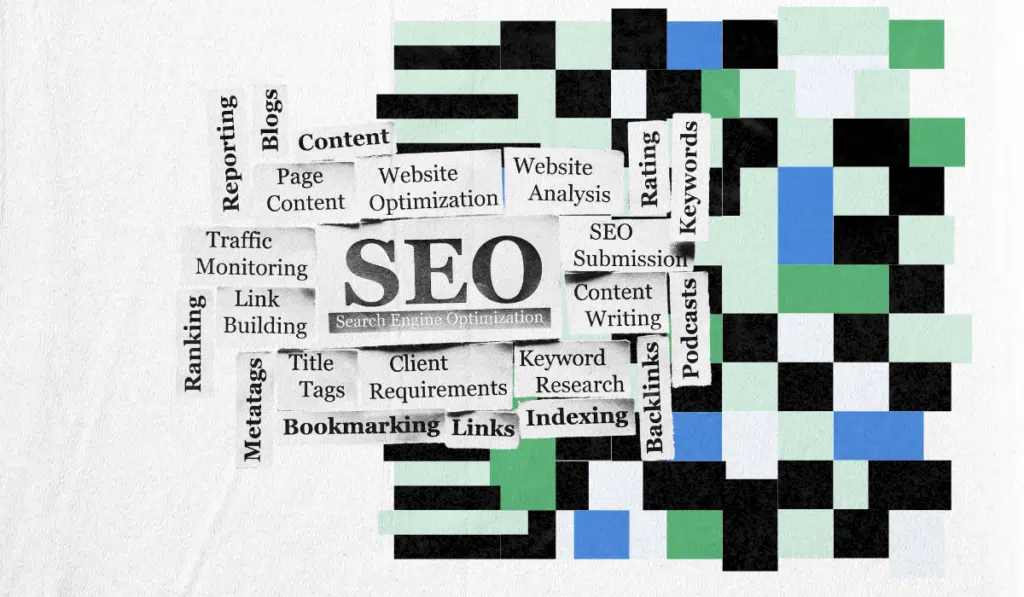
CBD SEO is the science of optimizing your website for hemp-related keywords, while respecting Google’s guidelines for “YMYL” (Your Money or Your Life) content, and FDA regulations regarding health claims. It’s based on the idea of establishing “Topical Authority” through medically proven content, technical health signals, and high-quality backlinks from health and legal sites.

What Is CBD SEO (and Why It Matters More Than Ever)
At its core, search engine optimization (SEO) is the process of refining your website’s content and online presence to ensure you make the first page on Google. So when we talk about CBD SEO, we’re taking the same basic concepts and applying them to the world of the cannabis industry.
For you, this means running the gauntlet of regulations and trying to outshine your competition. This is why many companies are turning to this route, as it is the most sustainable way to make sure you’re noticed without worrying about the threat of “being de-platformed.”
Unique Challenges in the CBD Space
If you’ve ever attempted to run a traditional cannabis marketing campaign, you already know the struggle is real. The major advertising channels, such as Google Ads and Meta, have notoriously tight restrictions, or outright bans, on promoting CBD products in any way, shape, or form. This means that search engine optimization for cannabis businesses is a requirement, not an optional luxury. If you can’t afford to buy the number one spot, you’d better be prepared to earn it.
And if you think the major advertising channels are difficult to navigate, you should try dealing with the FDA too. Want to use forbidden words like “relieves pain” or “treats anxiety”? That’s a warning letter from the FDA, quicker than you can hit publish.
And last but certainly not least, don’t forget that you’re a YMYL site, and that means that you’re subject to the highest level of scrutiny from Google regarding E-E-A-T (Experience, Expertise, Authoritativeness, and Trustworthiness). This is the real reason that a reputable CBD SEO firm exists in the first place: it’s all about finding a way to stay visible while staying compliant.
Why SEO Is the Safest Long-Term Growth Channel
Despite all the red tape, a well-designed CBD SEO strategy remains the most reliable way to grow your business. By securing the right cannabis keywords, you’re not only getting “traffic”; you’re getting people who are actively searching for solutions to their problems.
But the best part is, this kind of traffic doesn’t rely on ad policy changes or price fluctuations. By leveraging the power of compounding, you’re building a permanent source of traffic for your business. Meanwhile, your competitors are stuck playing a game of trial and error with untested and highly dangerous methods of dispensary marketing. Why not own the search engine results and play by the rules to provide real value to people seeking solutions to their problems?
CBD SEO vs. CBD Marketing
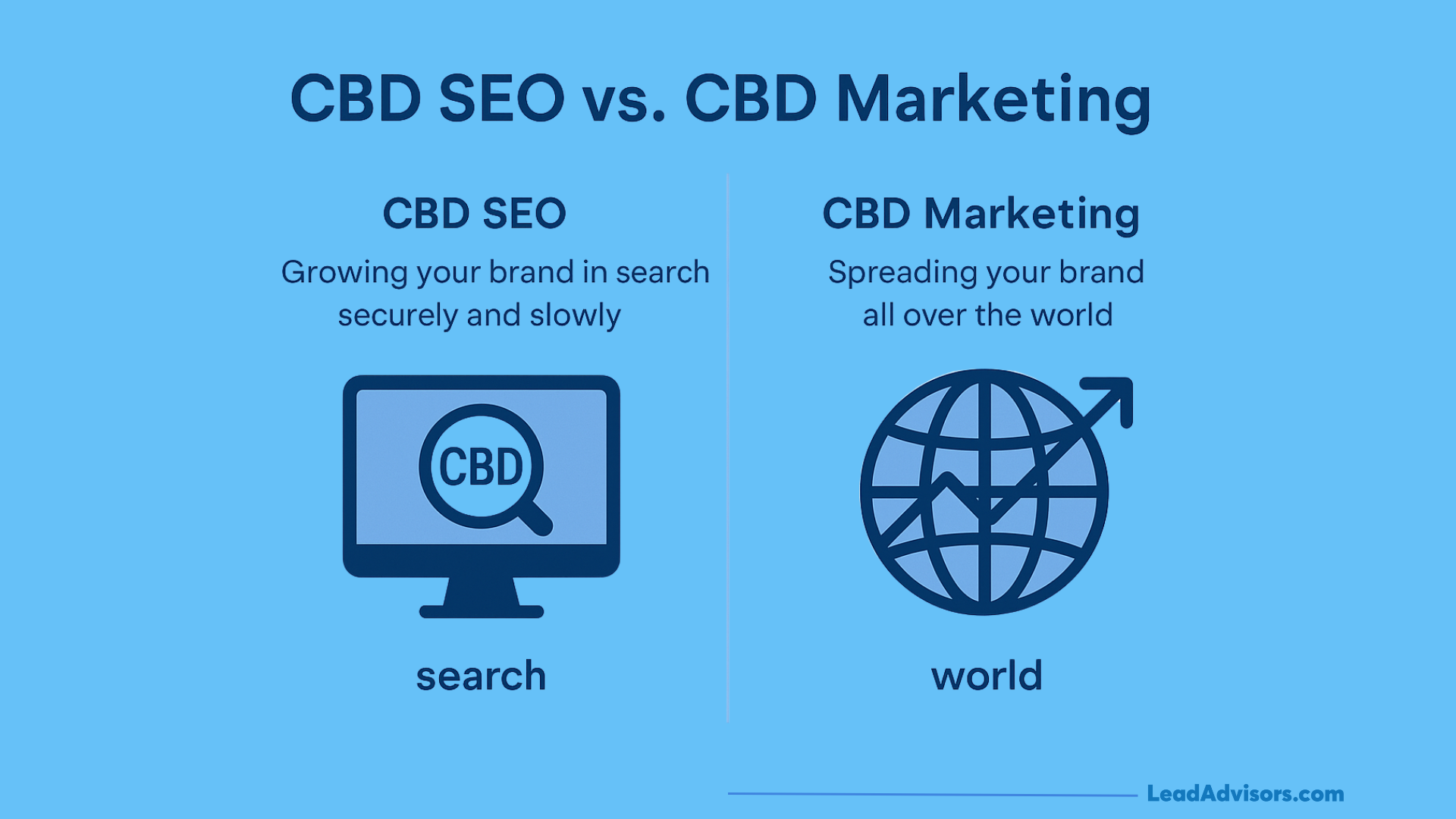
Marketing in the CBD space is akin to the personality and social life of your brand. It’s the “super set” that includes all the ways you go about building your brand, from social media to email marketing to influencer marketing to your brand’s unique story. Marketing is how you show up in the world. While it’s obviously important, it’s also the space in which CBD marketers have the hardest time.
On the flip side, CBD SEO is akin to your brand’s reputation and credibility in the eyes of Google or other search engines. It’s a much narrower and stricter “compliance first” space. While your marketing campaign may be designed to go viral, your CBD SEO campaign is designed to go stable. Often this is facilitated through a CBD SEO agency that understands how to navigate the space while checking every single box on Google’s technical list.
Why CBD Brands Are Choosing SEO Over Ads in 2026
You’ve probably noticed that traditional digital marketing channels are becoming a “policy minefield.” For example, while Google has expanded pilot programs for cannabis ads in countries like Canada, the US is a patchwork of laws and regulations as of 2026. This is why forward-thinking brands are changing their focus:
- CBD Marketing helps spread your brand awareness through lifestyle appeal and community building.
- CBD SEO helps grow your brand by targeting “high-intent” searchers, people seeking a particular solution, without risking a banned ad account.
The Role of E-E-A-T in Your Strategy
In 2026, Google’s E-E-A-T principle of Experience, Expertise, Authoritativeness, and Trustworthiness is the final arbiter. As a YMYL subject, Google will not list your site just because you have the keywords. To succeed, you need:
- Expert Authorship: Your content reviewed by experts in medicine or the industry.
- Real Experience: Your experiences that show you know your products inside and out.
- Transparency: Information about your products and third-party lab testing.
The Bottom Line: Marketing gets people to talk about you, but SEO for CBD companies gets them to find you when they are ready to buy.
Comparison: Marketing vs. SEO for Your Brand
| Focus Area | CBD Marketing | CBD SEO |
| Main Goal | Awareness & Engagement | Ranking & Intent Capture |
| Risk Level | High (Platform bans/Ads) | Low (When compliance-first) |
| Longevity | Short-term (Feed-based) | Long-term (Search-based) |
| Key Metric | Reach & Likes | Organic Traffic & Keyword Rank |
For a non-SEO-related strategy, see our Ultimate CBD Marketing Guide.
Building a Compliant CBD SEO Foundation
When it comes to ranking a CBD website in 2026, you can’t simply write “good” content. Google is looking for content that is not only medically credible and responsible but also safe. Your Money or Your Life (YMYL) is a type of content that has the highest safety and accuracy requirements.
If you want to succeed and outrank your competition, you’d better have a website that screams “trust” at every turn. This includes the people who write your content and the code running in the background.
a. E-E-A-T and YMYL Requirements
E-E-A-T (Experience, Expertise, Authoritativeness, and Trustworthiness) is what Google uses to rate your brand. For SEO for CBD oil, this isn’t just advice; this is your survival guide.
Here’s how to build your high-trust profile:
- Showcase Real Experience: Google now values first-hand experiences. Don’t just tell people your product works; show them. I have found that creating “What We Tested” sections with your own images of the product unboxing or oil consistency provides a huge trust boost.
- Add Medical Reviewers: Top-ranking CBD oil sites don’t just have writers; they have reviewers. Having a medical professional fact-check your content is one of the biggest trust signals you can have.
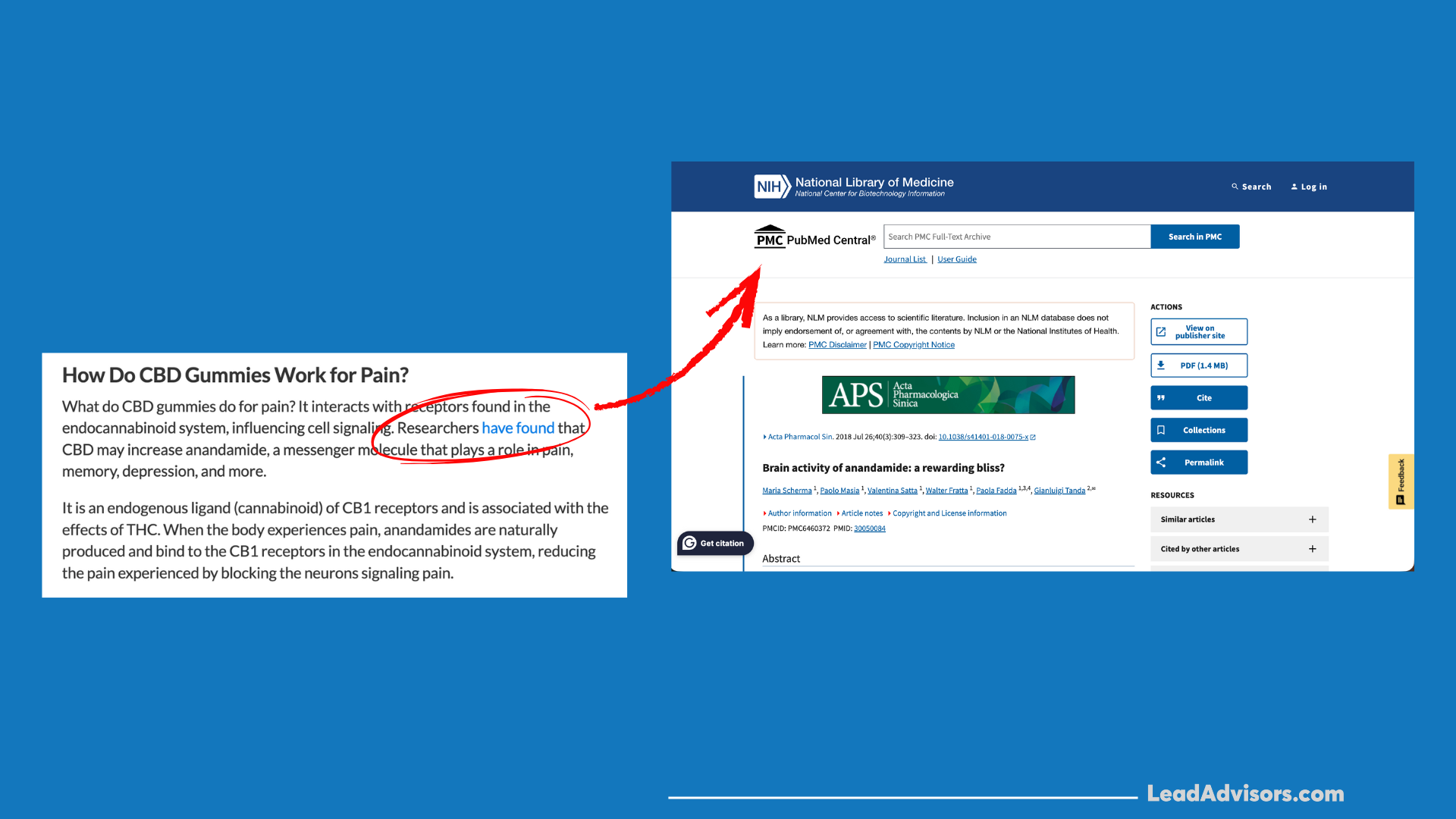
- Use Authoritative Citations: Every time you write about a benefit, you should have a link to a PubMed article, NIH article, or peer-reviewed article on .edu or .gov sites.
Implement Advanced Schema: Use MedicalWebPage, ReviewedBy, and Person schema to tell Google exactly who created and reviewed your content. This “talks” directly to Google’s algorithm and ensures your expertise is recognized.
b. Legal & Technical Setup
While “content is king,” your technical foundation is the king’s foundation. If your site looks “sleazy” or insecure, Google (and your customers) will not take you seriously.
- SSL/HTTPS is Non-Negotiable: A secure site is a basic trust factor. Without it, you’ll never rank on any competitive CBD SEO keywords.
- Cookie Consent & Legal Disclaimers: Transparency is the soul of the CBD website seo. You’ll want to have accessible links to your Privacy Policy, Shipping/Refund Policy, and a prominent FDA disclaimer on each page.
- Avoid “Medical Claim” Traps: This is where a great deal of CBD marketers go wrong. I recently audited a website that saw 50% of its traffic disappear because its meta tags promised a “cure” for insomnia. Be sure to keep your phrasing safe: “may support,” “promotes,” “aids,” etc.
- Make Legal Pages Crawlable: Don’t hide your Terms and Conditions from Google’s spiders. Ensure they are crawled so Google knows you’re a legitimate business that plays by the rules.
Summary Checklist: Is Your Foundation Solid?
| Trust Factor | Why it Matters | Action Item |
| Bylines | Proves a human wrote it | Add photos and bios for all authors. |
| Reviewer Schema | Proves it’s factually safe | Tag your medical reviewers in the code. |
| FDA Disclaimer | Legal compliance | Place in the footer of every page. |
| Original Media | Proves “Experience” | Swap stock photos for real product shots. |
Keyword Research for CBD SEO
If there’s one thing that can make or break your CBD SEO strategy, it’s keyword research. In a space where everyone’s competing for a slice of a highly regulated pie, the key is to choose keywords that are more about reaching people who are actually seeking help, not just people who are clicking on marketing gimmicks.
This is where you can actually outsmart the “big players.” While they’re spending millions of dollars on generic keywords, you can win the game with niche keywords.
a. Target Long-Tail and Informational Keywords
But let’s be realistic: your customers aren’t necessarily Googling “CBD oil” and buying the first thing they come across. What they’re doing is on a journey. What they’re asking is:
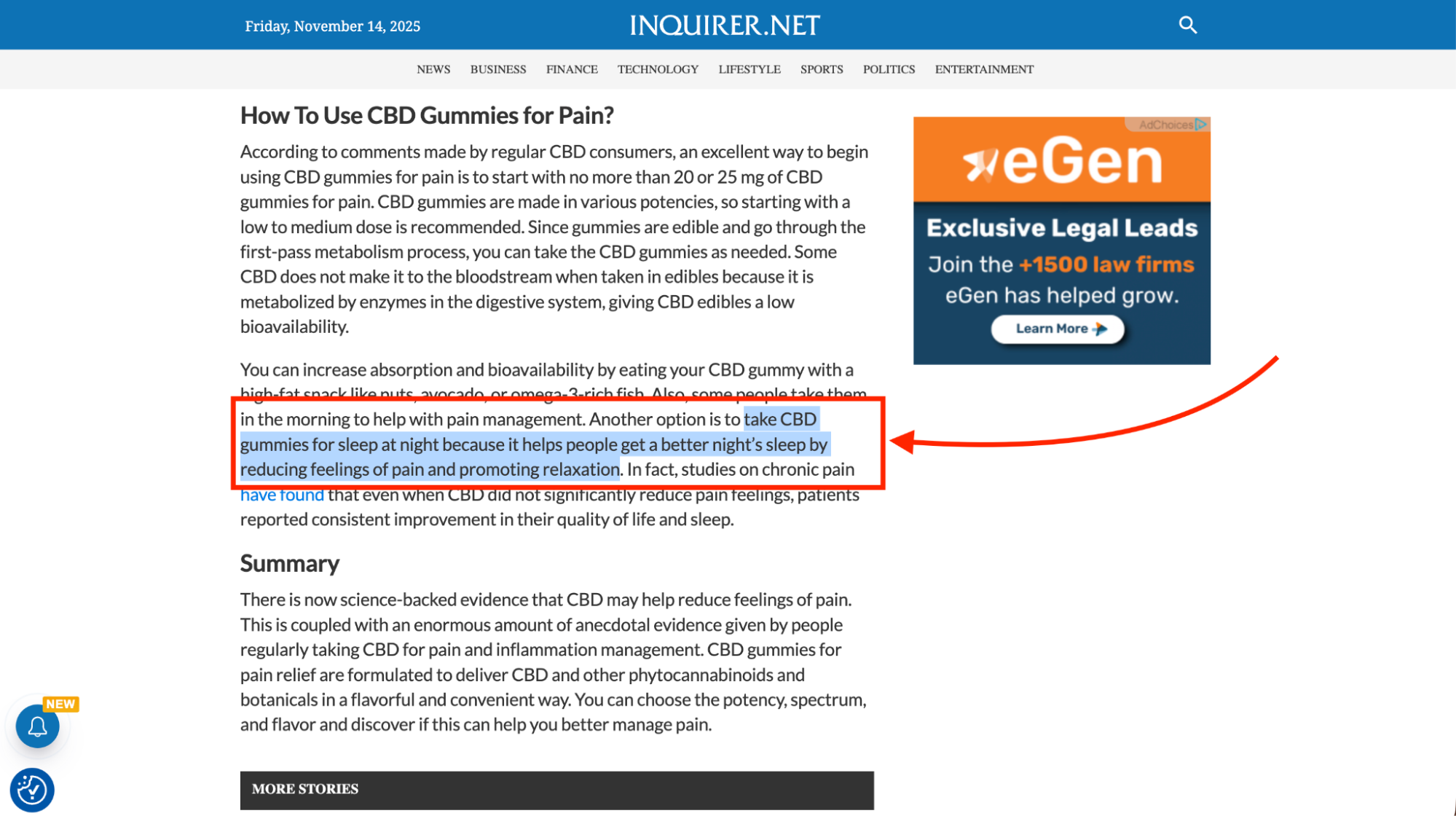
- “best CBD gummies for beginners”
- “CBD isolate vs full-spectrum differences.”
- “hemp topical for joint recovery.”
These are your friends. These are the keywords you want to be targeting. Why? Because they’re easier to rank for, and the audience is much more qualified. Let me put it this way: a customer looking for “CBD” is a casual shopper. But a customer looking for “how to dose CBD oil for sleep” is a shopper with a need.
Pro Tip: When I’m looking for keywords for CBD oil products, I start with tools like Ahrefs or Semrush. But then I also verify those keywords on places like Reddit or Quora. Seeing the exact language people use to describe their problems with wellness is like getting a form of “information gain” on your competitors, who only use tools. This is the secret to finding the best CBD keywords before they’re too competitive.
b. Map Keywords by Intent
After you have your list of cannabis keywords, you have to put them in the right place. Google wants to see that the content on your page aligns with the reason the user was searching for the content in the first place.
You can use this simple framework for your SEO plan for CBD companies:
| Intent Type | Example Query | Where it Goes |
| Informational | “What is broad-spectrum CBD?” | Educational Blog Posts |
| Commercial | “CBD sleep products reviews” | Comparison / Category Pages |
| Transactional | “buy CBD softgels 25mg” | Specific Product Pages |
| Local | “CBD store near me” | Google Business Profile |
By understanding intent in this way, you’re allowing Google to easily understand your website. This is also great for your CBD local SEO, as when someone searches for something in their local area, Google knows exactly which page of yours to display to them. This method of intent-based mapping is a key pillar for any cannabis SEO agency to build on.
c. The “Entity” Advantage
In 2026, marijuana search engine optimization has evolved beyond words to “entities.” To establish your credibility as a cannabis SEO expert, your content should incorporate these cannabis-related topics in a natural way:
- Endocannabinoid System
- Terpenes (Myrcene, Limonene)
- Bioavailability
- Certificate of Analysis (COA)
By doing this, you’re telling Google’s artificial intelligence you’re not just a store, you’re an expert in cannabis-related online marketing.
On-Page SEO for CBD Websites
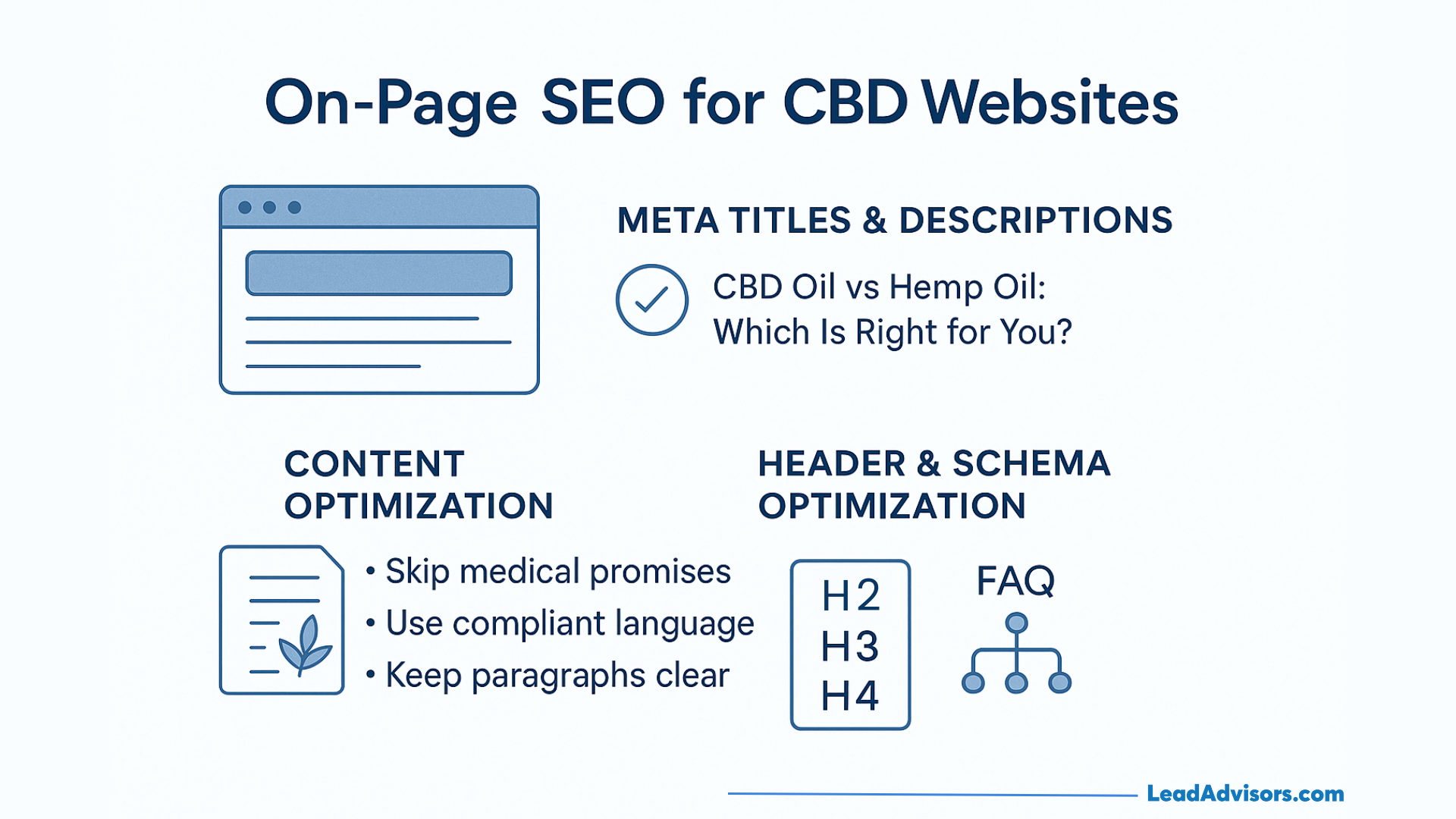
This is where on-page SEO meets your content, compliance, and keyword strategies. For a CBD brand, this means that each and every aspect of your page must be crawlable by Google, usable for the visitor, and—above all—compliant with the law. This is where the bulk of cannabis SEO services focus their efforts, lest “botanical wellness” slips into “undisclosed medical benefit.”
a. Meta Titles & Descriptions
Your meta tags are like the sign on your front door. You have around 60 characters for your Title and 155 for your Description before Google starts cutting you off.
- The Goal: Be clear, compliant, and clickable.
- Good Example: “CBD Oil vs. Hemp Oil: Which Is Right for You? | [Brand Name]”
- Bad Example: “Cure Your Chronic Pain with our Extra Strength CBD Oil” (This is a one-way ticket to a manual penalty).
Even in your metadata, “medical keyword stuffing” should be avoided. Google’s YMYL algorithms are very sensitive in the cannabis search engine marketing space. If your meta description promises your product can do something it cannot legally do, you will lose trust.
b. Content Optimization
When writing for SEO with CBD products, you need to master the art of the “soft sell.” You want to help your reader understand the benefits of your products without getting the FDA on your back.
- Skip the promises: Phrases like “reduces anxiety” or “stops inflammation” need to be replaced with “may support relaxation” or “promotes a sense of calm.”
- Focus on Readability: Google loves content that is easily digestible. Use short paragraphs, bullet points, and headings for key takeaways. If a reader cannot quickly scan your content and get the answer in 5 seconds or less, they’ll leave.
c. Header & Schema Optimization
Headers (H1, H2, H3) are not only cosmetic; they also help Google organize the structure of your content. For 2026 marijuana search engine optimization, the key is how well you organize your “entities.”
- H1: Your Main Topic (e.g., The Ultimate Guide to Full-Spectrum CBD)
- H2: Major Sections (e.g., How Full-Spectrum Differs from Isolate)
- H3: Supporting Details (e.g., What are Terpenes?)
The Power of Schema: For 2026 search engine optimization for CBD stores, Schema is no longer a choice; it is the key to letting Google know exactly what your page is about. For CBD stores, you need:
- Product Schema: For prices, availability, and ratings.
- FAQ Schema: For those coveted “People Also Ask” spots.
- Review Schema: For instance, trust with your potential customers.
2026 Insight: Google is using “Video Schema” to include video thumbnails directly into the search results. If you have a 30-second video of your product in action, you can increase your click-through rates by 30%.
Visit our How to Improve On-Page SEO for Your Business Website to know more about it.
Summary Checklist: On-Page Optimization
| Element | Best Practice | CBD-Specific Tip |
| URL | Short & Descriptive | Include the primary keyword (e.g., /best-cbd-gummies). |
| Images | High-Quality & Compressed | Use “Alt Text” to describe the image, not to spam keywords. |
| Internal Links | Link to relevant products | Guide readers from a blog post to a product page. |
| External Links | Link to .gov or .edu | Back up your claims with scientific studies. |
Technical SEO Essentials for CBD eCommerce
Think of technical SEO like the engine of a car. You can have the nicest paint job in town (your website design), and the best fuel to put in that tank (your content), but if the engine is shot, you’re not going anywhere. And in the world of CBD eCommerce, where a one-second delay can cost you a sale, technical SEO is a requirement, not a nicety.
The vast majority of CBD SEO services and cannabis SEO experts will tell you: if Google can’t crawl you, they can’t rank you.
1. Speed is Your Secret Weapon
Page speed is no longer a “nice to have” but a fundamental ranking factor. Google utilizes Core Web Vitals to measure the experience of page speed and reliability.
- LCP (Largest Contentful Paint): How fast does the main content load?
- CLS (Cumulative Layout Shift): Does the page jump around while loading? (Extremely frustrating for the customer to click on the “Buy” button!)
In my experience, improving the host for a CBD-based SEO client to a specialized high-performance host and optimizing the client’s product images saw a 25% increase in organic sessions in just one month. If the customer has to wait for the site to load, they will go elsewhere.
2. Mobile-First is the Only Way
The bulk of your customers are searching for cannabis keywords on their mobile devices while they are out and about. If your buttons are too small or your text is difficult to read on a mobile screen, then you are invisible to Google. A real responsive design is a must if you wish to succeed at CBD local SEO and show up if a customer searches for a shop “near me.”
3. Clean URLs and Site Structure
Your URLs should never resemble a random string of figures. They should always look neat and clear.
- Bad: yourdomain.com/p?id=9876&cat=4
- Good: yourdomain.com/cbd-gummies/sleep-support
Clean URLs help users and search engine spiders understand what your page is about. This is characteristic of the best marijuana SEO.
4. The Technical “Must-Haves” Checklist
To ensure your SEO for CBD companies strategy is on solid ground, make sure your developer has implemented these four things:
- XML Sitemaps: A literal map that tells Google, “Here are all the pages I want you to rank.”
- Robots.txt: Instructions that tell bots which parts of your site to stay out of (like your backend or staging site).
- Product Schema: This is the code that allows Google to show your best CBD keywords alongside your price, star rating, and “In Stock” status directly in the search results.
- HTTPS/SSL: Since you are handling sensitive customer data, a secure connection is the ultimate trust signal for SEO for the CBD business.
Pro Tip for 2026: Google’s AI crawlers now prioritize “Semantic HTML.” Using tags like <article>, <section>, and <aside> correctly helps the AI understand the context of your CBD research better than old-school coding methods.
Comparison: Technical Health vs. User Experience
| Technical Feature | Why Google Loves It | Why Your Customer Loves It |
| Fast Load Times | Better crawl efficiency | Instant gratification; no waiting |
| Mobile Optimization | Mobile-first indexing | Easy shopping on the move |
| Product Schema | Richer search results | Seeing prices/reviews before clicking |
| Clean Navigation | Clearer site hierarchy | Finding the right oil in 2 clicks |
Building Topical Authority with Content
In the hyper-competitive CBD niche of 2026, simply having a few great product pages isn’t enough to secure a top ranking. Google has moved beyond “keyword matching” and now prioritizes Topical Authority. This means the algorithm wants to see that you aren’t just selling a product—you’re a comprehensive resource that understands the entire ecosystem of hemp and wellness.
As the industry saying goes, “Content is God.” The more high-quality, compliant, and helpful content you release, the more Google views your brand as a trusted leader. This is why content marketing is the beating heart of any successful CBD SEO service.
1. The Strategy: Think “Syllabus,” Not “List”
Instead of chasing random keywords, you should build Content Clusters (also known as the “Hub and Spoke” model). This tells Google’s AI that you have deep semantic coverage of a topic.
Example of a CBD Content Cluster:
- Pillar (The Hub): “The Ultimate 2026 Guide to CBD Oil”
- Cluster Pages (The Spokes):
- “CBD Dosage: How to Find Your Sweet Spot”
- “Full-Spectrum vs. Broad-Spectrum: What’s the Difference?”
- “How to Read a CBD Certificate of Analysis (COA)”
- “CBD for Seniors: Safety and Benefits”
By interlinking these pages, you create a “web” of expertise. When Google’s crawlers hit this structure, they recognize the relationship between the pages, which significantly lowers the number of external backlinks you need to rank for competitive terms.
2. E-E-A-T: Show, Don’t Just Tell
In 2026, “Experience” is the most important “E” in E-E-A-T. Google rewards content that feels human and first-hand.
- Use First-Person Guidance: Instead of generic advice, use phrases like “In our testing…” or “What our customers reported…”
- Integrate Expert Voices: Don’t just hire a writer; partner with a cannabis SEO expert who knows how to integrate quotes from herbalists or medical reviewers.
- Transparency: Always link to your COAs and use scientific citations from reputable sources like PubMed or the NIH. This isn’t just for your readers—it’s a technical signal that you are a responsible CBD SEO company.
3. Interactive Content: The “Secret Weapon” for Authority
If there’s one thing AI can’t easily replicate, it’s interactive tools. In 2026, these are massive drivers of engagement and backlinks:
- Dosage Calculators: Help your users find the right amount based on their weight and needs.
- Product Quizzes: “Which CBD is right for you?”—this keeps people on your site longer (improving your “Dwell Time”).
- COA Explainer Tools: A simple tool that helps customers understand what those lab numbers actually mean.
These tools don’t just help your users; they turn your site into a “destination” rather than just a store. This is exactly what cannabis digital marketing experts use to build long-term authority and outrank even the biggest competitors.
Authority Roadmap: 2026 Benchmarks
| Milestone | Action Item | Expected Result |
| Month 1-2 | Build your first cluster (1 Pillar + 10 Spokes) | Improved indexing speed for new pages |
| Month 3-4 | Add medical reviewer bios & citations | Higher trust signals and stable rankings |
| Month 6+ | Launch an interactive tool (e.g., Dosage Calculator) | Increased “Share of Voice” and natural backlinks |
Read our Pillar Content vs. Cluster Content: Content Strategy Success for more information.
Backlink & Authority-Building Strategy
Backlinks are still one of the most powerful ways to rank in 2026. Think of a backlink as a “vote of confidence” from another website. Google looks at these external nods to see if your brand is the real deal. In the CBD world, where trust is everything, a solid link-building strategy can help you leapfrog over massive competitors—as long as you build those links naturally and ethically.
a. Natural Link Building: Earn Your Spot
In 2026, “buying” links is a fast track to a penalty. Instead, focus on earning them by being a genuinely useful resource. When other sites find your content valuable, they link to it because it makes their content better.
- Data-Driven PR: This is the “unfair advantage” for CBD SEO experts. If you conduct an original survey or a small study (e.g., “How 500 CBD users feel about sleep quality”), journalists and wellness bloggers will cite your numbers. Data is the ultimate currency for high-authority backlinks.
- Specialized Directories: Don’t just join any directory. Look for vetted cannabis and CBD SEO directories, local business associations, or wellness communities. These niche-specific links tell Google exactly where you belong in the market.
- Guest Expert Placements: Rather than just “guest blogging” for links, focus on becoming a guest expert. Contributing high-quality, medically reviewed insights to reputable health sites is a cornerstone of SEO for CBD companies.
b. Avoid Black-Hat Tactics: Don’t Risk Your Domain
In a regulated industry, taking shortcuts is like playing with fire. If you’ve spent any time on cannabis SEO Reddit threads, you’ll see the same advice: stay far away from PBNs (Private Blog Networks) and “link farms.”
Google’s 2026 algorithms are incredibly good at spotting these low-quality networks. Getting a “manual penalty” in the CBD space can be a death sentence for your brand’s visibility.
What a smart CBD SEO agency will do instead:
- Relevance over Authority: A link from a smaller, dedicated hemp blog is often more valuable than a link from a generic high-traffic site.
- Anchor Text Diversity: Don’t over-optimize. If 90% of your links say “best CBD oil,” it looks suspicious. Use your brand name, natural phrases like “this wellness guide,” or even just your URL.
- Quality over Quantity: In 2026, three high-trust links from wellness sites like MindBodyGreen or Leafly can move the needle more than 300 spammy links ever could.
c. The “Digital PR” Approach
The most successful brands in 2026 use Digital PR to build authority. This involves crafting “newsworthy” stories about your brand. Did you launch a unique sustainability initiative? Did your founder speak at a major hemp conference? These stories naturally attract mentions from news outlets and industry journals, providing the highest quality cannabis and CBD SEO experts’ approved links.
| Strategy Type | Best for… | Why it Works |
| Data Studies | Earning Media Links | Journalists love citing original numbers. |
| Local Sponsorships | CBD Local SEO | Builds community trust and local relevance. |
| Expert Interviews | Building E-E-A-T | High-quality “mentions” on established platforms. |
| Resource Guides | Passive Link Building | People have been linking to “The Ultimate Guide” for years. |
Local SEO for CBD Stores
If you have a physical brick-and-mortar shop, CBD local SEO is your absolute best friend. It’s the fastest way to get in front of people who are ready to buy right now. When someone in your neighborhood pulls out their phone and types “CBD near me,” Google doesn’t just show the biggest brand—it shows the most relevant, trusted, and nearby store.
For many store owners, local SEO for CBD is the most affordable and high-impact part of their entire cannabis marketing strategy. It’s about winning the battle for your own backyard.
a. Google Business Profile Optimization
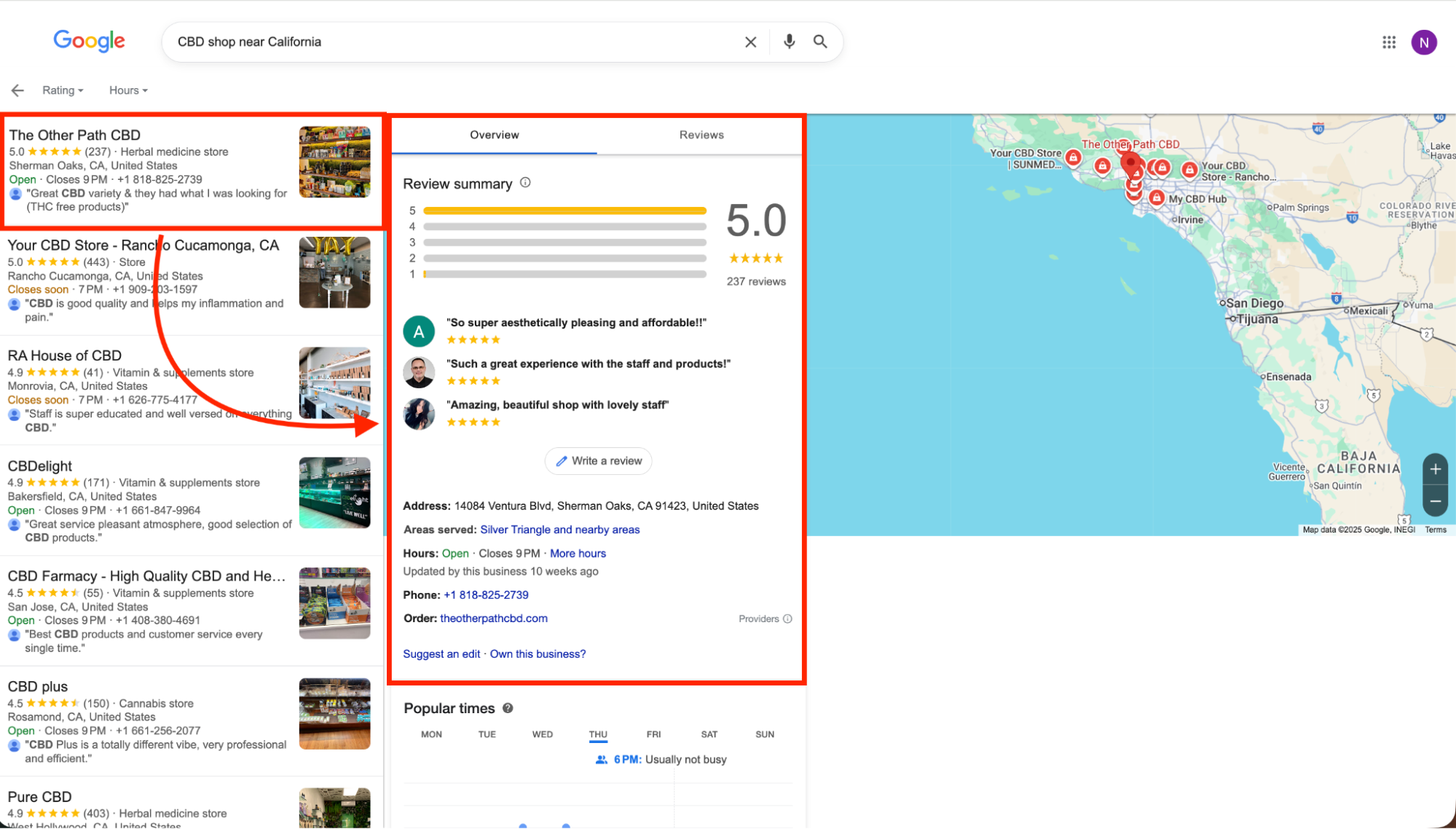
Think of your Google Business Profile as your “digital storefront.” If it looks messy or out of date, people will just keep scrolling.
- The Golden Rule of NAP: Your Name, Address, and Phone number must be identical across every single site on the internet. Even a small difference—like writing “Street” on one site and “St.” on another—can confuse Google and hurt your rankings.
- Be Specific with Services: Don’t just list “CBD.” Use your profile to tell customers you have “In-store pickup,” “Wheelchair accessible entrance,” or “Third-party lab results available.”
- Visual Trust: In 2026, Google’s AI “sees” your photos. Upload high-res shots of your shelves, your friendly staff, and even the street view of your store. This helps users find you physically and helps Google understand you are a legitimate CBD store SEO success story.
Stay Active: Use the “Updates” feature like a social media feed. Post about new arrivals, holiday hours, or educational tips. A profile that hasn’t been updated in six months looks like a closed business to Google.
b. Location Keywords & Citations
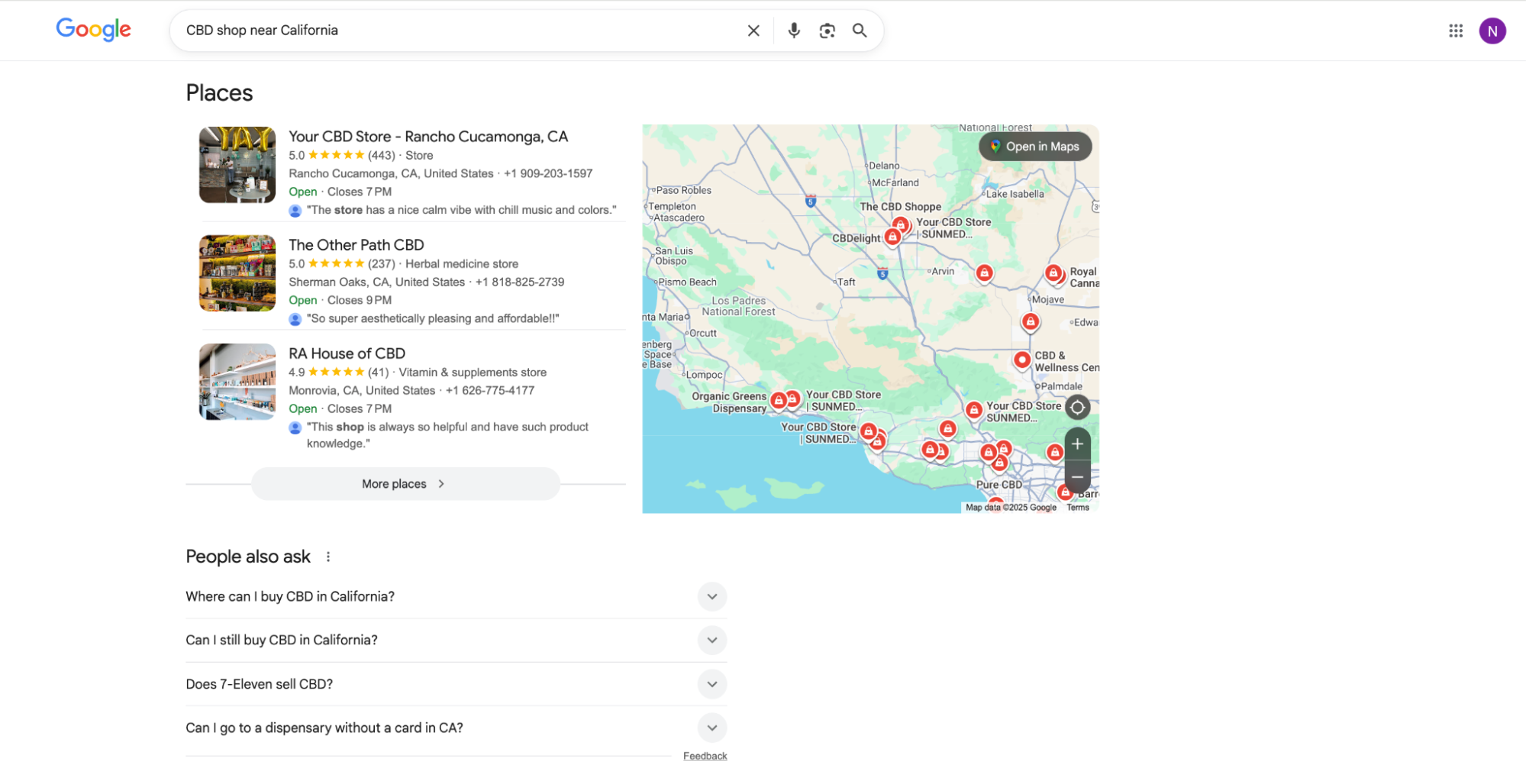
To dominate the “Map Pack” (those top 3 local results), you need to speak Google’s local language.
- Localized Keywords: Naturally weave phrases like “CBD shop in [Your Neighborhood]” or “best hemp oil store near [Local Landmark]” into your website’s meta descriptions and headers. This is a core part of any CBD local SEO expert‘s playbook.
- Location Schema: This is a bit of “invisible code” you add to your contact page. It tells search engines exactly where you are on the map, leaving zero room for ambiguity.
- Citations and Directories: Get your business listed on trusted sites like the local Chamber of Commerce, Yelp, and niche-specific platforms like Leafly or Weedmaps. These act as “digital votes” confirming your location and legitimacy.
Pro Tip for 2026: Google now prioritizes “Review Sentiment.” It’s not just about having 5 stars; it’s about what people say. Encourage customers to leave reviews that mention specific products, like: “The best CBD keywords I’ve found for sleep were in their broad-spectrum oil!” This helps you rank for those specific product terms locally.
Local SEO Quick-Win Checklist
| Action Item | Why it Matters | Difficulty |
| Claim your GBP | You can’t rank if you don’t own it. | Easy |
| Audit your NAP | Consistency = Trust in Google’s eyes. | Medium |
| Add “Local” Schema | Helps bots pinpoint your exact coordinates. | Hard (Need a Dev) |
| Respond to all Reviews | Shows you are active and care about customers. | Easy |
Measuring Success and Tracking ROI
Once you’ve put your CBD SEO strategy into motion, you can’t just “set it and forget it.” Since SEO is a marathon, not a sprint, you need dependable data to see what’s working, what isn’t, and where you should pivot. Whether you’re DIY-ing your growth or working with a cannabis SEO company, tracking the right metrics is how you turn a “guess” into a profitable marketing machine.
The Toolkit You Need
To get the full picture of your SEO for CBD performance, you need three essential tools:
- Google Analytics 4 (GA4): This shows you the “who” and “how.” You’ll see exactly how people move through your site, which blog posts they read, and most importantly, when they hit the “Purchase” button.
- Google Search Console (GSC): This is your direct line to Google. It tracks your impressions (how many people saw you) and clicks (how many people visited), while flagging any technical “indexing” errors that might be hiding your pages.
- Ahrefs or Semrush: These are the “competitive intel” tools. Use them to monitor your keyword rankings, track your backlink growth, and see exactly what cannabis search engine optimization tactics your rivals are using.
Key Metrics to Watch
Don’t get distracted by “vanity metrics” like total hits. Instead, keep your eye on these four needle-movers:
- Organic Traffic Quality: Are you attracting people who are actually interested in your products? Look at your “Engagement Rate” in GA4. If people leave in 5 seconds, you’re targeting the wrong CBD SEO keywords.
- Keyword Position Velocity: Are your target terms moving from page 10 to page 2? Seeing “upward movement” is the earliest sign that your CBD website SEO is gaining traction.
- Backlink Health: Are you earning links from trustworthy wellness and hemp sites? A few high-quality “trust votes” are worth more than a thousand low-quality spam links.
- Organic Conversion Rate: This is the ultimate ROI metric. At the end of the day, a CBD SEO expert wants to see that organic visitors are turning into paying customers.
The Monthly Audit Cycle
I recommend doing a deep dive into your data once a month. This allows you to spot trends without reacting to every tiny daily fluctuation in the rankings.
Use these insights to adjust your CBD SEO services plan. If a specific blog post is getting tons of traffic but zero sales, maybe it’s time to add a more compelling “call to action” or a product comparison table.
Pro Tip for 2026: Pay close attention to your “Assisted Conversions.” In the CBD world, a customer might read three of your educational blog posts over two weeks before finally making a purchase. If you only look at the “last click,” you might undervalue the incredible work your top-of-funnel SEO content is doing.
Tracking ROI: A Quick Guide
| Metric | What it Tells You | ROI Impact |
| CLV (Customer Lifetime Value) | How much an organic customer is worth. | High (SEO attracts loyalists) |
| CPA (Cost Per Acquisition) | How much time/SEO services did you spend to get a sale? | Lower than Paid Ads (Long-term) |
| Organic Revenue | Total dollars earned from search traffic. | The ultimate success signal |
Future Trends in CBD SEO (2026+)
The world of CBD SEO is moving faster than ever. We’ve moved past the days of just “stuffing keywords” into a blog post and hoping for the best. Today, Google’s algorithms are incredibly sophisticated—they don’t just read your words; they try to understand your brand’s credibility and your users’ true intent.
To stay ahead of the game, you need to align your CBD SEO strategy with where search is headed. Here are the major trends I’m watching this year that will separate the market leaders from the ghost towns.
1. Dominating AI Overviews (SGE)
You’ve likely noticed the brief, AI-generated answers at the top of Google results. These “AI Overviews” are now the primary way users get quick info. To show up here, your cannabis search engine optimization needs to focus on providing concise, “answer-first” content.
- The Strategy: Use a “Question-Answer” format in your headers.
- The Pro Tip: Provide a direct, 40-50-word answer right under an H2, then follow up with the deep-dive details. This makes your site the perfect source for Google’s AI to cite.
2. The Shift to “Experience” (The Fourth ‘E’)
Google is doubling down on first-hand Experience. They want to know that you’ve actually touched, tasted, and tested the products you’re selling.
- What to do: Include personal testing notes, original product photography (no more generic stock photos!), and expert commentary from your founders or head of product. This human element is something AI can’t fake, making it a huge advantage for SEO for CBD oil brands.
3. Voice Search and Natural Language
As more people use Siri, Alexa, or Gemini to find products, marijuana search engine optimization is becoming more conversational. People don’t type “CBD store Chicago”; they ask, “Where can I buy organic CBD oil near me right now?”
- Optimization: Use natural, long-tail phrases that mirror how people actually talk. This is a massive win for CBD local SEO and grabbing that immediate, high-intent traffic.
4. Visual and Interactive Search
Google’s AI is now much better at “reading” images and videos.
- Rich Media: Use infographics to explain complex topics like the “Entourage Effect.”
- Video Schema: Adding short, educational videos with proper schema markup can help you land in the “Video” carousel, giving you more real estate on the first page.
- Comparison Tables: Google loves structured data. A simple table comparing Full Spectrum vs. Isolate helps the algorithm (and your users) understand your content at a glance.
2026 CBD SEO Trend Map
| Trend | Why it Matters | Action Step |
| AI Overviews | It’s the new “Position Zero.” | Write clear, 50-word definitions. |
| Experience (E-E-A-T) | Proves you aren’t a “thin” affiliate site. | Add “How we tested this” sections. |
| Visual Search | Improves CTR and accessibility. | Use unique, high-res product photos. |
| Voice Search | Captures “near me” local buyers. | Use conversational H2 questions. |
The bottom line? The future of cannabis and CBD SEO belongs to the brands that are the most helpful and the most human.