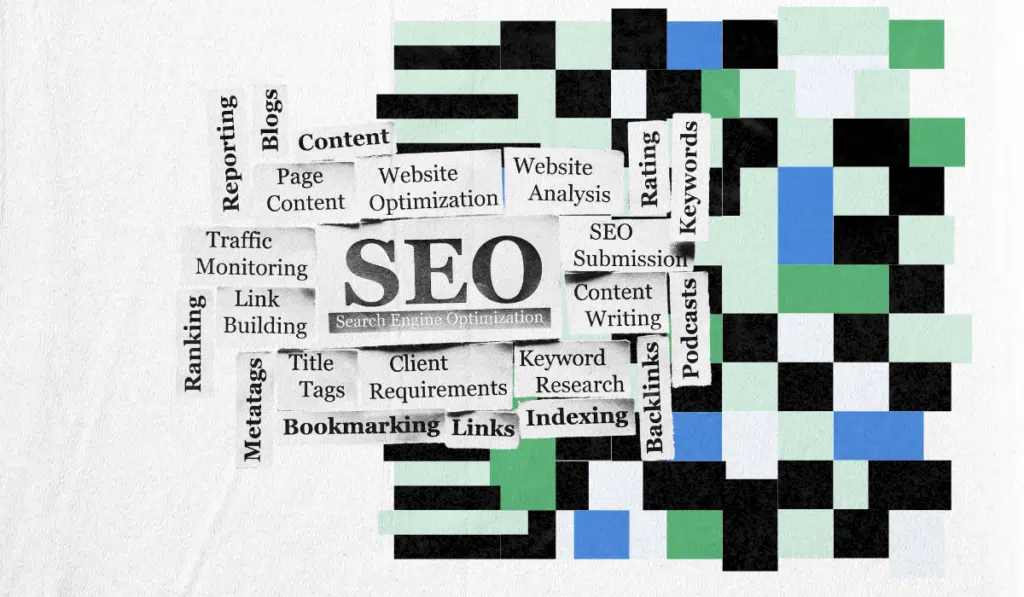
An off-page SEO strategy describes actions that are taken beyond your own web pages to influence your rankings in the search engine results pages (SERPs). The main aim is to elevate your website’s perceived authority, trust, and relevance through quality backlinks, brand mentions, and social engagements.
Are you trying to get your website more recognized, attract organic traffic, and achieve the top positions in the search engine results? If your answer is “yes”, then it is imperative to grasp the potential of off-page SEO methods.
Off-page SEO refers to tactics and methods carried out away from your site to enhance your ranking factors, online reputation, and domain authority. It is a crucial part of search engine optimization, as it plays a big role in your ranking on search engine results pages, such as Google.
Key Takeaway
Consider SEO as the game for your digital reputation. On-page SEO ensures that your web page has title tags, alt text, and is optimized overall, but off-page SEO is the endorsement the rest of the world gives you. You want to convince the search engines that your business website is the most trusted leader in your particular industry.


The Pillar of Authority: High-Quality Backlinks

If your goal is to be victorious in search engine optimization, first, you need to have a clear understanding that on-page SEO and off-page SEO constitute two aspects of the same issue. On-page SEO is more about your content and how it is structured, whereas off-site SEO emphasizes your reputation through the number of backlinks you have.
Consider the link from another party as a digital “vote of confidence. ” When high-authority websites link to you, they are effectively communicating to search engines like Google that your site is a reliable resource.
Nevertheless, the hard way I have realized is that not all links are equal. During an audit that I recently conducted, I discovered that the impact of removing fifty “spammy” automated links was less than that of obtaining just one editorial link from a prestigious news site. Quality certainly beats quantity all the time.
How to Acquire Quality Backlinks
Having a link-building strategy in line with SEO is a must if you want to ramp up your search ranking. Below are some of the most effective SEO tactics that I personally recommend:
- Create “Linkable” Assets: Content marketing can be a great way to give a whole new life to your data, blog posts, or infographics. If you help people, you will automatically get links even if you do not ask.
- The Broken Link Building Method: This is one of the SEO strategies I love most. Use an SEO tool you are familiar with to identify broken links on authoritative web pages in your niche. After that, write a friendly email to the site owner and propose replacing the defective link with one to your equally amazing content. It not only improves their user experience but also helps you get another backlink.
- Focus on Anchor Text Diversity: When you do link building, keep this in mind. In order for your anchor text (the part visible and clickable) to look natural, be different in the way you use the words in the text of the connection. Of course, this is only necessary when the link is external. Otherwise, Google might feel that you are manipulative if you use the exact same keywords every time without exception.
Managing Your Backlink Profile
Getting links is only the beginning; you also need to plan for their upkeep. I recommend using digital marketing software to check your backlinks at intervals.
Link Type | Impact on Domain Authority | Action Strategy |
Editorial Links | Extremely High | Focus on digital PR and relationships. |
Guest Posts | Medium to High | Only post on reputable, relevant sites. |
Nofollow Links | Low (Directly) | Great for referral traffic and brand balance. |
Spam/Paid Links | Negative | Use the disavow tool to protect your search rankings. |
By continually creating relevant links and cleaning your backlink profile from low-quality ones, your SERP visibility will skyrocket.
Social Media Marketing & Brand Mentions

Although Google has indicated that social signals (such as likes and retweets) are not direct ranking factors, it would be unwise to disregard social media in your off-page SEO strategy. Consider social media channels, Facebook, X (Twitter), LinkedIn, and Instagram as giant megaphones for your content.
Social media is where the true magic of social media engagement lies. When you produce high-quality content that your target audience feels connected to, they share it. It has been my experience, time after time, that a viral thread not only delivers referral traffic but also causes an increase in “branded searches.”
Brand searches are when people use Google to specifically find your company website. These brand mentions and searches serve as strong signals or indicators to search engines that your brand is a reputable and trusted authority.
How to Leverage Social Media for SEO
Social media marketing will yield maximum results only when you are more than just a broadcaster; you are also a participant.
- Build a Presence: Keep your social media presence active so that your audience does not forget about you. Run social media campaigns to announce the launch of your blog and SEO content.
- Influencer Marketing: Get in touch with the leaders of your industry. If an influencer shares your link, then many other web pages may follow their lead, thus giving you the benefit of high-quality backlinks.
- Engage in Communities: Don’t just post and disappear. You should also attend industry-related forums and groups. By replying to the questions and linking to the helpful resources on your site, you are showing that you are a reliable source.
The Power of Unlinked Brand Mentions
One of the new SEO tactics you should be aware of is the monitoring of unlinked brand mentions. Even when a third party refers to your brand without a link, Google still recognizes it. It’s as if someone is discussing your business in a loud and crowded room; people still notice.
However, if you come across a mention, it is a wonderful chance for digital PR. Contact the author and ask politely if they would consider changing that mention into a link to your website page, which will also increase your domain authority.
Pro Tip: A video clip or a poll on social media, based on my experience, generates 3 times more engagement than a simple link. Capitalize on these methods in order to interrupt the scrolling and get your potential customers to click through to your site.
Guest Blogging: Borrowing Authority the Right Way

Guest blogging has been one of the most traditional off-page SEO strategies. It is very effective if you focus on quality over quantity. By composing top-notch guest posts for well-established websites in your niche, you will gain valuable backlinks that can dramatically improve your search engine ranking.
Basically, guest posting involves a mutually beneficial partnership. You, as an outsider, offer the third party high-quality content without charge, and in return, they provide you with a link and exposure to their audience. This is one of the simplest and most impactful SEO tactics to make your brand known and bring referral traffic to your site.
How to Find and Land Guest Post Opportunities
I have tried emailing hundreds of sites with a “spray and pray” method, and it never works. Instead, you should follow this SEO checklist if you want to get better results:
- Research with Precision: Google search to find sites in your niche. Look for those with a high domain authority and an active readership.
- The “Human” Pitch: Don’t use a generic template when you reach out to webmasters. Every time I pitch a guest post, I send a short video clip or a bullet-pointed outline of the proposed topic. It proves that you have actually read their web page, and it greatly increases the chances of getting a positive response.
- Focus on the Value Exchange: Highlight what your audience will get from your content. You should be trying to help your readers through your article, not just getting a backlink.
The Guest Post Quality Checklist
There is definitely a list of best practices your post should follow to get published on a site:
- Unique Insights: You should neither simply retell your existing blog posts nor just your own blog posts. You should give new data or a new point of view.
- Strategic Internal Linking: You can add a link to a relevant page from your website by using a natural anchor text.
- Engagement: When the post gets published, make sure to be available to respond to the comments. This way, you will establish trust with your new audience as well as the host site.
Key Takeaway: One guest post on a top-notch industry site is more valuable than twenty posts on obscure, “made, for, SEO” blogs. High-quality SEO link building is essentially about being noticed in the right neighborhoods.
Dominating the Neighborhood with Local SEO

If your business operates from a physical location or simply caters to a local market, then local SEO could be the most overlooked aspect of an effective off-page SEO strategy. Whereas regular SEO aims at capturing the global audience, local SEO is about getting the “near me” Google search right.
When you refine your online presence for local intent everywhere, local search engines will rank you higher in the listings, i.e., in your community. This is definitely more than just your website; it’s also about your business visibility in the whole digital marketing environment.
Your Secret Weapon: The Google Business Profile
Your Google Business Profile (previously known as Google My Business) is the key to unlocking all the great things that can come from you being “the best” one in your neighborhood. It is kind of like a 2nd homepage that shows up right there in the search results!
- Claim and Verify: Be sure to claim your business profile and have your Business Name, Address, and Phone number (NAP) exactly the same everywhere, 100% accurate.
- Keep it Fresh: Changing your open hours, adding good shots, and also posting updates where people can see is just like being on social media!
- The Power of Reviews: Ask your customers if they would mind leaving you some feedback. If you get a lot of good reviews, that will be a big ranking factor for the local “Map Pack.”
Building Local Relevance
On top of your business profile, you also need to demonstrate to search engines that you are a pillar of your local community.
- Local Keywords: Optimize your SEO content with references to your city and neighborhood. Instead of just “best pizza,” say “best pizza in New York City.” Put these in your title tags and headings.
- Local Citations: Make sure your business is listed in local directories and the chamber of commerce websites. They serve as local backlinks that confirm your location.
- Community Engagement: Sponsor a local event or work with a local influencer. If a neighborhood blog mentions your website, it is a very valuable signal for local SEO.
Why Local Signals Matter
I’ve observed that for service-based clients, the Google Business Listing, which is well-optimized, has been able to attract more organic traffic and phone calls, even surpassing the business website in its effectiveness. Maintaining your information consistent and engaging with your local target audience, you create a trust level that search engines are eager to reward.