In 2026, the traditional sales funnel strategy has evolved from a linear path into a dynamic, multi-dimensional ecosystem. While a funnel helps you visualize the conversion process, it is User Journey Mapping that reveals the “why” behind the data. By understanding the intricate layers of how people interact with your digital brand—and where AI-driven agents might be navigating on their behalf—you can transform a standard sales process into a high-performance growth engine.
In this guide, we’ll show you how to synchronize your journey maps with your sales funnel strategy to identify high-impact touchpoints and anticipate customer needs before they even arise. You’ll learn how to use next-generation templates, define your target audience for an AI-first world, and optimize every stage of the experience to maximize both immediate conversion and long-term loyalty.

Understanding User Journey Mapping
User journey mapping is no longer just a design exercise—it is a strategic necessity. By 2026, the Customer Journey Analytics market is projected to reach over $25 billion, as businesses shift from static visualizations to real-time, data-driven orchestration.
Key elements of modern customer journey mapping include:
Touchpoints: Interaction points across your digital assets. Today, these are increasingly “omnichannel”—customers who engage across multiple channels spend an average of 10% more than single-channel users.
User Personas: Segments of your audience that help tailor experiences. In 2026, the focus has shifted toward “situational personalization,” where maps adapt in real-time to a customer’s immediate goal rather than just their demographic profile.
Updated Data Layers
Understanding customer goals is the bedrock of a successful map.
Needs & Expectations: Current research shows that 97% of high-performing journey maps now include a dedicated layer for customer goals and needs.
Predictive Insight: New data for 2026 indicates that 70% of companies are now using AI to improve their journey maps. Organizations that optimize the entire journey, rather than individual touchpoints, see a 15% lift in revenue and a 20% reduction in operational costs.
The Business Impact in 2026
The financial argument for journey mapping has never been stronger:
Revenue Growth: 41% of “customer-obsessed” companies achieved at least 10% revenue growth in the last year, compared to just 10% of their less mature peers.
AI Efficiency: Companies utilizing AI-driven journey management report up to a 25% increase in customer satisfaction and a 28% reduction in churn.
The Cost of Failure: Brands that do not map and act on customer journeys risk losing 15–20% of potential revenue growth. Conversely, 73% of businesses that provide above-average customer service outperform their rivals financially.
Steps to Conduct Effective User Journey Mapping

User journey mapping requires a systematic approach to yield optimal results. By following these steps, teams can conduct customer journey analysis that accurately predicts and enhances the overall user journey.
Step 1: Define Your Target Audience:

To begin, you must understand your audience through consumer journey mapping. Conduct research to understand behavior and pain points. By creating a user journey map template based on real personas, you can better understand their motivations and challenges.
In 2026, 71% of businesses using journey mapping report higher satisfaction because they tailor the experience map to specific audience needs.
Step 2: Identify Key Touchpoints:

Identifying where users interact with your brand is essential for a customer experience map. These touchpoints include your website, social media, and support channels. On average, a customer now interacts with a business across 20+ micro-moments before purchasing.
By mapping the customer journey through these touchpoints, you gain the insights needed to optimize the ecommerce customer journey map.
Step 3: Map the User Journey:
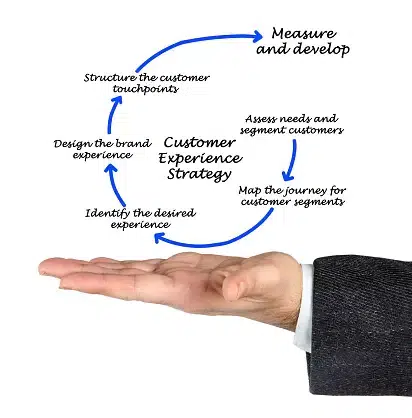
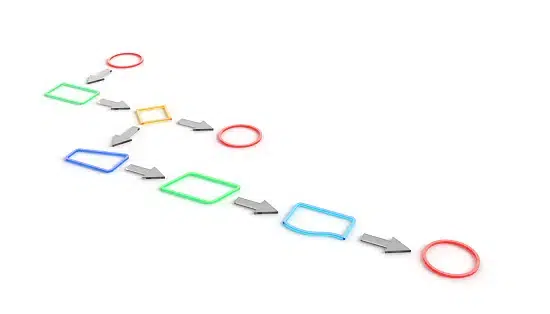
Creating a visual customer journey map example is pivotal. Start by outlining the customer journey stages, from initial awareness to final conversion. Plotting the touchpoints while “standing in the customer’s shoes” allows you to visualize the entire consumer journey map.
These journey map examples provide valuable opportunities to remove friction from existing customer journeys.
Step 4: Analyze and Optimize:

Once your customer journey template is complete, analyze it for pain points. Look for bottlenecks that hinder a seamless customer experience journey map. Customer journey mapping research shows that optimizing these flows can lead to a 15% lift in revenue and a 20% reduction in operational costs.
With the right customer journey software, it is time to implement this knowledge. Start by defining your audience, identifying touchpoints, and mapping customer journey data to drive success.
Tools and Techniques for User Journey Mapping

The process of journey mapping is significantly enhanced by utilizing modern software that aids in creating and visualizing comprehensive customer journey maps.
By using these resources, businesses can gain valuable insights into user behavior and enhance the overall customer experience journey through data-driven optimization.
User Research and AI Discovery
User research remains the foundation of any user journey map. In 2026, tools like SurveyMonkey, Google Forms, and UserTesting.com have integrated AI to automatically cluster qualitative feedback into actionable themes.
These tools help uncover user preferences and pain points faster than manual analysis, providing the raw data needed to improve the digital customer journey.
Real-Time Feedback and Behavioral Analysis
Capturing customer feedback is vital for successful customer journey management. Hotjar, Qualtrics, and UserVoice now offer real-time sentiment analysis, allowing businesses to spot opportunities the moment they arise.
Heatmaps and Session Recordings: Tools like Fullstory and Mouseflow provide “frustration detection” (identifying rage-clicks) to show exactly where the consumer journey map breaks down.
Sentiment Tracking: AI-driven widgets now measure satisfaction at specific customer journey stages, giving you a granular view of the customer experience map.
Advanced Customer Journey Analytics
Analytics platforms like Google Analytics 4, Mixpanel, and Amplitude have moved toward predictive modeling. Instead of just showing past behavior, these customer journey mapping tools now forecast potential drop-off points in your sales funnel strategy. They track interactions across platforms, ensuring your digital customer journey mapping accounts for every mobile, web, and offline touchpoint.
Dedicated Customer Journey Mapping Software
For professional visualization, specialized customer journey mapping software such as UXPressia, Smaply, and TheyDo is essential.
Dynamic Templates: These platforms offer customer journey map examples and journey map templates that sync with live data.
Collaboration: Miro and Lucidchart have introduced “AI Diagramming,” where you can generate a full user journey map template from a simple text prompt, allowing teams to brainstorm and iterate in real-time.
Interactive Prototyping and Simulation
Prototyping tools like Figma, ProtoPie, and Axure RP help businesses simulate the user journey before a single line of code is written. In 2026, these tools allow for “Agentic Testing”—using AI agents to navigate your clickable prototypes to find usability issues early. This ensures that your final ux journey map is validated by data, resulting in a more intuitive and successful customer experience journey.
Measuring the Success of User Journey Mapping

Measuring the success of a customer journey map is crucial for understanding how optimized journeys impact overall business performance.
In 2026, organizations have moved beyond static reports toward customer journey management (CJM) platforms that provide real-time, measurable impact. By tracking specific journey map KPIs, you can gauge the effectiveness of your optimization efforts.
When measuring success in today’s landscape, consider these five key factors:
1. Advanced User Behavior Analysis
Tracking behavior across the digital customer journey provides insights into how users interact with your assets. In 2026, we look beyond basic clicks to behavioral intelligence metrics:
Micro-moment Engagement: Tracking short, high-intent interactions.
Friction Scores: Identifying “rage clicks” or “bird’s nest” navigation patterns where users are struggling.
Touchpoint Efficiency: Analyzing which channels provide the fastest path to a solution.
2. Multi-Stage Conversion Rates
Monitoring conversion rates at every stage of the journey map is essential. By 2026, the average Google Ads conversion rate is approximately 7.04%, but top-performing ecommerce sites are hitting 3.2% to 4.8% in total site-wide conversions.
Funnel Health: Analyzing add-to-cart and form-completion rates to pinpoint exactly where a sales funnel strategy is leaking.
Micro-conversions: Tracking smaller wins, like newsletter sign-ups or whitepaper downloads, that lead to the final purchase.
3. Customer Satisfaction and Trust
In 2026, trust is the new conversion metric. Assessing satisfaction serves as a primary indicator of an effective customer experience journey.
NPS and CSAT: High-performing brands use these to measure the emotional “moment of truth.”
Trust Signals: Analyzing how social proof and user-generated content (UGC) affect the journey. Research shows that interaction with UGC can double the likelihood of purchase, boosting conversion rates by 102%.
4. Return on Investment (ROI) and LTV
Evaluating ROI is essential to justify customer journey consulting and software spend.
LTV-to-CAC Ratio: The gold standard for 2026. A healthy ratio ensures that your customer journey marketing is sustainable.
Operational Cost Savings: Companies that optimize the journey see a 20% reduction in support costs and a 15% lift in revenue.
5. Usability Testing and “Agentic” Feedback
Incorporating usability testing provides qualitative insights that numbers can’t reach. In 2026, this includes Agentic Testing, where AI agents simulate a user journey to find flaws before a human does. Direct feedback remains the best way to uncover the “why” behind any obstacles in your UX journey map.