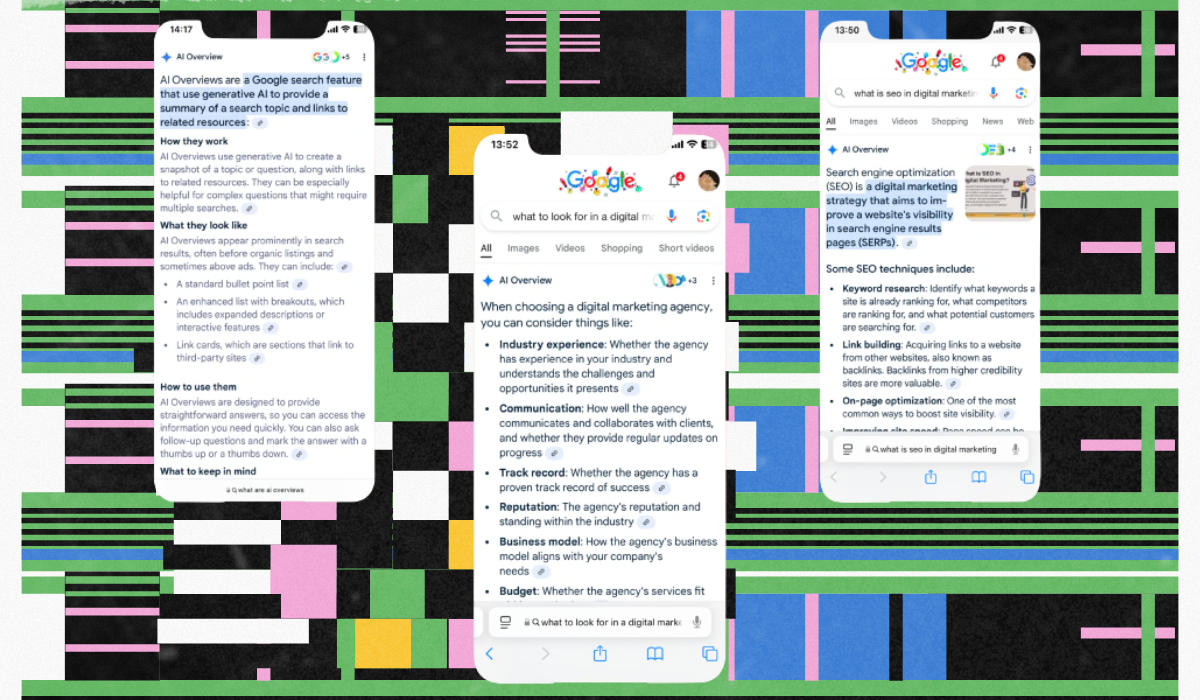
The search landscape has fundamentally shifted. Google’s AI Overviews now answer user queries before anyone clicks a link, causing a 61% drop in organic click-through rates for affected search results.
But here’s the twist: visibility might be more valuable than clicks. Success in 2026 means mastering “Citation Share”—getting featured in AI-generated summaries as the authoritative source. This isn’t about gaming algorithms; it’s about engineering content that AI models trust enough to cite.

TL;DR: Your 5-Minute Strategy to Rank in AI Overviews
- Build modular content with direct answers (40-60 words after each heading) that Google’s AI can extract and cite independently
- Deploy technical foundations, including structured data (HowTo/FAQPage schema), clean HTML, and optimized content formats
- Create original insights through surveys and case studies—76% of AI Overview citations come from top-10 pages, but lower-ranked pages with unique data still get featured
- Optimize for user intent across multiple content formats, including video content, featured snippets, and well-structured answers
- Track new metrics like citation frequency, AI Overview tracking, and brand mentions in AI-generated answers instead of just organic traffic
The New Search Reality: Why Traditional SEO Strategy Falls Short
Search engines have evolved from librarians to tutors. When someone enters a Google search query in 2026, they’re increasingly met with AI-generated summaries that pull from multiple sources—or sometimes one definitive direct answer.
Understanding Google’s AI Overviews Ecosystem
AI Overviews appear as collapsed summaries at the top of search results, while AI Mode offers a fully immersive conversational experience, where 30% of users now conduct their searches. The difference matters because each format favors different search optimization approaches.
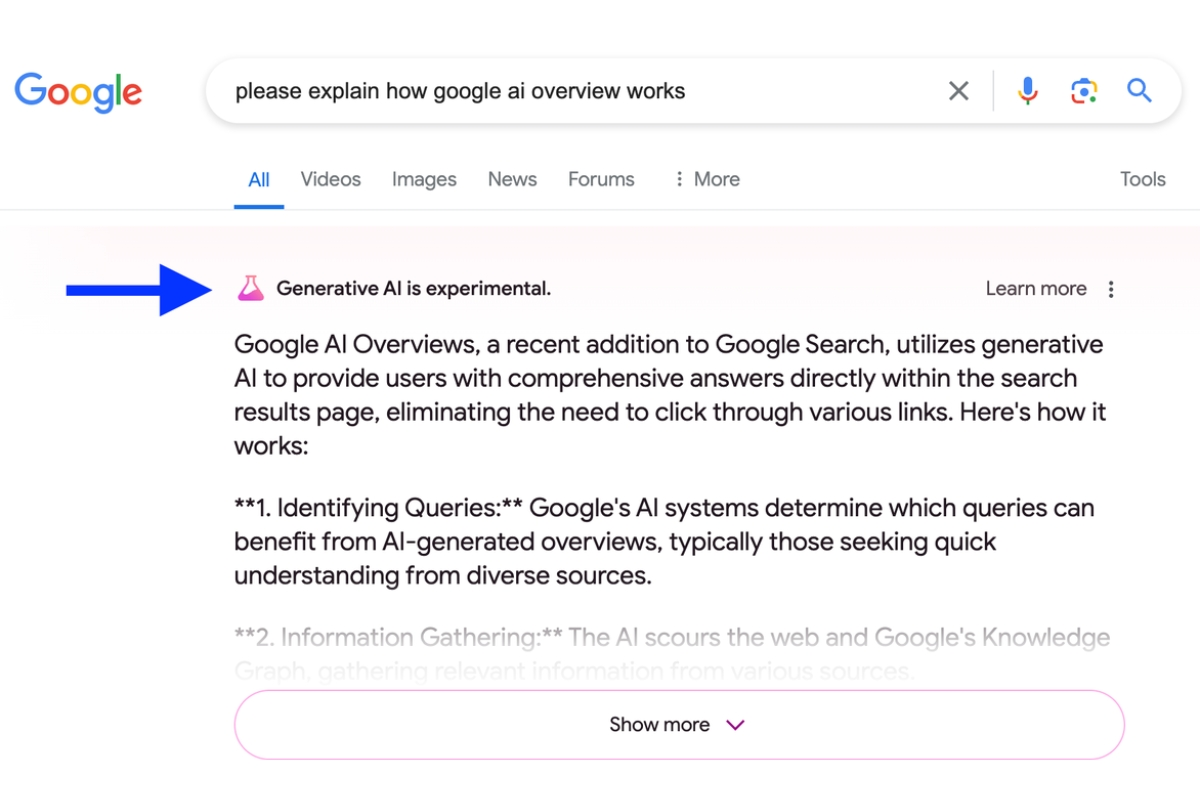
Here’s what catches most marketers off guard: AI models evaluate passage-level quality, factual density, and information gain—not just traditional ranking factors like backlinks. Your domain authority alone won’t secure a spot in AI overviews.
The Fan-Out Effect
When you enter a search query, Google’s AI doesn’t just search for that exact phrase. It expands your question into dozens of related sub-prompts behind the scenes, searching for the best answer to each micro-question. This means your content must address not just the core intent, but the entire topic landscape surrounding it.
| Traditional Search Results Focus | AI Search Optimization Focus |
| Page-level rankings | Passage-level citations |
| Keyword density | Entity relationships |
| Total backlinks | Factual accuracy + freshness |
| Homepage authority | Author credentials + E-E-A-T |
Strategy #1: Create Content That AI Models Can Parse and Trust
The hub-and-spoke model has taken on new meaning. Your main content must serve as a gateway that AI tools can efficiently understand and extract from.
The Modular Content Architecture
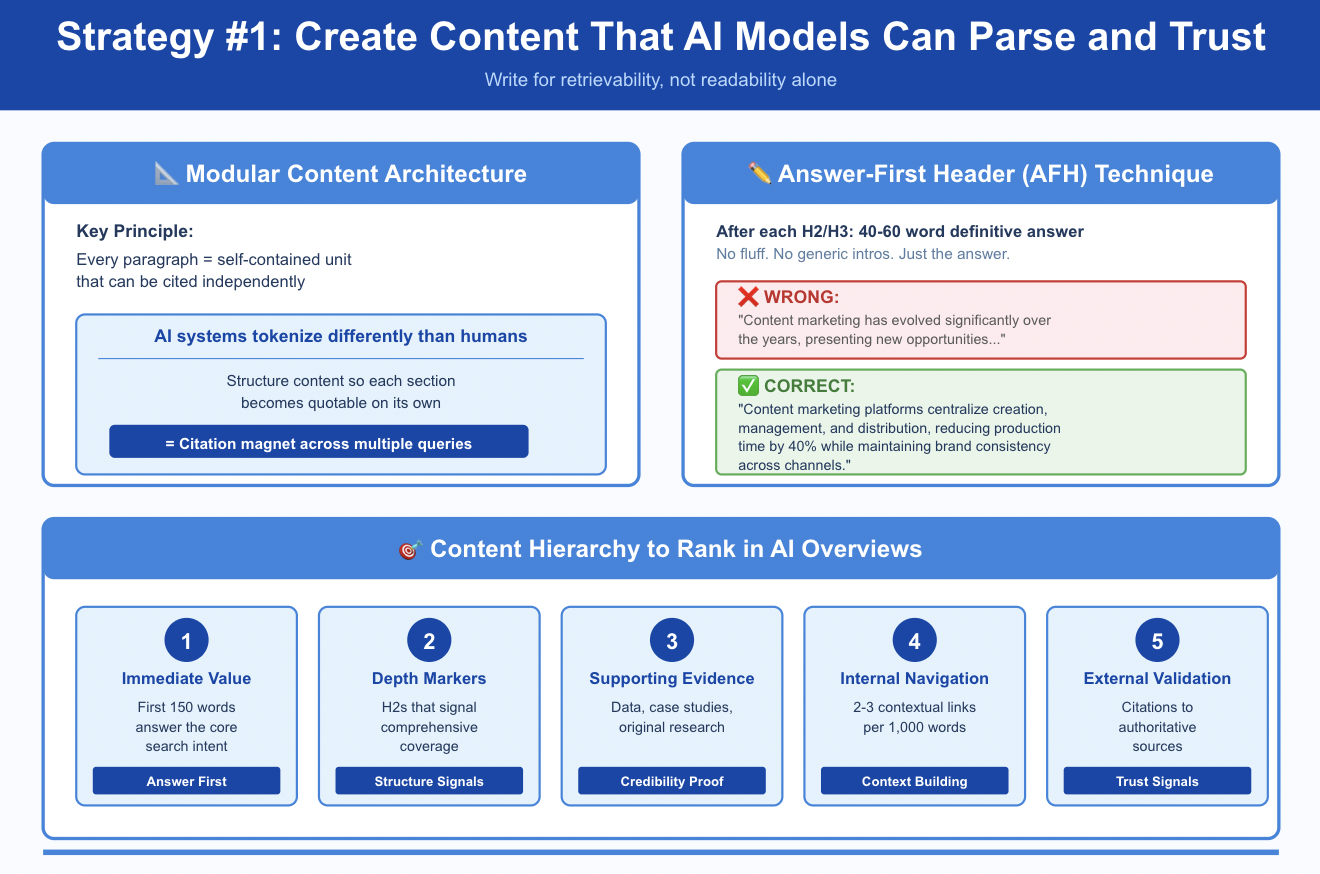
Write for retrievability, not readability alone. AI-generated systems tokenize your content differently from how humans process it. Every paragraph should function as a self-contained unit that can be cited independently—this is how you optimize content for AI overviews to rank success.
The Answer-First Header (AFH) Technique: Immediately after each H2 or H3, place a 40-60 word definitive answer. No fluff. No “In today’s fast-paced digital world…” introductions. Just the answer that matches search intent.
For example:
- ❌ “Content marketing has evolved significantly over the years, presenting new opportunities…”
- ✅ “Content marketing platforms centralize creation, management, and distribution, reducing production time by 40% while maintaining brand consistency across channels.”
This approach transforms your pages into citation magnets for Google’s AI Overviews. Each section becomes quotable on its own, increasing your chances across multiple relevant queries.
Structuring for Featured Snippets and AI Citations
Your content should follow this hierarchy to rank in AI:
- Immediate value (first 150 words answer the core intent)
- Depth markers (H2s that signal comprehensive coverage)
- Supporting evidence (data, case studies, original research)
- Internal navigation (2-3 contextual links per 1,000 words)
- External validation (citations to authoritative sources)
The goal: Make it impossible for generative AI to write a complete answer without citing you. This strategy directly affects how AI Overviews rank in Google search results.
Strategy #2: Technical Foundations for Search Optimization
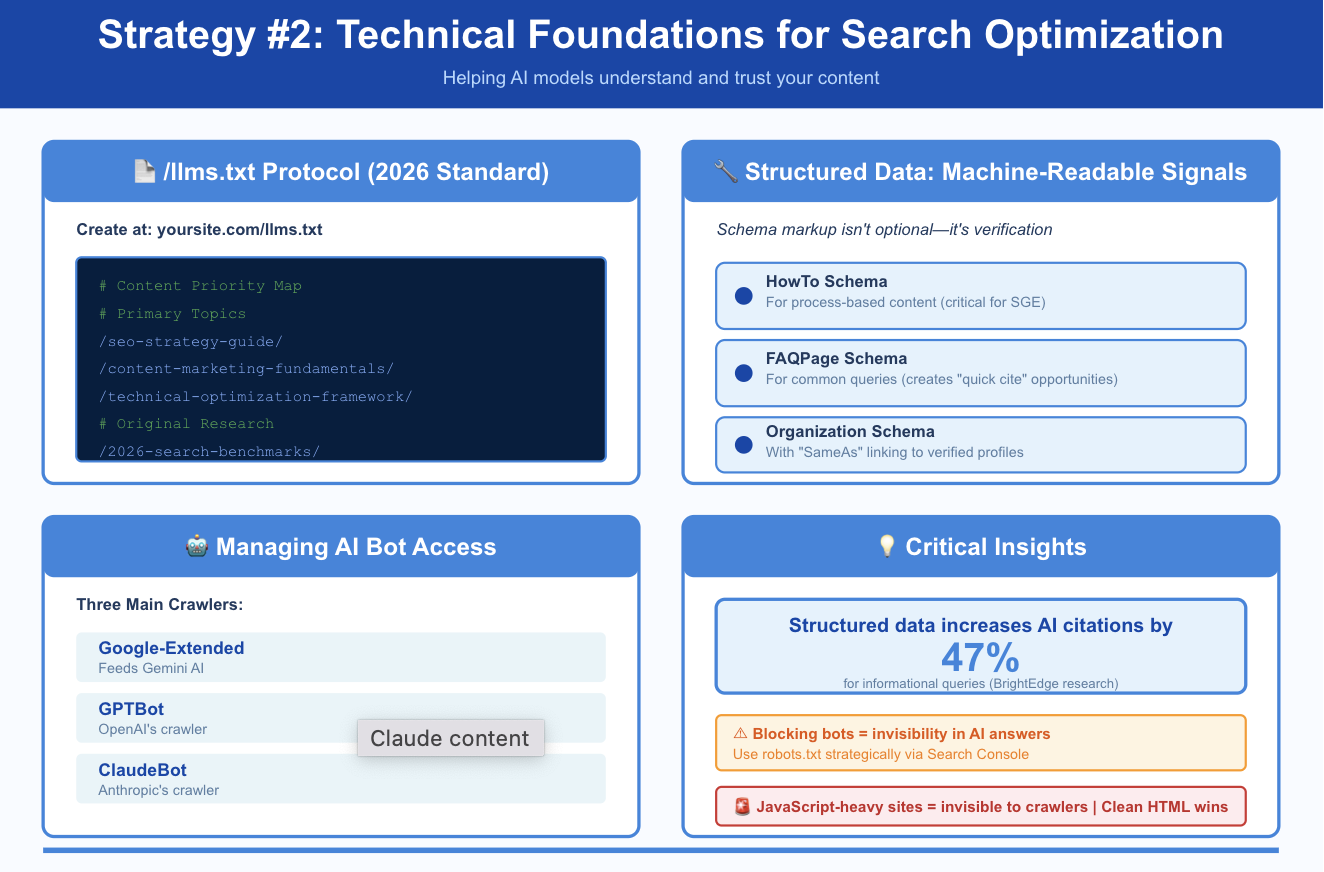
If traditional SEO is about helping search engines find your content, AI search optimization is about helping AI models understand and trust it.
Implement the /llms.txt Protocol
This 2026 standard tells AI tools exactly what content matters most on your site. Create a simple text file at yoursite.com/llms.txt:
# Content Priority Map
# Primary Topics
/seo-strategy-guide/
/content-marketing-fundamentals/
/technical-optimization-framework/
# Original Research
/2026-search-benchmarks/
/case-studies/
Structured Data as Machine-Readable Signals
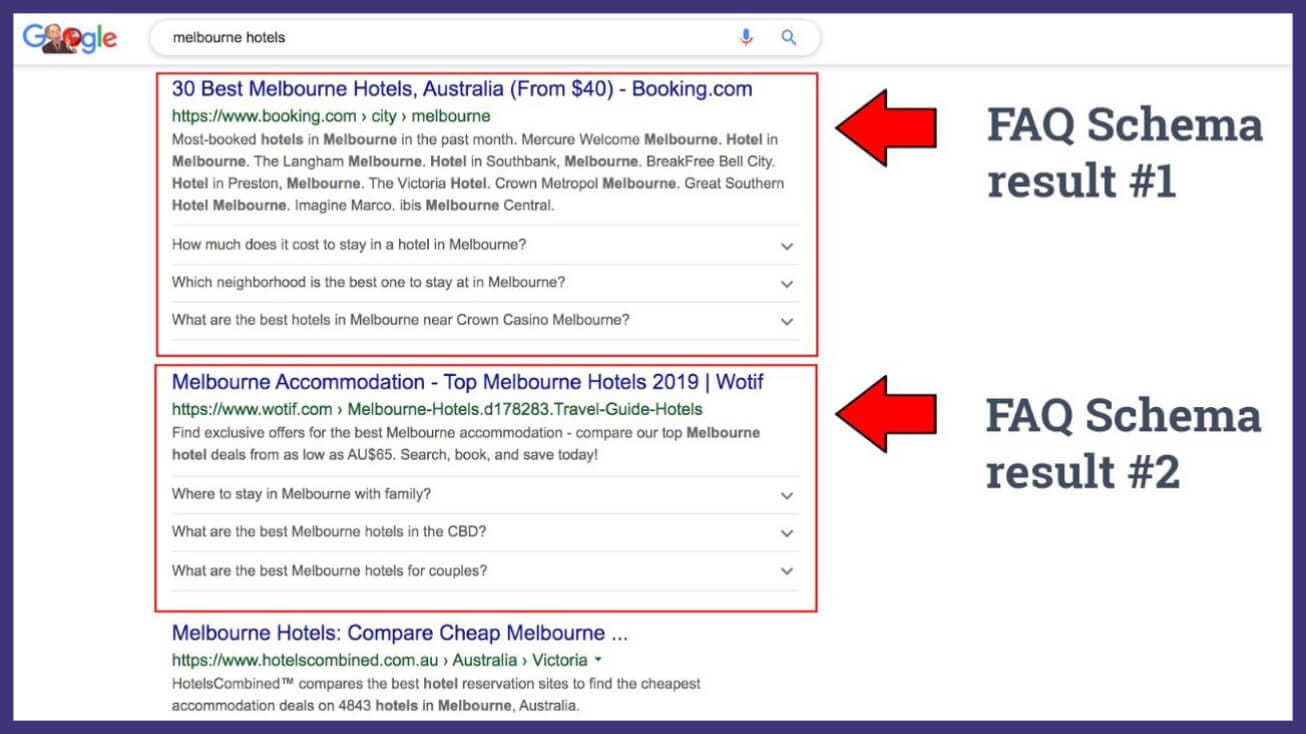
Schema markup isn’t optional for AI overviews—it’s how generative AI verifies your expertise. Implement these schema types:
- HowTo schema for process-based content (critical for search generative experience)
- FAQPage schema for common user queries (creates “quick cite” opportunities)
- Organization schema with “SameAs” properties linking to your verified profiles
According to BrightEdge research, structured data increases the likelihood of AI citations by 47% for informational queries.
Managing AI Bot Access
You’ll encounter three main crawlers that feed AI-generated content systems:
- Google-Extended (feeds Gemini)
- GPTBot (OpenAI’s crawler)
- ClaudeBot (Anthropic’s crawler)
Blocking these bots might feel tempting, but it guarantees invisibility in AI-generated answers. Instead, use your robots.txt strategically through Google Search Console to guide them toward your strongest content while protecting thin pages.
Critical insight: AI tools struggle with JavaScript-heavy sites. If your platform relies on client-side rendering, you’re essentially invisible to these crawlers. Clean HTML wins for AI search optimization.
Strategy #3: Information Gain & Modern E-E-A-T Signals
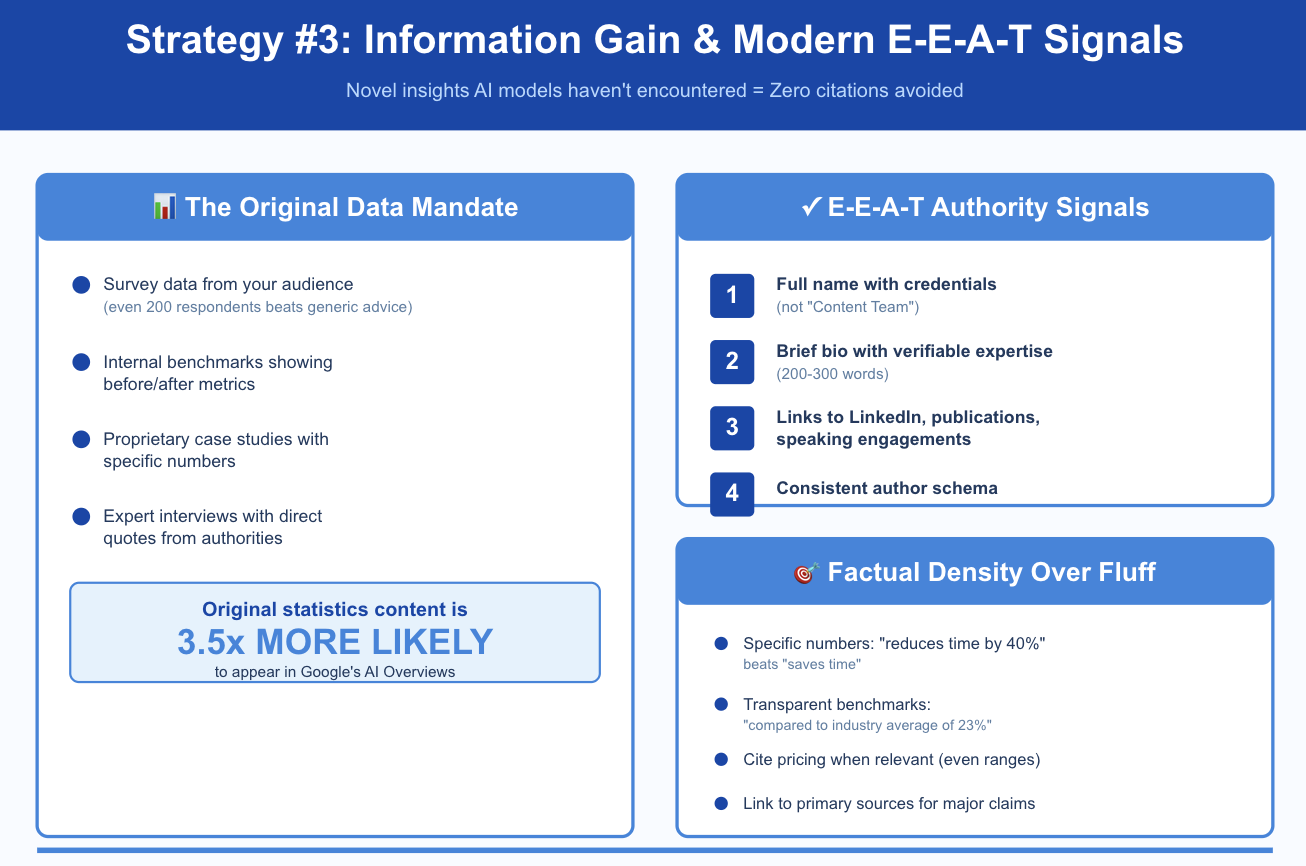
AI models are trained on billions of web pages. Repeating what’s already in their training data earns you zero citations. You need information gain—novel insights the AI hasn’t encountered before.
The Original Data Mandate
The single most effective way to rank in AI overviews: publish original research. This includes:
- Survey data from your audience (even 200 respondents beats generic advice)
- Internal benchmarks showing before/after metrics
- Proprietary case studies with specific numbers, not vague “success stories.”
- Expert interviews with direct quotes from verifiable authorities
Studies show that content featuring original statistics is 3.5x more likely to appear in Google’s AI Overviews than aggregated content.
E-E-A-T Authority Signals
Your byline matters more than your brand in many search queries. Include:
- Full name with credentials (not “Content Team”)
- Brief bio with verifiable expertise (200-300 words)
- Links to the author’s LinkedIn, publications, and speaking engagements
- Consistent author schema across all content
This isn’t vanity—it’s verification. AI models cross-reference author claims against external databases when determining whether to feature your content in AI overviews.
Factual Density Over Fluff
Every unsubstantiated claim increases the AI’s risk when citing you. Combat this:
- Include specific numbers: “reduces time by 40%” beats “saves time.”
- Add transparent benchmarks: “compared to the industry average of 23%”
- Cite pricing when relevant (even ranges)
- Link to primary sources for major claims
The complex process of AI citation selection favors content that reduces uncertainty—a key factor in ranking in AI Overviews.
Strategy #4: Local Search and Multi-Location Optimization
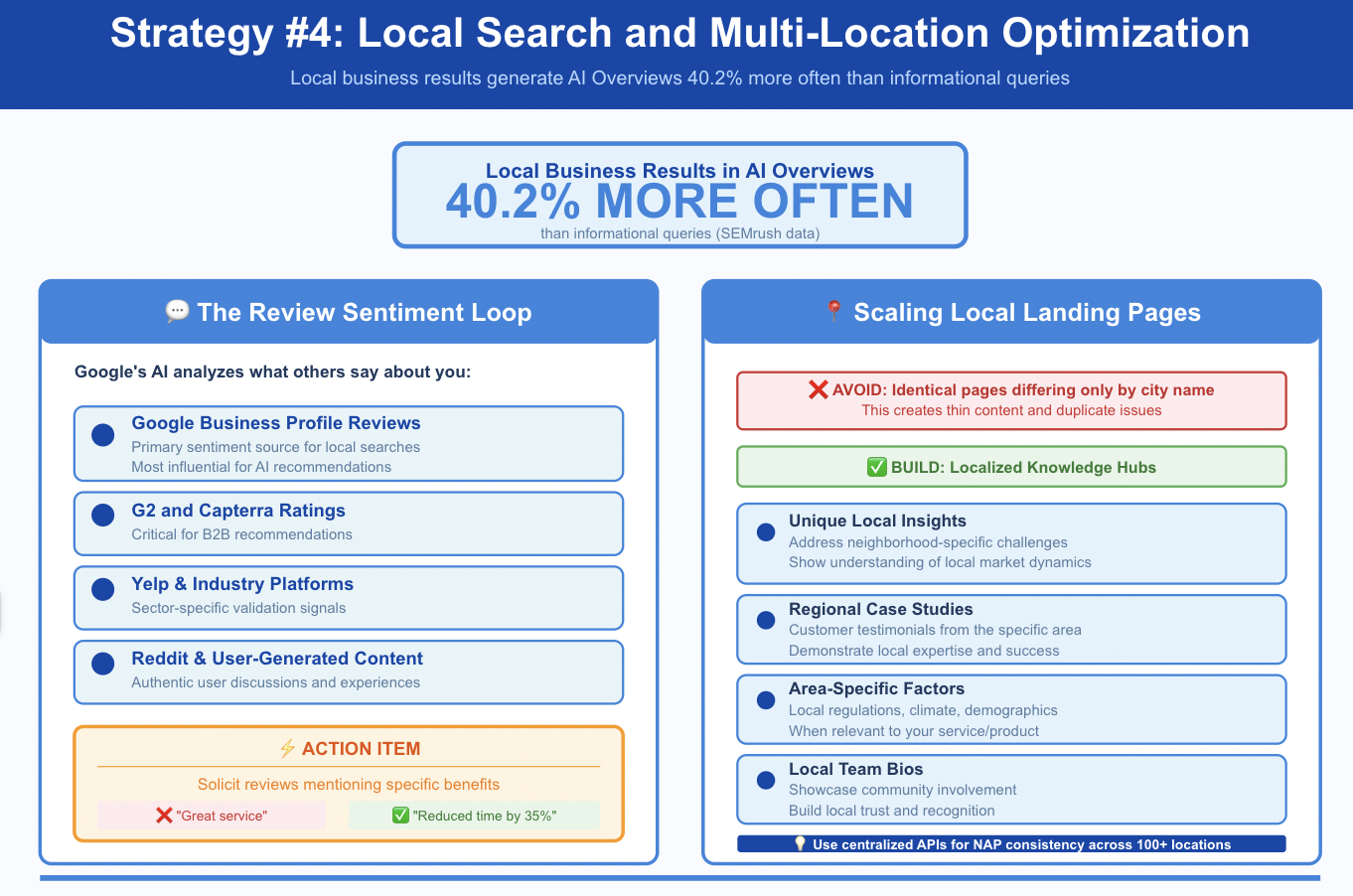
Local business results generate AI Overviews 40.2% more often than informational queries, according to SEMrush data. If you operate across multiple locations, this strategy is essential.
The Review Sentiment Loop
Google’s AI doesn’t just crawl your website—it analyzes what others say about you. When generating recommendations, it pulls sentiment data from:
- Google Business Profile reviews
- G2 and Capterra ratings (B2B)
- Yelp and industry-specific platforms
- Reddit discussions and user-generated content
Action item: Actively solicit reviews that mention specific benefits. “Great service” helps less than “Reduced our production time by 35% in the first month.”
Scaling Local Landing Pages
Avoid creating identical location pages that differ only by city name. Instead, build localized knowledge hubs:
- Unique local insights (neighborhood-specific challenges)
- Regional case studies or customer testimonials
- Area-specific factors if applicable
- Local team bios with community involvement
Use centralized APIs to maintain NAP (Name, Address, Phone) consistency across 100+ locations without manual updates—critical for local business results in AI overviews.
Strategy #5: Multimodal Content and Search Visibility
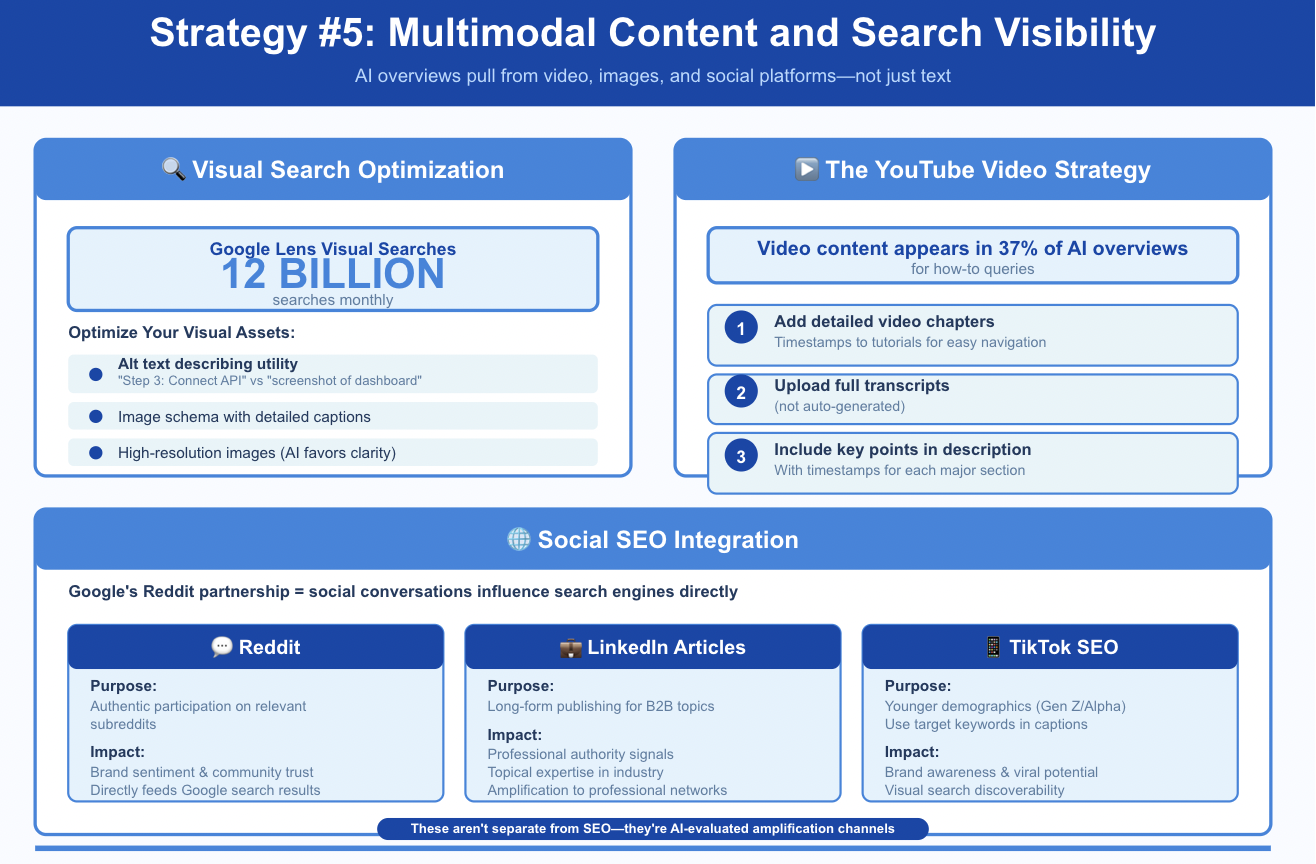
AI overviews increasingly pull from video content, images, and social platforms—not just text-based search results.
Visual Search Optimization
Google Lens handles over 12 billion visual searches monthly. Optimize your visual assets:
- Alt text that describes utility, not just objects (“Step 3: Connect API endpoint” vs. “screenshot of dashboard”)
- Image schema with detailed captions
- High-resolution images (AI favors clarity for extraction)
The YouTube Video Strategy
Video content appears in 37% of AI overviews for how-to queries. To capture these featured snippets:
- Add detailed video chapters (timestamps) to tutorials
- Upload full transcripts (not auto-generated)
- Include key points in the description with timestamps
- Create content that embeds and expands on YouTube videos
This positions you for both the video carousel AND the text-based AI overview—maximizing search visibility.
Social SEO Integration
Google’s partnership with Reddit means social conversations now influence search engines directly. Your search optimization strategy should include:
- Reddit participation on relevant subreddits (authentic contribution)
- LinkedIn article publishing for B2B topics
- TikTok SEO for younger demographics (use target keywords in captions)
These aren’t separate from your SEO strategy—they’re amplification channels that AI models evaluate for brand sentiment and topical authority.
Strategy #6: Understanding AI Citation Patterns
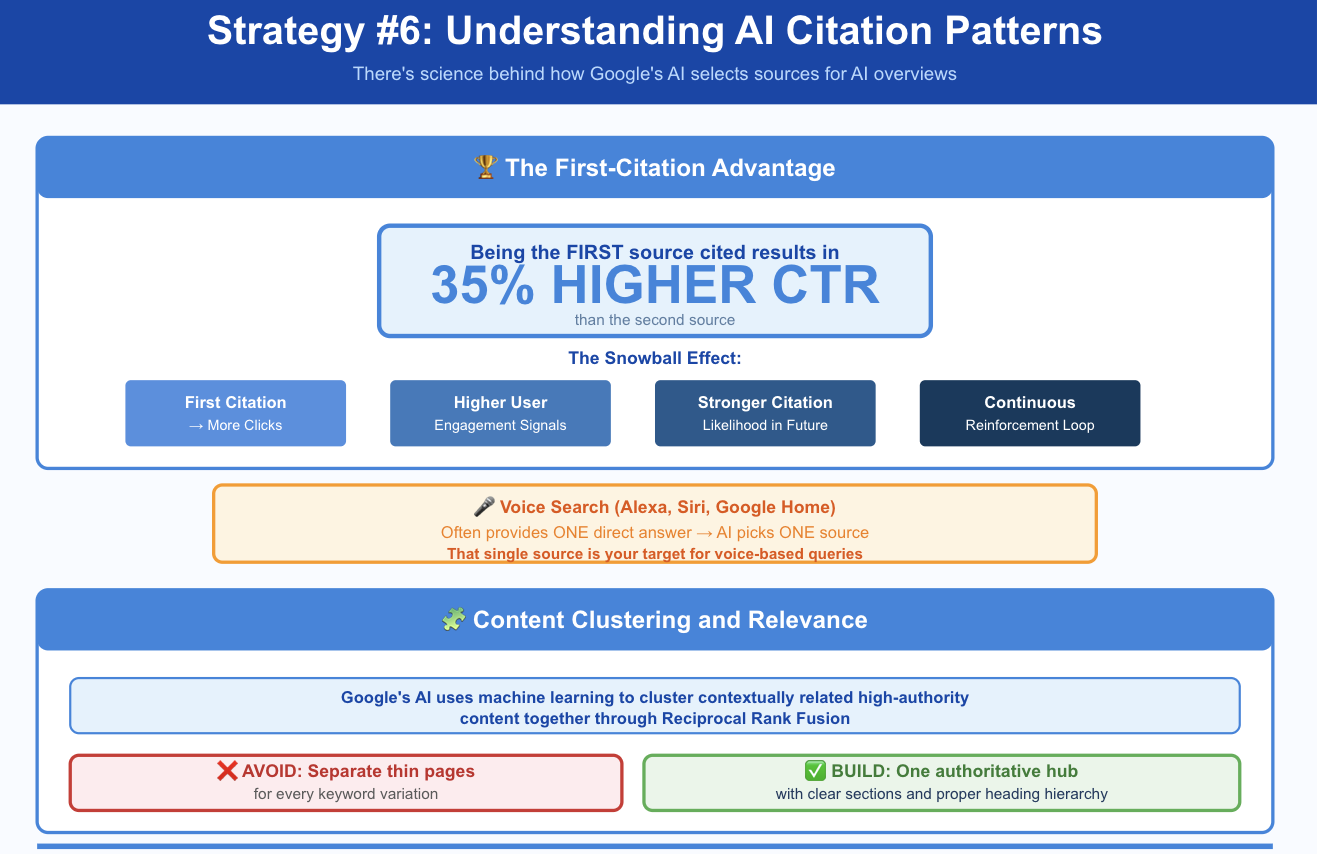
There’s science behind how Google’s AI selects sources for AI overviews. Understanding these patterns helps you prioritize efforts.
The First-Citation Advantage
Being the first source cited in an AI overview results in 35% higher click-through than the second source. This creates a snowball effect: more clicks → more user engagement signals → stronger citation likelihood in future search queries.
For voice search (Alexa, Siri, Google Home), there’s often a single direct answer. The AI picks ONE source. That’s your target when optimizing for voice-based user queries.
Content Clustering and Relevance
Google’s AI uses machine learning to cluster contextually related high-authority content together through Reciprocal Rank Fusion.
Practical application: Don’t create separate thin pages for every keyword variation. Build one authoritative hub with clear section divisions using proper heading hierarchy. Let the AI extract what it needs based on search intent context.
Measuring Success: 2026 KPIs for AI Overview Rankings
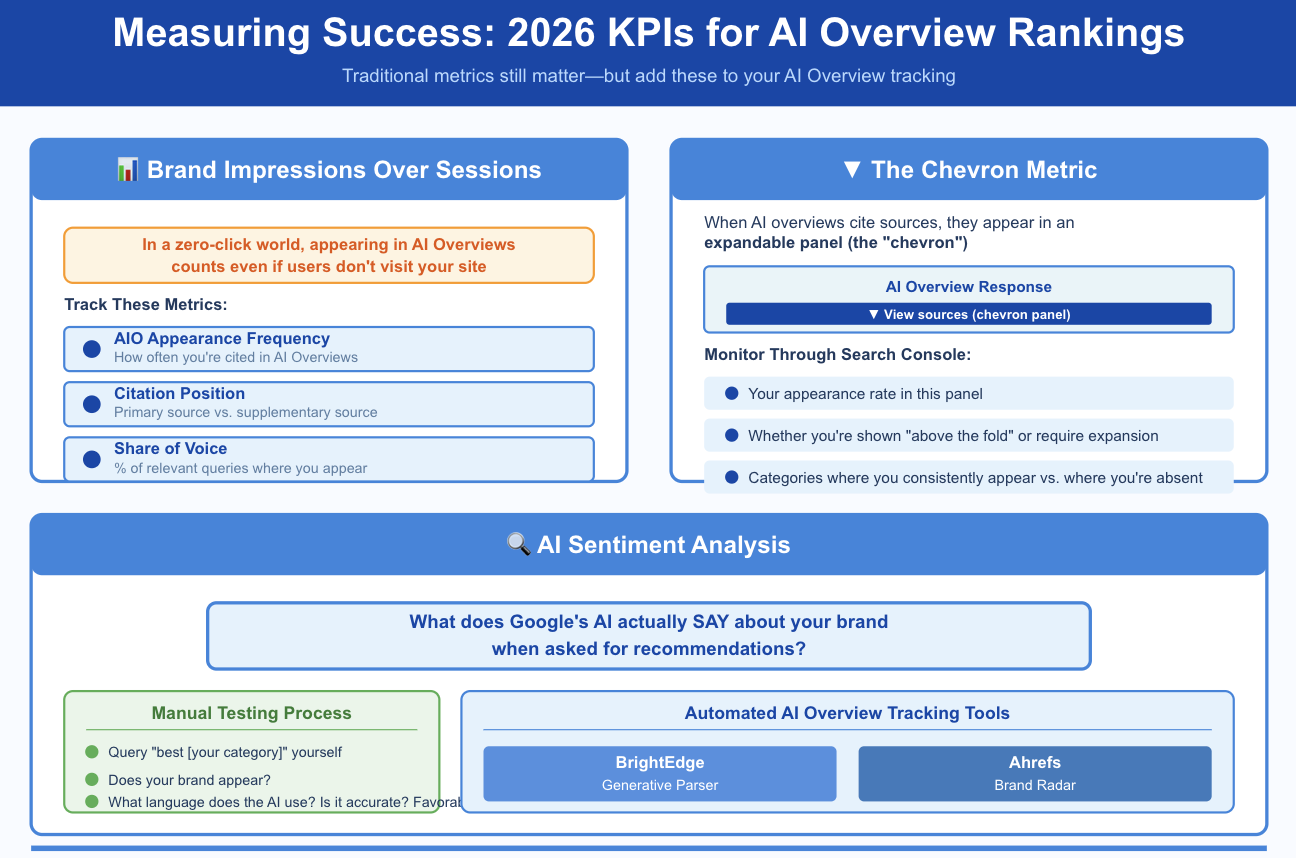
Traditional metrics still matter, but add these to your AI Overview tracking:
Brand Impressions Over Sessions
In a zero-click world, appearing in Google’s AI Overviews counts even if users don’t visit your site. Track:
- AIO appearance frequency (how often you’re cited)
- Citation position (primary source vs. supplementary)
- Share of voice in your topic categories (percentage of relevant queries where you appear)
The Chevron Metric
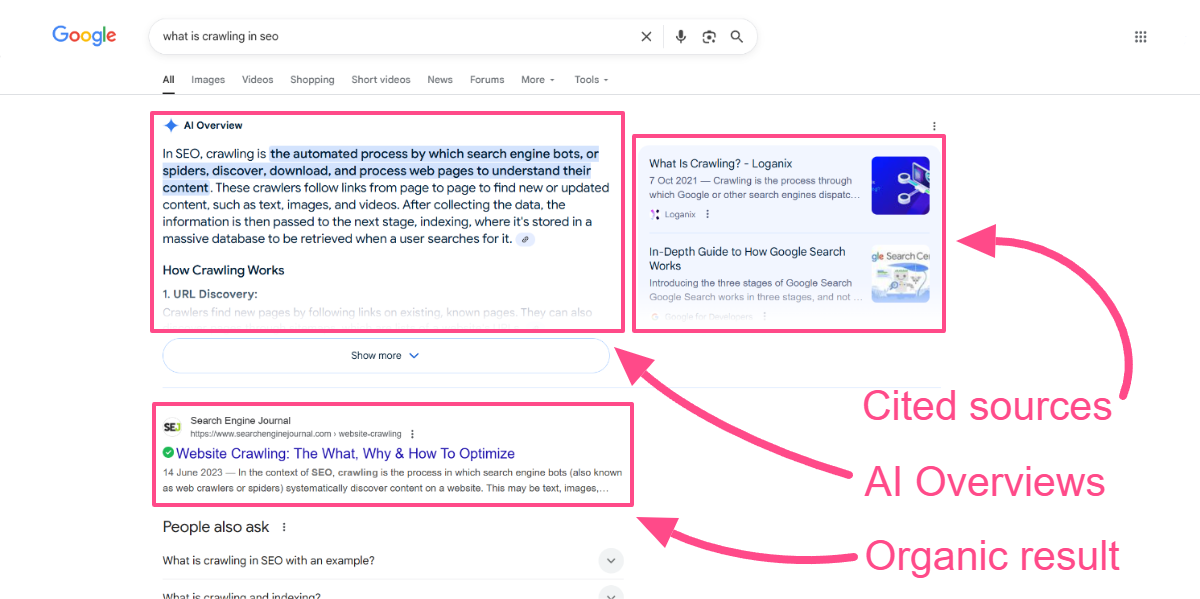
When AI overviews cite sources, they appear in an expandable panel (the “chevron”). Monitor through Search Console:
- Your appearance rate in this panel
- Whether you’re shown “above the fold” or require expansion
- Categories where you consistently appear vs. where you’re absent
AI Sentiment Analysis
What does Google’s AI actually SAY about your brand when asked for recommendations?
Query “best [your category]” yourself. Does your brand appear? What language does the AI use? Is it accurate? Favorable?
This requires manual monitoring initially, but AI tools like BrightEdge Generative Parser and Ahrefs Brand Radar are building automated AI Overview tracking for this.
Advanced Tactics: Going Beyond the Basics
Once you’ve implemented foundational strategies, these advanced approaches can amplify how you rank in AI overviews.
Entity Engineering for Brand Recognition

AI models don’t just understand keywords—they understand entities (people, places, brands, concepts) and their relationships. Build your entity graph:
Link your brand consistently
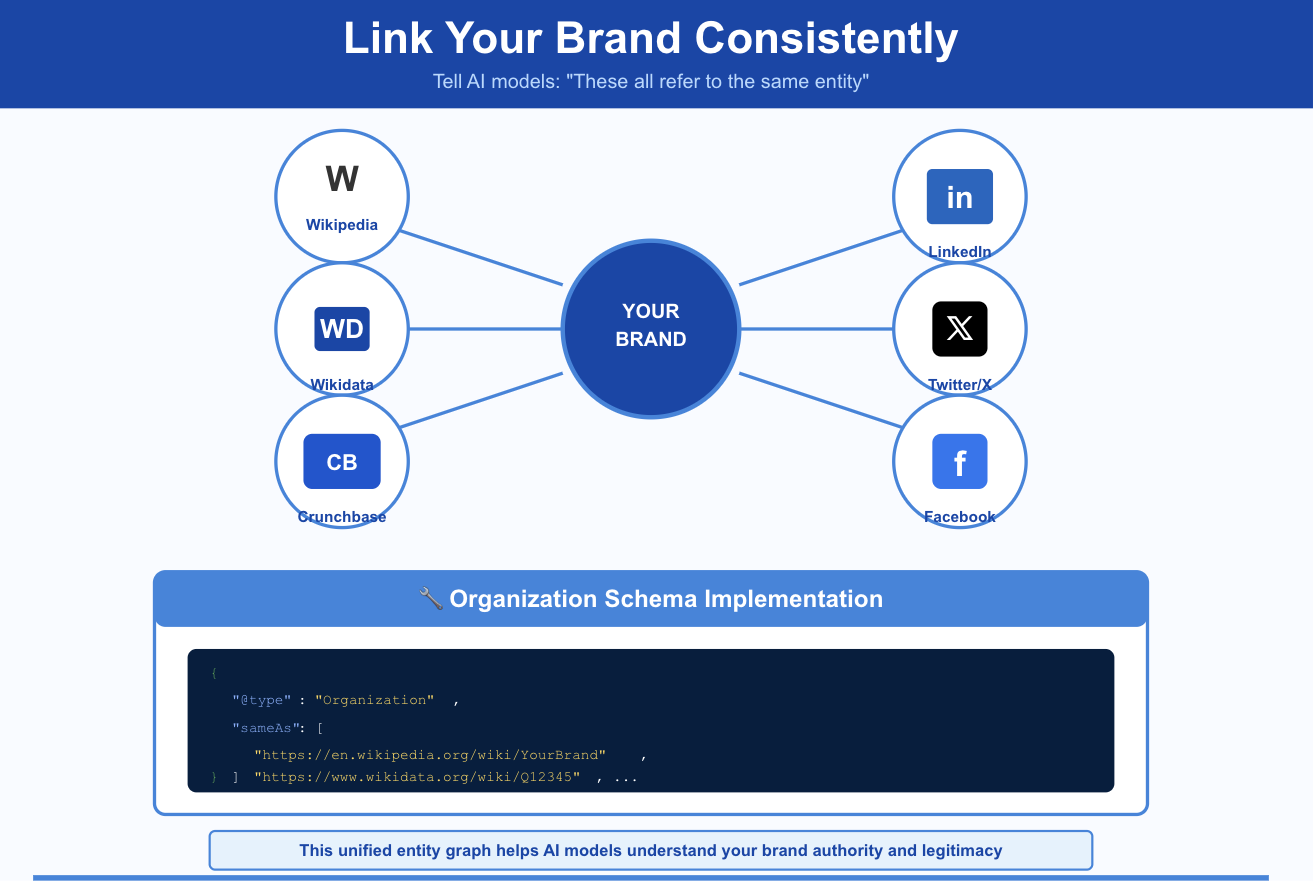
Ensure your Organization schema includes “sameAs” properties pointing to your Wikipedia, Wikidata entry, Crunchbase profile, and major social profiles. This tells AI models, “These all refer to the same entity.”
Create knowledge panels
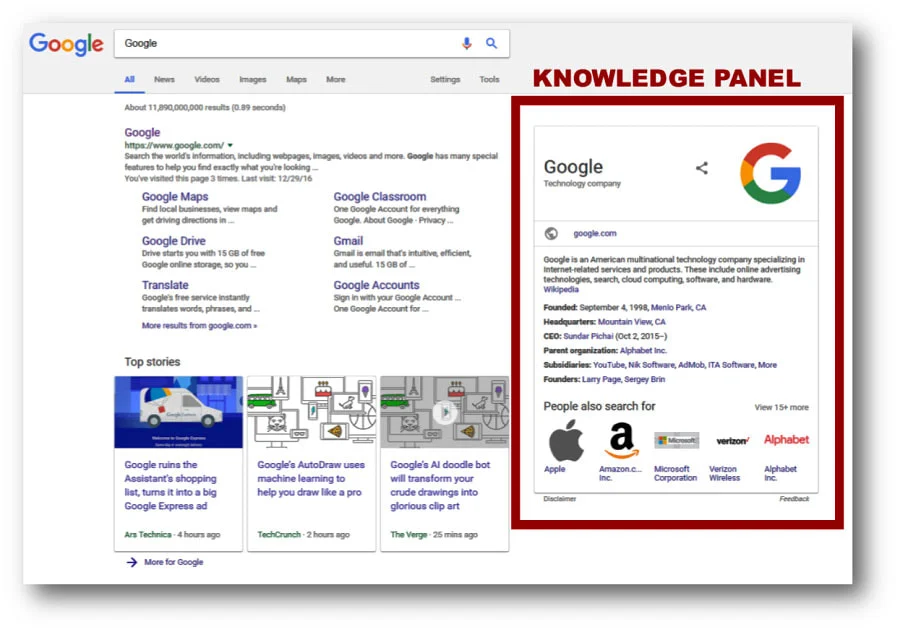
Maintain an active, verified Google Business Profile, claim your brand on Wikidata, and ensure consistent NAP data across authoritative directories—all accessible through Google Search Console.
Build topic authority clusters
Don’t just create isolated content. Develop interconnected gateways where your main page links to related subtopics, and those subtopics link back. This internal linking structure helps AI understand your breadth of topics across search queries.
The Content Database Approach
Leading marketing teams now treat their content like a structured database rather than a collection of blog posts:
- Tag content by intent stage (awareness, consideration, decision)
- Map content to customer questions using actual user queries
- Create content matrices showing coverage gaps
- Version control with clear last-updated timestamps
This systematic approach ensures you’re building a comprehensive knowledge resource that covers entire topic clusters—critical for consistent AI overviews and rank performance.
Leveraging Multiple Platforms for Distribution
Your content shouldn’t live only on your website. Use downstream channels to amplify reach:
- Publish on Medium with canonical tags pointing back to your main site
- Repurpose for LinkedIn articles targeting specific user intent
- Create presentation decks on SlideShare for educational content
- Submit research to industry aggregators
Each distribution channel creates additional citation opportunities while reinforcing your entity authority across search engines.
Platform-Specific AI Search Optimization
Different AI models require different approaches. Here’s how to optimize content for each major platform.
Google AI Overviews (Primary Focus)
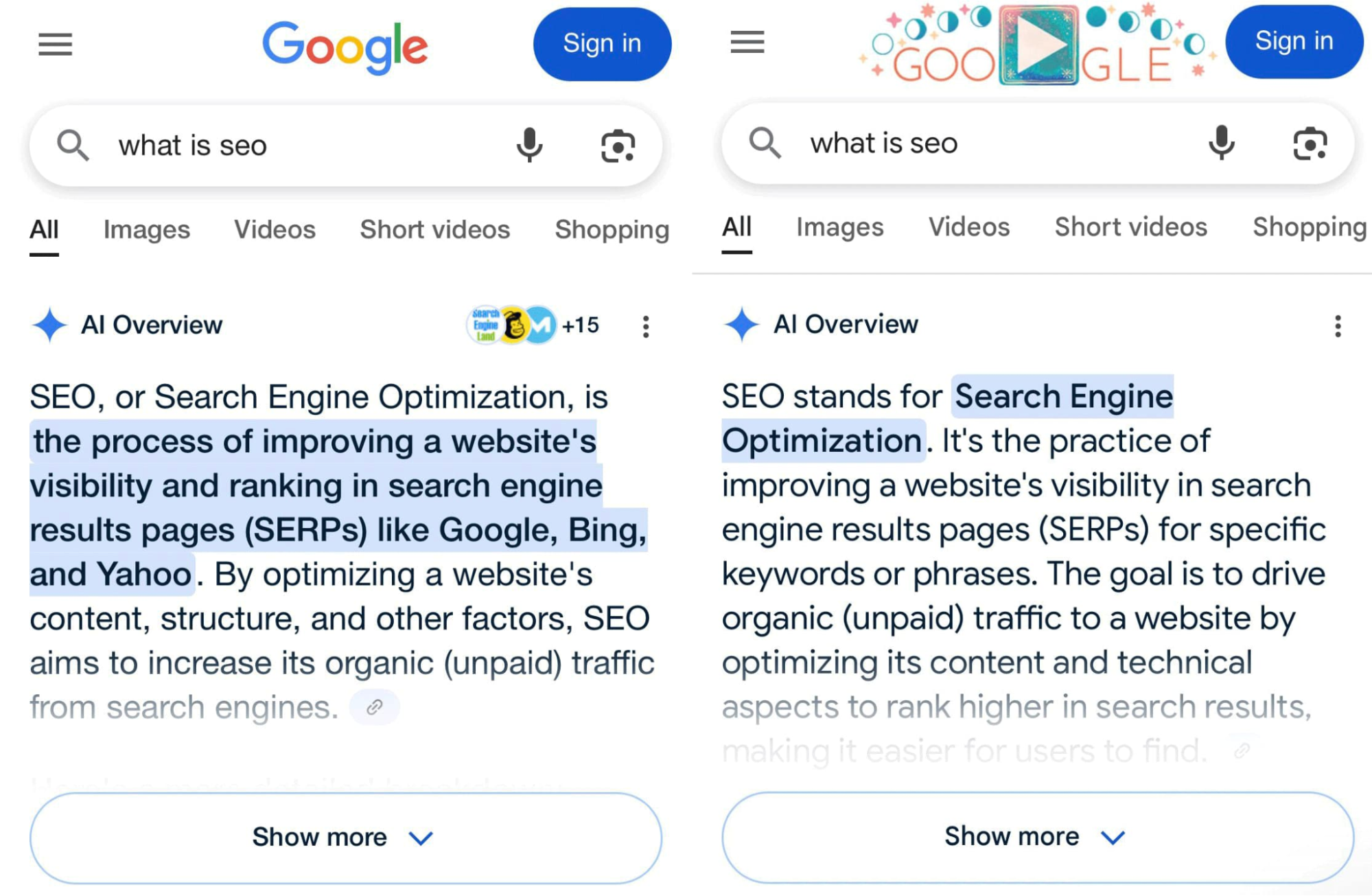
Best for: Product research, how-to search queries, local services
Optimization priorities:
- Structured data (especially HowTo and Product schema)
- High factual density with specific metrics
- Fresh content (updated within last 90 days performs better)
- Strong E-E-A-T signals with verified author credentials
Bing Chat (Microsoft Copilot)
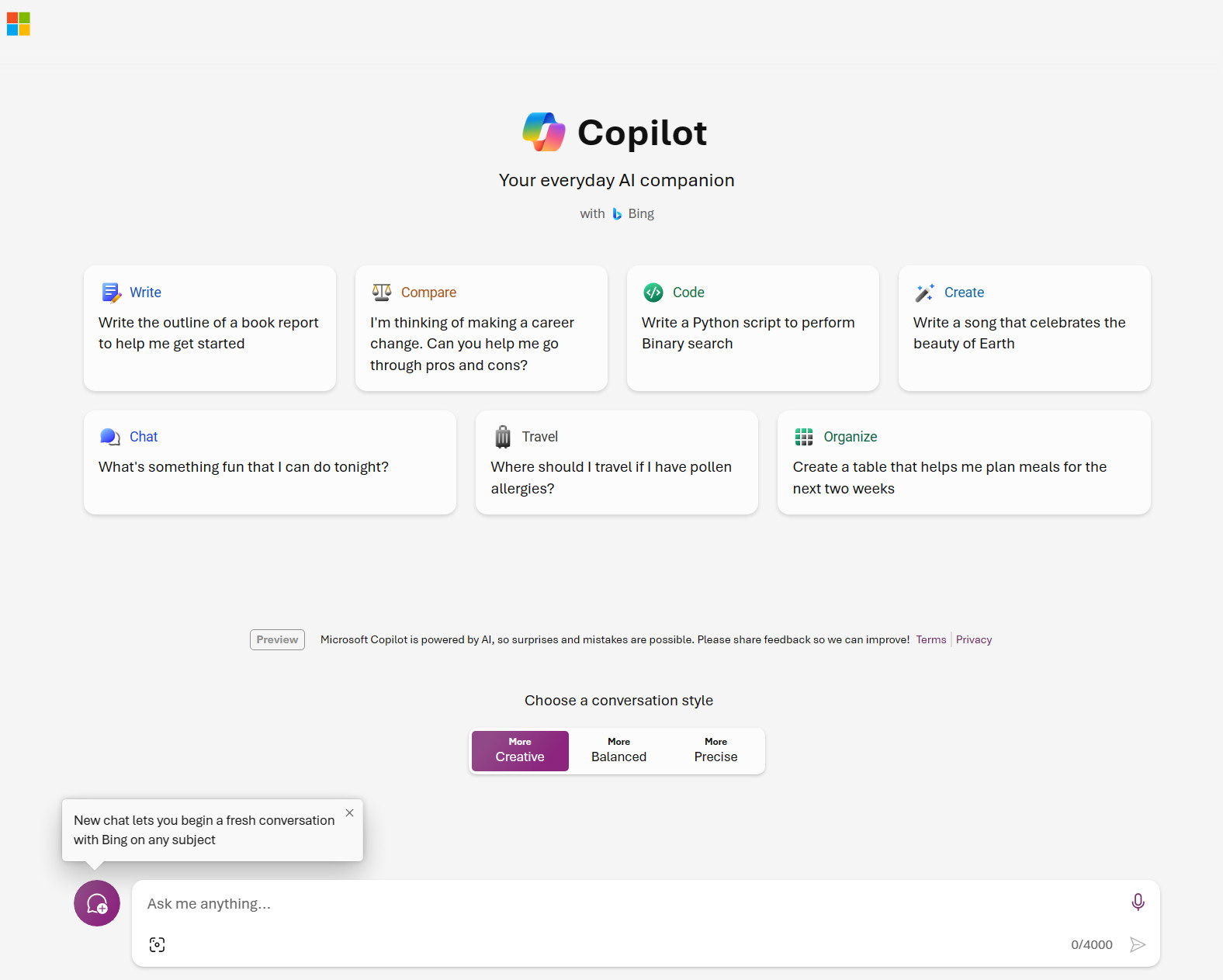
Best for: Research tasks, academic queries, technical documentation
Optimization priorities:
- Academic citation style (Bing favors scholarly sources)
- Clear attributions to primary research
- Technical depth over surface-level coverage
- Integration with the Microsoft ecosystem
ChatGPT Search
Best for: Nuanced questions requiring synthesis, creative applications
Optimization priorities:
- Conversational tone that feels natural when quoted
- Multiple perspectives on complex issues
- Practical real-world examples and use cases
- Less reliance on keywords, more on conceptual coverage
Perplexity AI
Best for: Research-heavy queries, data analysis questions
Optimization priorities:
- Data visualization and charts (include descriptive alt-text)
- Methodological transparency in research
- Links to datasets and primary sources
- Technical accuracy over simplified explanations
Content Format Innovation for AI Citations
Not all content formats perform equally in AI generated summaries. Here’s what’s working in 2026:
The Comparison Matrix Format
Google’s AI loves structured comparisons. Create comprehensive tables that include:
| Feature | Option A | Option B | Option C |
| Price | $X/mo | $Y/mo | $Z/mo |
| Best for | [specific use case] | [specific use case] | [specific use case] |
| Pros | [specific benefits] | [specific benefits] | [specific benefits] |
| Cons | [specific limitations] | [specific limitations] | [specific limitations] |
The AI can extract relevant rows based on user intent, making your content highly modular and citation-friendly for multiple search queries.
The Progressive Disclosure Format
Start with quick answers, then progressively add complexity:
- Level 1 (AI Overview target): Basic definition in 40-60 words
- Level 2 (Quick research depth): Common use cases and examples (100-150 words)
- Level 3 (Deep dive depth): Technical implementation, edge cases, expert insights (500+ words)
This structure serves both users wanting direct answers and those conducting serious research—addressing different levels of search intent.
Strategic Use of Bullet Points
Bullet points make content scannable for both humans and AI models. Use them strategically for:
- Lists of features or benefits
- Step-by-step processes
- Key points summarizing longer sections
- Comparison criteria
However, avoid excessive bullet points—mix them with prose for natural readability while maintaining structure that AI tools can easily parse.
Competitive Intelligence for AI Overview Rankings
Understanding your competitors’ performance in AI overviews helps identify opportunities.
The AI Visibility Audit
Monthly, run these search queries and document results through Search Console:
- Generic category queries: “best [your category]”
- Problem-solution queries: “how to [pain point you solve]”
- Comparison queries: “[your brand] vs [competitor]”
- Feature queries: “[specific capability] tools”
For each query, note:
- Does an AI overview appear?
- Which brands get cited?
- What language does Google’s AI use?
- Which specific pages are cited?
Pattern recognition: If competitors consistently rank in AI overviews for certain query types, analyze those pages. What schema markup are they using? What’s their content structure? What original data do they include?
The Citation Gap Analysis
Map your content against common user queries in your industry. Where are you absent from Google’s AI Overviews? Those gaps represent your roadmap:
- High search volume + low citation presence = immediate opportunity
- Emerging queries + no established AI answers = chance to become the authoritative source
- Your strengths + competitor citations = head-to-head optimization battle
Use SEO tools to identify these gaps, then prioritize based on search traffic potential and your ability to create superior content that matches user intent.
Ethical Considerations in AI Search Optimization
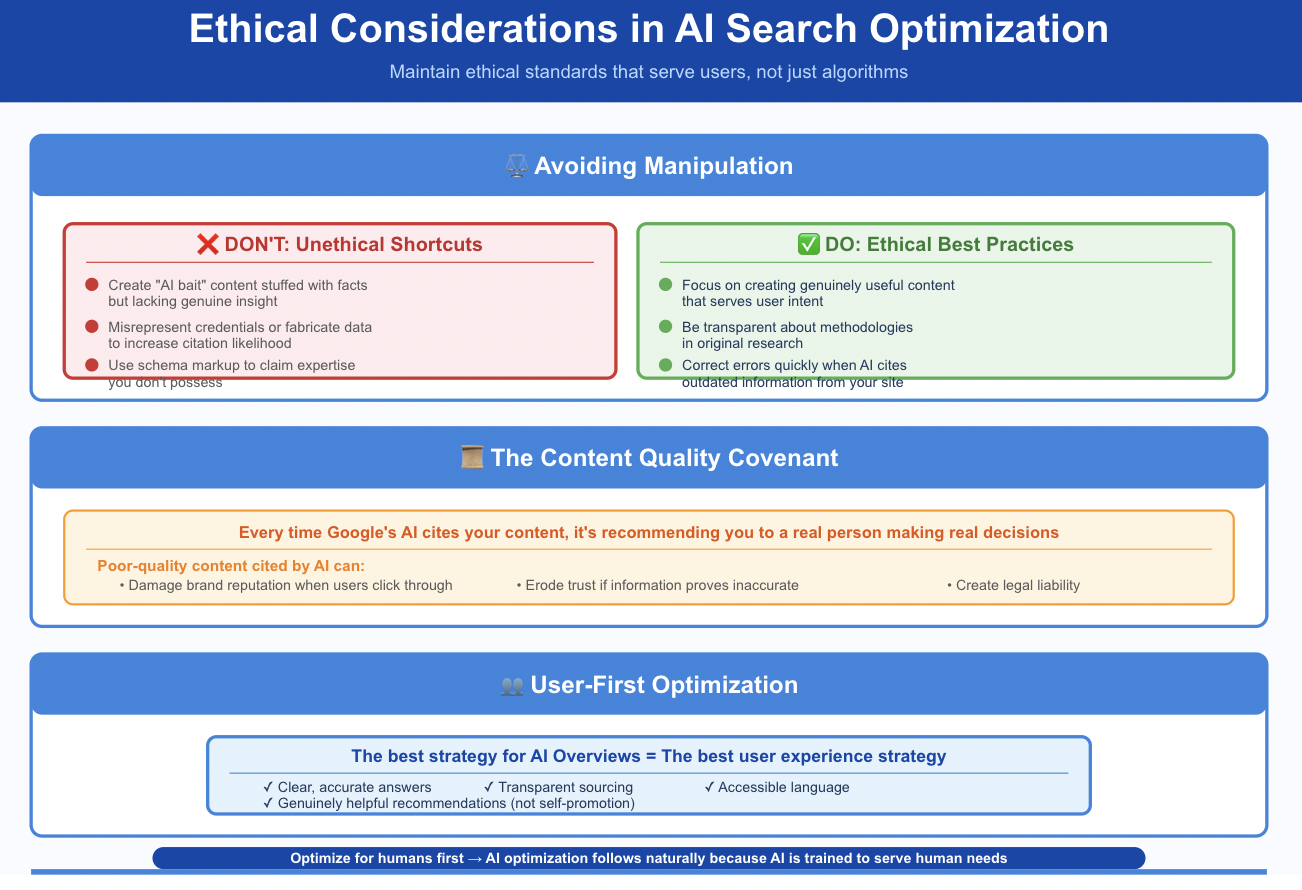
As you optimize for search visibility, maintain ethical standards that serve users, not just algorithms.
Avoiding Manipulation
There are unethical shortcuts:
Don’t: Create “AI bait” content stuffed with facts but lacking genuine insight Don’t: Misrepresent credentials or fabricate data to increase citation likelihood Don’t: Use schema markup to claim expertise you don’t possess
Do: Focus on creating genuinely useful content that serves user intent Do: Be transparent about methodologies in original research Do: Correct errors quickly when AI cites outdated information from your site
The Content Quality Covenant
Remember that every time Google’s AI cites your content, it’s recommending you to a real person making real decisions. Poor-quality content cited by AI can:
- Damage your brand reputation when users click through
- Erode trust if your information proves inaccurate
- Create legal liability if users act on incorrect information
Your goal should be to create content so valuable that AI should cite it—not to trick AI models into citing mediocre content.
User-First Optimization
The best strategy for how to rank in AI overviews is also the best user experience strategy:
- Clear, accurate answers to common search queries
- Transparent sourcing and methodologies
- Accessible language that doesn’t require expert knowledge
- Genuinely helpful recommendations, not just self-promotion
When you optimize for humans first and match their search intent, AI search optimization follows naturally because the AI is trained to serve human needs.
Conclusion: From Search Visibility to Market Leadership
The transition from traditional search results to AI-mediated discovery represents the most significant shift in digital marketing since Google displaced Yahoo. But unlike previous algorithm updates, this isn’t just about adjusting tactics—it’s about fundamentally reconceiving how your audience discovers and evaluates solutions.
The Compounding Returns of AI Authority
Citation in AI overviews creates a flywheel effect. Each citation:
- Increases brand recognition among target audiences
- Generates social proof (“Even Google’s AI recommends them”)
- Attracts backlinks from users who found you through AI
- Improves domain authority, which reinforces AI trust
- Creates customer recall that converts later in the journey
This compounds over months and years. Early movers in AI search optimization are building advantages that will be difficult for competitors to overcome.
The Content Landscape Transformation
We’re witnessing evolution from isolated articles to interconnected knowledge ecosystems. Your SEO strategy must shift accordingly:
Old model: Publish individual blog posts targeting target keywords, hope for top 10 traditional search results, monetize through clicks
New model: Build comprehensive content addressing entire topic clusters, earn citations through original insights, monetize through brand authority and recall
This requires patience. You won’t see dramatic traffic spikes from individual posts. Instead, you’ll build sustained search visibility across hundreds of relevant queries—a more defensible position than ranking #1 for a handful of target keywords.
Distribution Evolution
Your content distribution strategy now includes AI models as a primary channel. When you publish content, you’re not just publishing to your website—you’re publishing to:
- Google’s AI training and retrieval systems
- ChatGPT’s knowledge integration
- Bing’s Copilot ecosystem
- Perplexity’s research engine
- Future AI platforms not yet launched
Each piece of content is an opportunity to educate these systems about your expertise, ensuring they recommend you when appropriate across user queries.
Investment Priorities for 2026
If you’re deciding where to allocate budget, prioritize these areas:
- Original research programs (surveys, studies, proprietary data)
- Content refresh initiatives (updating existing content with current data)
- Technical infrastructure (schema markup, clean HTML, Search Console optimization)
- Author development (building recognizable experts with verifiable credentials)
- Measurement systems (AI tools to track citations and sentiment)
These investments build long-term assets that appreciate in value as AI search grows and more user queries generate AI overviews.
The Mindset Shift Required
Success in AI search requires letting go of some traditional metrics:
Less focus on: Individual page rankings, direct response conversions from organic search, session-based analytics
More focus on: Brand impression share, citation frequency across query categories, sentiment analysis in AI generated answers, assisted conversions where organic played a research role
This doesn’t mean abandoning traditional SEO—it means expanding your definition of search success to include AI-mediated discovery and search visibility beyond organic search results.
Your First 90 Days to Rank in AI Overviews
Here’s a practical roadmap to transform your approach:
Days 1-30: Foundation
- Audit existing content for AI-readiness using Search Console data
- Implement structured data and priority schema markup
- Establish baseline measurements (current citation frequency in overview data)
- Train your team on AI search optimization principles
Days 31-60: Creation
- Launch one original research initiative
- Refresh top 20 performing pages with Answer-First Headers
- Optimize author bios with verifiable credentials
- Build internal linking structure connecting topic clusters
Days 61-90: Expansion
- Publish multimodal content (video content, infographics) for top user queries
- Develop social presence on Reddit/LinkedIn for entity building
- Create comparison matrices for key decision queries
- Document what’s working using AI Overview tracking and scale successful approaches