
As companies rely more on guest, contributed content for their online marketing and audience engagement needs, they encounter the problem of figuring out how effective their content marketing is. If they don’t know how well their content is doing, it might be hard for them to continue investing time and money into such projects.
And that is why measuring return on investment (ROI) is very important. When companies measure the right metrics, they can learn how well their guest contributed content is received by their target market, and they can use this data to improve their content strategy.
This post outlines seven metrics that you can employ to determine the financial return of activities involving guest, contributed content. By implementing these, companies will be able to discern their content’s performance and take strategic actions to enhance their content marketing efforts.
Snippet: Measuring the effectiveness of guest contributed content can be done through seven main metrics: lead quality, total sales conversions, referral traffic volume, onsite engagement, social shares, SEO growth, and brand authority.Utilizing UTM parameters and GA4, assisted conversions helps in pinpointing the revenue contribution of each guest post, thus going a step beyond mere page views as a vanity metric.


What is Guest Contributed Content?

Guest Contributed Content is often a great strategic “secret weapon” for any business that is willing to be a Thought Leader in a very crowded market.</span> It represents the act of publishing top-quality, original pieces of work on websites other than one’s own with the idea of utilizing their existing authority and audience.
One shouldn’t confuse this with Content Syndication. Content syndication is all about republishing the same piece of content across different platforms, while guest, contributed content is different, it is unique, and it is specially made for the host publication’s readers. Businesses, through offering such exclusivity, can gain new customers, increase their brand awareness, and thus, become recognized as the main experts in their field.
7 Valuable Metrics For Determining Success
When measuring success, businesses shouldn’t limit their perspectives to just revenue figures or website traffic conversion. Knowing what really drives success means measuring regularly and analyzing a wide range of metrics that offer a window into various facets of a company’s work.
Below are the 7 useful metrics to gauge success:
1. Lead Quality
In the context of guest posts, the number of leads is a beauty metric; Lead Quality is the metric that really influences your bottom line. To know if a guest post is successful, it is necessary to check the distribution of readers in the different levels of the marketing funnel.
ToFu vs. BoFu: Understanding Lead Temperature
Not every guest post is designed to accomplish the same goal. Generally, a broad thought, leadership piece on a major news site is considered Top of Funnel (ToFu); it helps raise awareness, but hardly ever results in an immediate purchase. On the other hand, a technical “How-to” guide on a niche industry blog caters to Bottom of Funnel (BoFu) readers who are looking for a solution and are pretty much ready to buy.
When, I was responsible for outreach at high, growth B2B SaaS companies, making a guest post with a case study mention in the first 200 words resulted in 40% more quality leads than generic ‘how, to’ guides from my point of view. Because BoFu specialists want to check the effectiveness, ToFu beginners want only instructions. In case you need high, intent leads, demonstrate your work upfront.
Aligning with Search Intent
Strictly speaking, the best way to make sure your leads are really your potential clients is to align your theme with the Search Intent of the publisher’s audience. For example, if someone comes to a guest post through a search for “best free tools” and you offer a “high-ticket enterprise service, ” the user experience will be disrupted, and you will naturally have a high bounce rate and unqualified leads.
Technical Tracking with UTM Parameters
If you want to have a thorough understanding of the performance of each piece, you have to attach UTM Parameters to all the links in your guest article. This way, you can know for sure which publication, article, and even which specific call to action (CTA) brought the lead.
The Attribution Window Gap
One thing to keep in mind is that the reality of the Attribution Window is that guest content seldom gets a conversion on the first interaction. A customer may come across the brand through a guest post today, but the actual conversion may take several weeks. By looking at Assisted Conversions in GA4, you are able to tell a guest post as the “first touch”, which later on led to a valuable customer.
Solving the “Attribution Window” Problem
Linearity of conversions is not that should be blamed one of the biggest mistakes in measuring guest content damage. A person who reads your guest post on a niche trade site might forget about it, be reminded by a LinkedIn ad three days later, and finally convert by doing a direct search a week after that.
In Google Analytics 4 (GA4), you should investigate “Assisted Conversions” (these are available under Advertising > Attribution > Conversion Paths).
The Strategy: Use UTM parameters specifically for your guest posts (e.g.,
utm_medium=guest_post).The Insight: Moreover, if a guest post isn’t the “Last Click” that resulted in a sale, GA4 will identify an “Early Touchpoint” at least. If guest content is kept showing up at the beginning of a $10 000 sales journey, the return on investment would be immense, even if direct sales might not indicate a high level.
2. Sales

Lead generation is a good way to kick off, but the ultimate aim of guest content pieces is to make money. So if you want to be on top of your sales game, you should really track how many of those leads become customers.
Setting up a CRM or some other platform to help you track important sales figures, such as total sales or conversion rates, is the right thing to do as the first step. Nevertheless, well-executed guest content not only brings in sales; it also lowers your overall Customer Acquisition Cost (CAC).
Thus, by continually offering high-quality referral leads from authoritative sources, you cut down your need for costly paid advertising, which in turn, converts your whole marketing system into a profit in the long run.
3. Web Traffic
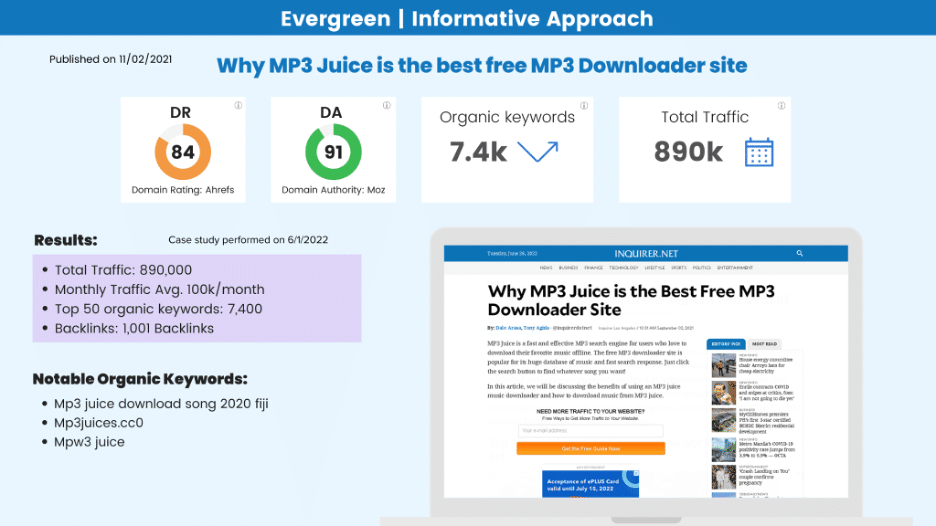
Web traffic is like the blood running in your online business veins, but you have to know that not all visitors are equal. One of the best ways to measure return on investment is to keep a record of where your visitors are actually coming from and what they do after coming.
Referral Traffic vs. Referral Domain Quality
Referral traffic is a bit like a word, of, mouth recommendation in a virtual world. When a website links to your site, its a signal that they consider you an expert in your field. Nevertheless, a simple tally of clicks will no longer suffice; you should analyze the quality of each Referral Domain.
The Reality of Referral Traffic: Most of the time Referral Traffic is like a coin with two sides. The writer of that major post that got mentioned in the tech world thought it boosted the traffic of his site and as a consequence increased his revenues. In reality, he got 5000 visitors out of that post but zero conversions. ‘Referral traffic’ is one of those superficial metrics you use to impress your friends unless your call, to, action is totally aligned with the reader’s intent on that particular site. High traffic without a strategic bridge to your product is just a drain on your server.
Organic and Direct Traffic
Guest posting has the dual benefit of resulting in immediate referral traffic and contributing to organic traffic growth by improving your SEO potential. Besides that, as you gain brand authority, your Direct Traffic will also rise, the fans who are so loyal that they simply type your URL in the browser without needing to Google your name first, just because they have read your guest posts.
Advanced Tracking in Google Analytics 4 (GA4)
If you want to get a real grasp on the ROI of such traffic channels, you should definitely leverage the Explorations tool of GA4. With this, you can plot the user’s whole journey right from the moment they land at your website through a guest post up to the moment they decide to purchase. Following their path across various touchpoints allows you to demonstrate that guest content is most of the time the trigger of your highest-value sales.
4. Onsite Engagement
Getting a lot of visitors from a guest post is only part of the game; the other part is what happens once the visitor lands on your site. Watching onsite engagement indicators such as bounce rate and pages per session can give you a clue whether your guest post is truly engaging the right audience.
Diagnosing the Disconnect with CRO
Should you find out that a particular guest article brings in a lot of visitors but the Conversion Rate is very low, you most probably have a misalignment problem. This is where Conversion Rate Optimization (CRO) becomes useful. You might have to resort to CRO techniques on your landing pagefor example, making the headline more attractive, shortening the lead form, or making sure the “feeling” of your landing page corresponds with the tone of the guest article. If the switch is too sudden, the reader will exit.
Keeping Visitors Interested
To reduce bounce rate and increase session duration, you need to make sure that your website is easy to use and optimized for mobile devices. Employ internal linking to take visitors from your guest, post landing page to more in-depth, related articles on your site. This “nurture path” will keep them in your ecosystem longer, thus increasing the possibility of a sale later on.
5. Social Media Shares and Comments

These days, return on investment (ROI) in the search game can be elusive if you only look for a direct link. Social media shares and comments are a very effective type of “word of mouth” marketing, and they communicate both to your audience and to search engines that your content is worth their time.
The Power of Unlinked Brand Mentions
A lot of people think wrongly that a guest post is a “failure” if it doesn’t come with a clickable backlink. In 2026, brand mentions (including the unlinked ones) are extremely important. If reputable websites mention your brand name positively, Google will mark that connection. These mentions strengthen your brand power and increase your visibility in the search, which in turn often results in your branded search volume going up.
By measuring the number of times your guest posts are shared or talked about, you can get an idea of how much impact your message makes. Lots of social engagement usually serves as a good indicator of SEO success and referral traffic, which comes later.
6. SEO Success
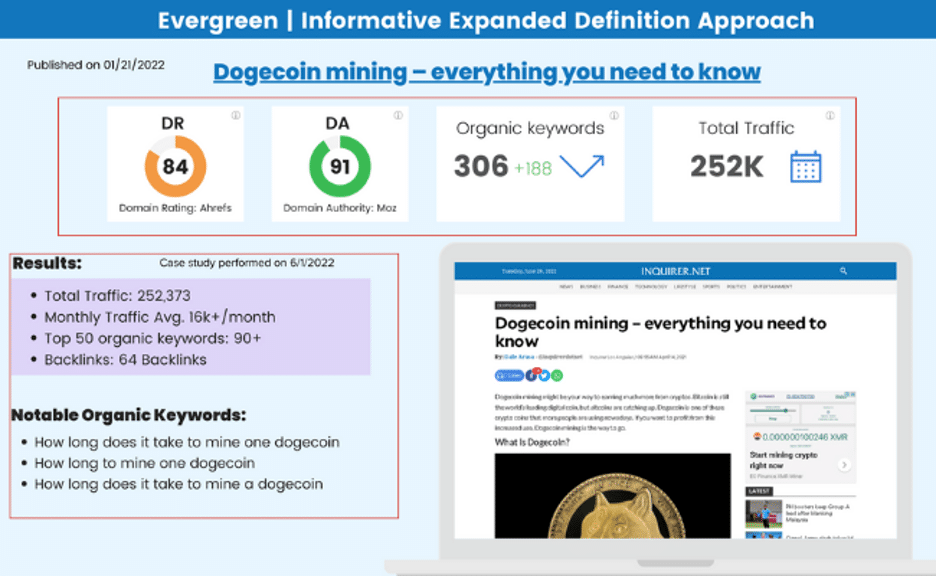
SEO success is a long-term metric. It is understandable that one gets irritated if waiting for rankings to go up takes too long, and hence, measuring the technical effect of guest content is very crucial, and one should do it in order to determine the long-term ROI.
Building a Healthy Backlink Profile
Guest posting is probably the most thoughtful of your strategies when it comes to changing your Backlink Profile composition. That is why, when you get links from well-known, authoritative, and industry-relevant sites, you are sending a signal to Google that your brand is trusted all over the internet. But still, the number of links alone is not the measure nowadays; the context matters most.
Context Over Quantity: Googles algorithms are gradually changing the focus of their ranking factors from the number of links to their relevance. When we were auditing our backlink profile last year, we found that a single link from a highly authoritative ‘best, of’ list (compiled by an industry peer) resulted in more ranking gain for our target keywords than five normal guest posts. It is a lesson that besides the backlink itself, the context and the ‘neighborhood’ of the link are what count the most.
Maintaining Anchor Text Diversity
To keep Google’s approval, you shouldn’t over-optimize your links. Keep your Anchor Text Diversity as if it’s coming from a natural source. Rather than using the same “exact match” keyword for each link, throw in some branded terms, naked URLs, and descriptive phrases as well. This stops your content from seeming like “search engine manipulation,” and your profile stays looking organic.
Audience Alignment vs. Domain Authority (DA)
Many marketers are so busy with a site’s Domain Authority (DA) that they forget that a high score is not a guarantee for ROI.
The DA 80 Pitfall: A post on a massive, general news site might give you a “powerful” link, but if the audience is too broad, your engagement will crater.
The DA 30 Goldmine: A guest post on a niche blog with a DA of 30 might have less “raw power, ” but if that audience consists of your exact target customers, the conversion ROI will be significantly higher.
Target Keyword Rankings
In the end, you should see how your guest posts help the ranking of your target keywords. It is a situation where your content keeps bringing you in the top 10 results, which is a clear indication of the growth of your Topical Authority. You can use tools such as Ahrefs or Semrush to keep track of these changes over a period of time.
7. Exposure and Authority
When it comes to content marketing, exposure is crucial. Exposure refers to the number of people who come across your content, whether it’s a blog post, a video, or an infographic. The more exposure your content receives, the more opportunities you have to connect with potential customers and establish yourself as a thought leader in your industry.
As you build your brand, exposure becomes increasingly important. It’s not enough to create great content; you also need to make sure that people see it. When your content is seen by a large number of people, it can lead to a ripple effect of positive outcomes, such as increased business referrals, leads, and sales. This can ultimately help you improve your overall content marketing ROI.
To increase your exposure, you should start by creating high-quality content that is relevant and informative to your target audience. Then, you can promote your content through various channels, such as social media, email marketing, and paid advertising. By taking a strategic approach to content marketing and focusing on increasing your exposure, you can maximize your chances of success and achieve your business goals.
Calculating the “True” Cost Per Lead (CPL)
To find the real ROI, you have to account for the “hidden” resources spent. Most marketers only look at the invoice from a writer, but your internal time is an expense too.
Use this Guest Content ROI Formula:

Where “Total Content Investment” includes:
Outreach Costs: Subscription fees for tools like BuzzStream or Hunter.io + the hourly rate of the person doing the pitching.
Creation Costs: Freelance fees or internal salary for the hours spent drafting the content.
Editing & Management: The time spent by your Senior Editor reviewing the piece and coordinating with the publisher.
Example: If you spend $500 in total resources to get a post live, and it generates 2 leads with a Lifetime Value (LTV) of $2,000 each, your ROI is 700%.