Did you know the average form completion rate is only 67%? This means nearly one-third of potential leads drop off before taking action. Completion rate is a critical metric measuring how many users finish a specific digital task, directly impacting your ability to capture leads and drive conversions.
Whether filling out forms or completing purchases, optimizing these rates is essential. Many businesses that outsource to the Philippines utilize specialized teams to refine these processes and better guide audiences through the conversion funnel.
This guide explores the importance of completion rates and provides actionable strategies to minimize friction. By fine-tuning your user journey, you can maximize engagement, improve your marketing ROI, and successfully turn potential leads into loyal, long-term customers.

What Is a Completion Rate?

A completion rate reflects how many users complete a specific task compared to those who started it. For instance, if 100 users begin filling out a contact form and 80 successfully submit it, the completion rate is 80%. This seemingly simple calculation is a cornerstone of conversion funnel optimization. This helps marketers identify opportunities to streamline processes and maximize engagement.
Why Completion Rates Matter for Lead Generation

Completion rates are more than just metrics—they represent how effectively a business is addressing user intent and driving actions that lead to conversions. Here’s how they directly influence lead generation:
Qualifying and Engaging Leads
A high completion rate demonstrates that your platform effectively guides users to take critical actions, such as signing up for services via contact forms or interacting with content crafted through effective keyword placement or keyword mapping. This builds a database of qualified leads ready for nurturing through email nurture campaigns or omnichannel marketing strategies.
Pinpointing Drop-Offs in the Funnel
Analyzing drop-offs in the completion process through tools like user feedback analysis can reveal friction points in the journey, whether it’s an overly complex form or unclear instructions. This insight allows marketers to address these issues, improving user flow and increasing conversions.
Enhancing Digital Services for Higher Conversions
Completion rates reveal which services—like the effectiveness of a search function, press kit downloads, or Pinterest marketing strategies—are working and which require improvement. Focusing on high-performing elements while auditing others can refine the entire experience, increasing lead conversion rates.
Improving User Experience for Better Completion Rates
By addressing gaps found through a content gap analysis, conducting website audits, and refining keyword research 101 strategies, businesses can improve user experiences and encourage more users to complete desired actions. Whether it’s making a purchase, signing up for a webinar, or downloading a resource, seamless experiences translate to higher completion rates.
How to Optimize Completion Rates for Better Lead Generation

Boosting completion rates involves understanding your audience and removing friction from their journey. Here are actionable strategies:
Simplify the User Journey
Streamline the process by eliminating unnecessary steps and focusing on a well-structured website architecture. Use journey mapping to ensure your design is intuitive and guided by actual user behavior.
Provide Clear CTAs
Use direct, action-oriented calls-to-action like “Get Started Now” or “Claim Your Free Trial.” Ensure they are strategically placed at high-visibility touchpoints to encourage immediate response.
Use Engaging Multimedia
Incorporate videos or infographics to explain complex processes. Engaged users are significantly more likely to finish a task than those staring at a wall of text.
Optimize for Mobile
With mobile traffic dominating, a seamless, responsive experience is non-negotiable for high completion rates.
Leverage Feedback
Perform regular user feedback analysis to identify hidden pain points. Constant auditing allows you to refine the funnel and improve lead capture over time.
Offer Immediate Support
Provide real-time help via chatbots or live support to resolve user concerns before they abandon the page. Many companies outsource to the Philippines to staff these support roles, ensuring 24/7 availability that builds trust and reinforces your marketing strategy.
Example of a Good Form for Better Completion Rate
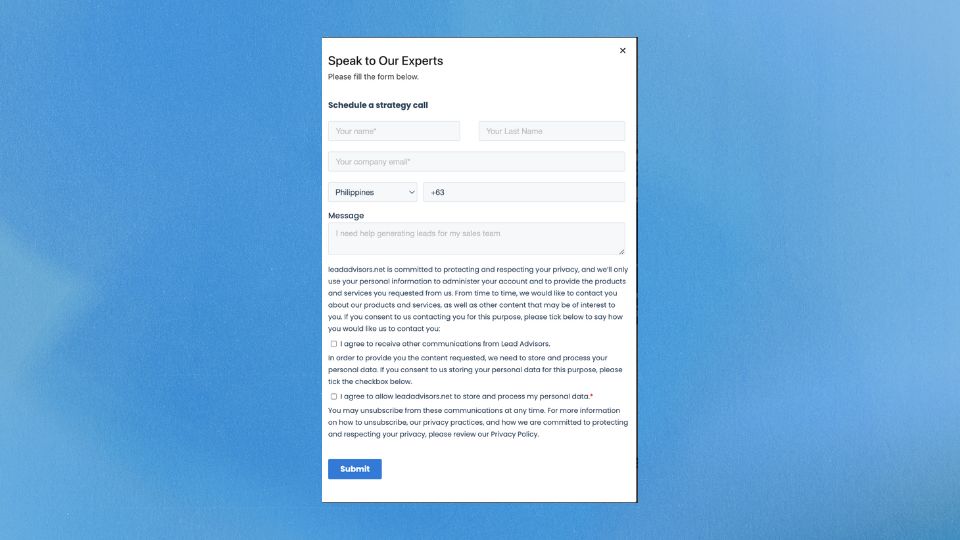
A well-designed form removes the psychological barriers to entry. Below are the key strengths that make a form high-converting:
Minimalist Design
A clean, uncluttered layout reduces cognitive load. By stripping away distractions, you allow the user to focus solely on completing the required fields.
Clear Purpose
Effective forms use headlines like “Speak to Our Experts” to immediately communicate value. When users understand the “why,” their willingness to finish the form increases.
Logical Field Placement
Vertical, step-by-step alignment creates a natural flow. This sequential structure prevents users from feeling overwhelmed by a wall of input boxes.
Professional Branding and Transparency
Trust is a major driver of completion. Including professional branding and a clear privacy policy reassures users that their data is secure.
Mobile-Friendly Layout
With the majority of traffic coming from handheld devices, a responsive vertical design is essential.
Pro Tip: Maintaining these high standards across dozens of landing pages can be resource-intensive. Many growing businesses choose to outsource to Philippines for dedicated web maintenance and lead-gen optimization to ensure every form stays updated and high-performing.