
In order to increase domain authority, you need to focus on acquiring high-quality backlinks, building deep topical content clusters, and ensuring a clean technical SEO profile. Although it is a third-party metric, the higher the score, the higher the competitive power of your website in search engine results.
Hey there! Have you ever wondered what makes some websites appear on the first page of Google while others languish on page ten? You’ve probably heard of the term “domain authority,” but to be honest, search engine optimization can be a bit of a maze. If you’re feeling a bit lost, don’t worry! You’ve come to the right place to learn how to increase your website’s authority and finally get the traffic you deserve.


What is Domain Authority?

In other words, Domain Authority, or DA, is a measure that estimates the probability of your website appearing in the search engine results.
In short, Domain Authority is like a “reputation score” of the internet.
Though Google itself doesn’t utilize this data to rank your website, other applications like Moz, Ahrefs, and Semrush do, allowing you to gain insight into the strength of your website.
You may hear it referred to by different names, depending on the application that is utilized:
- Moz DA score or DA score
- Domain Rating (DR) (Ahrefs)
- Authority Score (Semrush)
What is Domain Authority, and what does it mean for you? In essence, the higher your Domain Score, the more trust search engines have in the information that is presented on your website.
When I created my own website, my Domain DA was a flat 1, which meant that it seemed impossible to budge, though by utilizing the following steps, I was able to increase my Domain Authority ranking from 1 to 35 in just six short months!
How is Domain Authority Calculated?
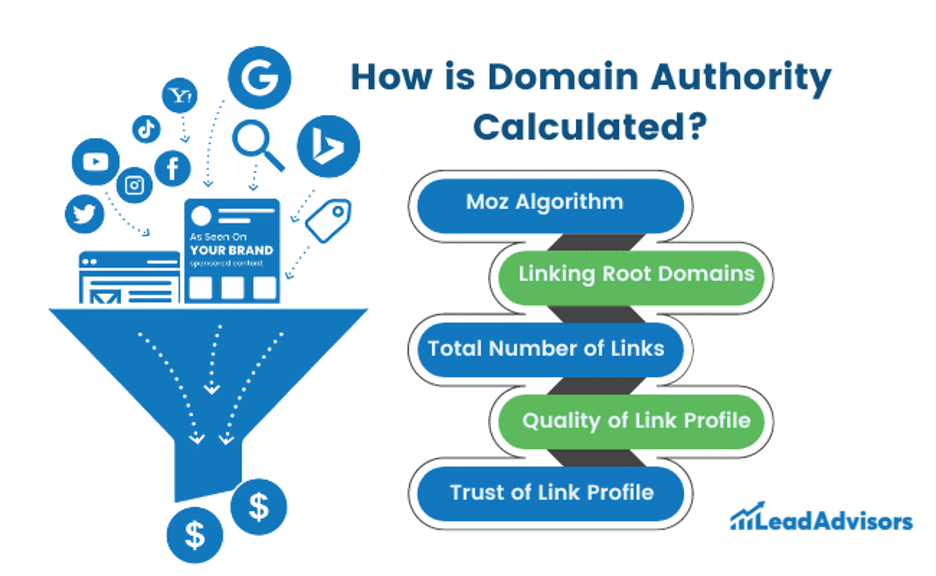
If you’ve ever been curious about what goes on behind the curtain of a Moz DA score, it’s useful to think of it as a kind of “credit report” for your website, run by AI. What is the calculation of DA actually based on, then?
Moz uses a machine learning algorithm that considers dozens of factors, but there are four major “pillars” on which it is primarily based.
1. Linking Root Domains (The “Unique Votes” Rule)
This is one of the most important elements in raising domain authority. “Linking root domain” is a fancy way of saying “a unique website.”
- The Rule: It is much better to have 10 links from 10 different websites than 100 links from just one website.
- Why it matters: Diversity tells search engines that your “vote” is not a special favor for a friend, but rather a sign that you’re popular across the web.
2. Total Number of Links
While it is true that “quality is king,” the total number of links still plays a part in your domain score. Just remember that thousands of “spammy” links from low-quality directories can actually hurt your DA rank more than they help.
3. Quality of Your Link Profile
In 2026, the “neighborhood” your website hangs out in is just as important as your website itself. One link from a website with a high domain authority (like a news organization or industry blog) will move your DA website score more than 500 links from unknown sites.
- Latest Stat: Recent studies have found that websites that are part of Google’s “AI Overviews” are 4.5x more likely to have a DA score greater than 50. High-quality links are the “trust signals” that AI needs to recommend your website.
4. Trust and “Entity” Recognition
Finally, Moz’s algorithm attempts to determine how much the internet trusts you. This is where Domain Authority and Page Authority intersect. If your website is linked to by “seed sites” (the most trustworthy sites on the internet, such as .gov or .edu domains), your authority score will increase much more quickly.
Understanding the Logarithmic Scale (The “Climb”)
It’s also important to note that domain authority is on a logarithmic scale.
What does this mean to you? It’s much easier to increase your DA score by 10 points when your current DA is 10, as opposed to trying to increase your DA by 10 points when your current DA is 70.
Think of it like a video game. It’s much easier to level up when you’re just starting out, but when you get to the “boss levels,” it’s much harder to get that extra XP (in this case, backlinks with high power)!
DA Range | What it Means for Your Site |
1 – 20 | New or low-authority. You might struggle to rank for competitive terms. |
21 – 40 | Growing authority. Common for small businesses and consistent bloggers. |
41 – 60 | Strong authority. You’re likely a “go-to” source in your specific niche. |
61 – 100 | Market leaders. These are the giants like Forbes, Wikipedia, or HubSpot. |
Important Note: While having a high domain authority is great because it means that your website has a better chance at ranking on Google, remember that Google does not actually use this tool. It’s simply a tool that allows you to check your website’s authority and compare it to your competition.
What Domain Authority Does Not Include?
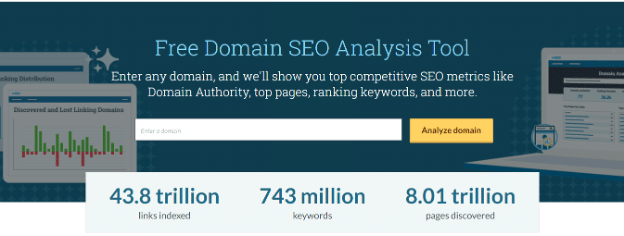
While keeping an eye on your DA score is good, it’s not exactly a magic crystal ball that’s going to help you become a master at improving your domain authority if you’re not aware of exactly when this metric ends and when other SEO metrics kick in.
Domain authority is like a high school GPA, which means that while it tells people that you’re a good student, it doesn’t exactly show that you’re good at playing the piano or speaking a second language.
Here is what DA is missing:
- Google’s Actual PageRank: This is Google’s internal (and secret) version of your website’s power. Moz’s domain authority makes an educated guess at what Google thinks, but it never has access to Google’s secret data.
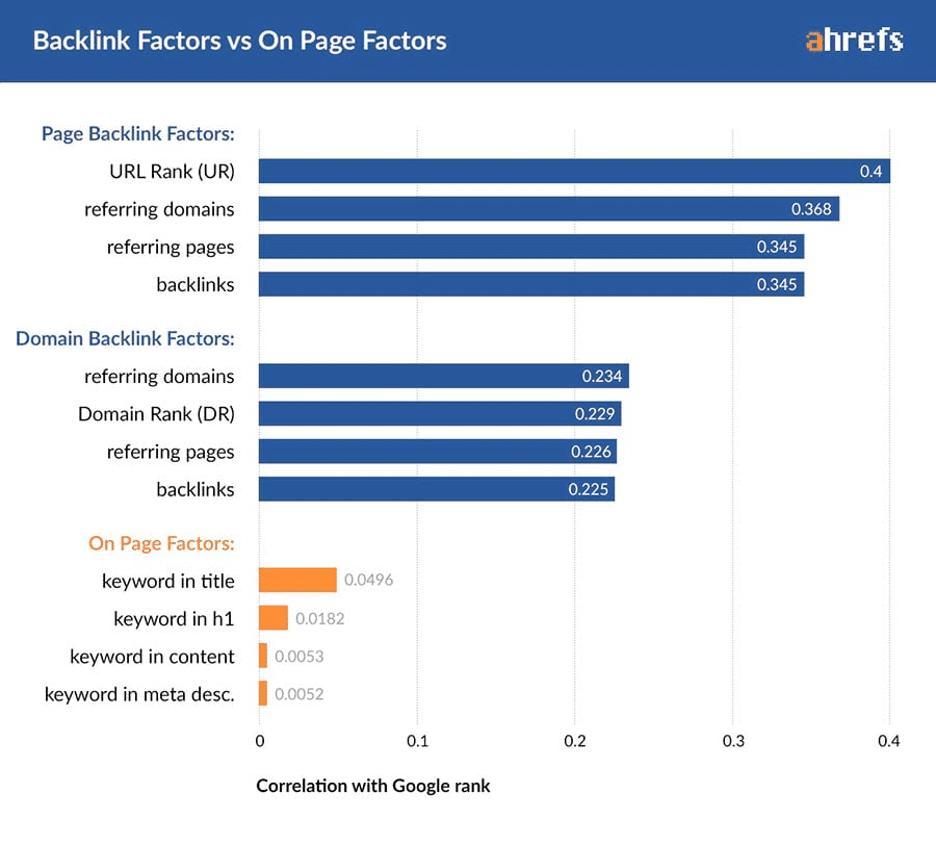
- On-Page SEO: Your authority score doesn’t care if you have perfect keywords in your titles or if your images have alt text. You could have an 80 DA rank and still not rank well if your on-page SEO is a disaster.
- Technical Health: Site speed, mobile-friendliness, and “Core Web Vitals” are not in the algorithm.
- Search Intent: Having high domain authority does not guarantee that you’ll rank #1 if your content does not, in fact, answer the question that the user asked.
Use It as a “Relative” Metric (The 10-Point Rule)
This is because the domain authority scale is based on a logarithmic scale. Therefore, the actual score is less significant than the comparison with your neighbors.
Take the case where you run a website authority test and find out that your score is 30, but your main competitor’s score is just 25. This means that you are in a very advantageous position.
However, the case is different if your score is 30 but your competitor’s score is 70.
Expert Tip: Do not worry if your domain authority score drops by one or two points as a result of the Moz domain authority update.
This is because this could be due to the fact that other websites on the internet have improved, and not because your website has deteriorated.
The Big Picture: It’s Only One Piece of the Puzzle
At the end of the day, your success depends on a “triple threat” strategy:
- On-Page SEO: Creating content that humans and AI love.
- Off-Page SEO: Creating those coveted DA links.
- Content Marketing: Engaging with your audience so they keep coming back.
Website authority is a great tool for checking website domain authority, but never forget that “Helpful Content” is what keeps you at the top of those search results!
5 Steps In Improving Domain Authority
If you want to increase your website’s authority, you may be aware that it does not happen overnight. However, if you follow these 5 simple yet proven techniques, you may be able to increase your domain authority and witness your DA score rising steadily.
1. Publish high-quality content consistently.

Another key step that helps improve your DA score is the creation of good-quality content on a regular basis. Now, here is the big secret: Google, as well as other AI search engines, is not looking for more words; they are looking for value.
- Be a Source, Not Just a Writer: In order to get the links, we need to create “Link Magnets” that people have to cite.
- The “I Tested This” Insight: When I first started my website, I was posting three articles per week, three short articles per week, and my blog authority was not increasing at all. I changed my strategy by creating a 3,000-word “Ultimate Guide” with original charts every two weeks, and my domain rating went up by points just because people were using my data as a source.
2. Promote your content.
To improve your domain ranking, you need to get your content in front of the right eyes. You cannot just “publish” your content and expect it to magically get better rankings.
- Social & Email: Share your content on LinkedIn or Twitter, or send it out to your email list. This drives traffic, which tells search engines your DA site is alive.
- Repurpose: Rephrase your content as an infographic or a quick video.
- Latest Stat: Infographics are shared 3x more than any other type of content.
3. Commit to Guest Posting
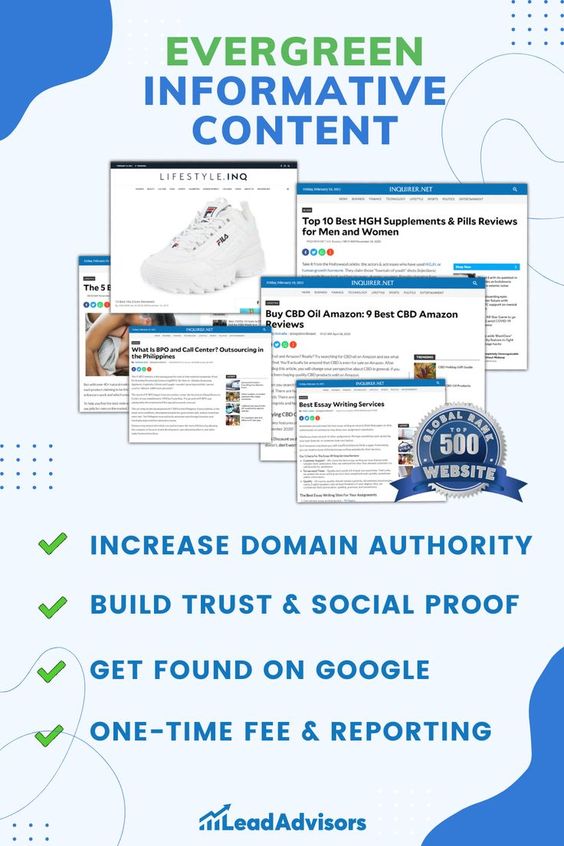
Guest posting on high authority websites in your niche is a sure way of building your domain authority quickly. You get the chance to “borrow” the authority of the website and send a high-powered link back to your website.
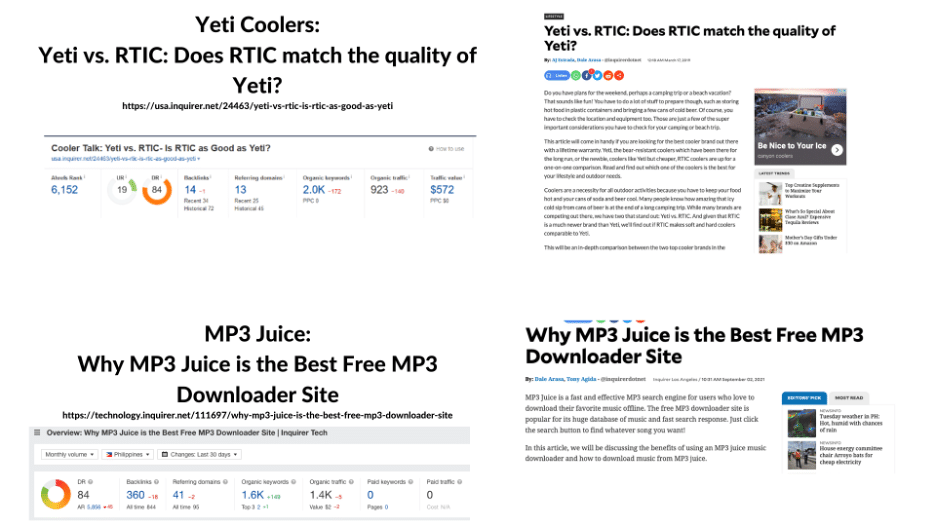
- First, check the authority of the website before pitching them with your idea. You should only pitch guest posts on websites with a Moz DA score that is higher than your own.
- Quality Over Quantity: One article on a website like Forbes or a top-tier niche blog is worth 50 articles on a website with a low domain score.
4. Reference other authoritative websites in your content.
If your content is to be trusted, then it is essential that you reference other authoritative websites. This may seem odd, as why would you want to refer readers away from your website?
- Build Trust: Referencing news articles or studies demonstrates to search engines that your content is well-researched.
- Advanced Tips for Improving Domain Authority: Referencing high domain sites is like sitting next to the smartest kid in school. It tells Google your site is part of a specific “Entity” or niche. Eventually, everyone thinks you’re smart!
5. Monitor your website’s analytics and adjust your strategy accordingly.

Your website analytics are like the road map to your website. By monitoring your DA rankings, you can get an idea of what is working.
- Fix the Leaks: If your analytics are showing that many visitors are having a high “bounce rate” (i.e., they are clicking away from your website right away), add more internal links to your website to encourage them to stay longer on your website. This will improve the user experience on your website, which indirectly helps your website’s DA.
- Double Down: If one of your pages is getting lots of traffic, update that page! Make it even more valuable by adding a video or more statistics.
Summary Checklist: How to Improve Domain Authority
Action Item | Why It Works |
Original Research | Earning the links naturally. |
Guest Posting | Boosting your authority ranking via trust transfer. |
Niche Relevance | Improving domain authority for AI search engines by proving expertise. |
Link Audits | Checking the domain authority of your links to remove “spam.” |