The SaaS Content Quick-Take: A successful SaaS company uses its blog as a channel to discuss user issues, demonstrate product features, and emphasize its industry knowledge. Combining data, driven content, smart SEO, and customer stories, a SaaS blog stops being merely a source of information and becomes a lead generation powerhouse.
Are you having a hard time coming up with captivating blogs for your SaaS (Software as a Service) business? You’re in good company. Creating content that actually keeps a CTO or a Product Manager reading is a top-notch skill in a world of “AI-slop” and information overload.
In a world saturated with digital content, it is difficult for people to stay focused on one thing for a long period. As such, the old strategy of posting only on a regular basis is not sufficient anymore. Based on Orbit Media’s 2025 survey of 1,200+ bloggers, businesses that post 16+ times monthly generate 3.5 times more traffic than those who blog less than four times. However, for a SaaS company, traffic is a vanity metric if it doesn’t lead to a trial signup or a demo request.
The Secret: Product-Led Content
The difference between a “ghost town” blog and a “growth engine” blog lies in Product-Led Content. This is the art of solving a reader’s technical problem while naturally showcasing your software as the tool for the job.

What Are SaaS Blogs?
A SaaS blog is a strategic content hub designed to solve the complex problems of a software-driven audience. Unlike traditional business blogs, the best SaaS content balances industry news with technical “how-to” guides that naturally lead a reader toward product adoption.
The SaaS Market in 2026: A Growth Engine
The SaaS sector has transformed from a fledgling market to the mainstay of global enterprise. As per the most recent Gartner predictions, software is the fastest-growing category of IT spending in 2026, with total global spending expected to be $1.43 trillion.
- Projected Market Size (2026): Global SaaS revenues are forecast to reach $465 billion, a huge leap from the $102 billion recorded in 2020.
- The AI Factor: A considerable portion of this growth is attributed to AI integration. Actually, by the end of this year, 95% of companies are predicted to use SaaS applications that are powered by AI.
The Proof: Case Studies in Content Authority
A blog isn’t just a writing exercise; it’s a lead-generation machine.
- HubSpot: Frequently cited as the “Gold Standard” for SaaS blogging, HubSpot’s multi-channel content strategy generates millions of monthly visits. More importantly, it converts 75% of its leads through inbound marketing—proving that high-quality content outlasts paid ads in long-term ROI.
The Lead Growth Advantage: According to Content Marketing Institute’s (CMI) B2B research is that businesses using content marketing—such as blogging—generate 3x more leads than those relying on traditional outbound marketing methods, at 62% less cost per lead.
I’ve Seen This Work: When consulting for a B2B SaaS startup last year, we stopped writing “news” and started writing “workflows.” By documenting how our tool solved one specific security bottleneck, our demo requests increased by 30% in a single month.
Comparison: Why SaaS Blogging is Different
Think of these three pillars when you are trying to figure out how your blog fits:
- Thought Leadership: Identifying the future of the industry (for example, the transition to AI, native apps).
- Product-Led Education: Emphasizing the role of your product in alleviating the user’s challenges through demonstration rather than mere telling.
- Customer Success: Utilizing the testimonials of customers as stories that demonstrate the effectiveness of your software in real-life situations.
Importance of Creating Engaging SaaS Business Blogs
A blog for a contemporary software company is not only a set of articles; it is an essential strategic lever that can fuel the whole Go-To-Market (GTM) strategy. Below are the ways through which compelling content brings a tangible impact on your revenue:

1. Accelerating Lead Generation and Pipeline
The main focus of a SaaS company is to transition the users from being only aware of their problem to being aware of the solution. One way to do this is by generating content that will rank for the type of keywords that express the searcher’s strong intent. In such a case, you are not just getting traffic but Marketing Qualified Leads (MQLs).
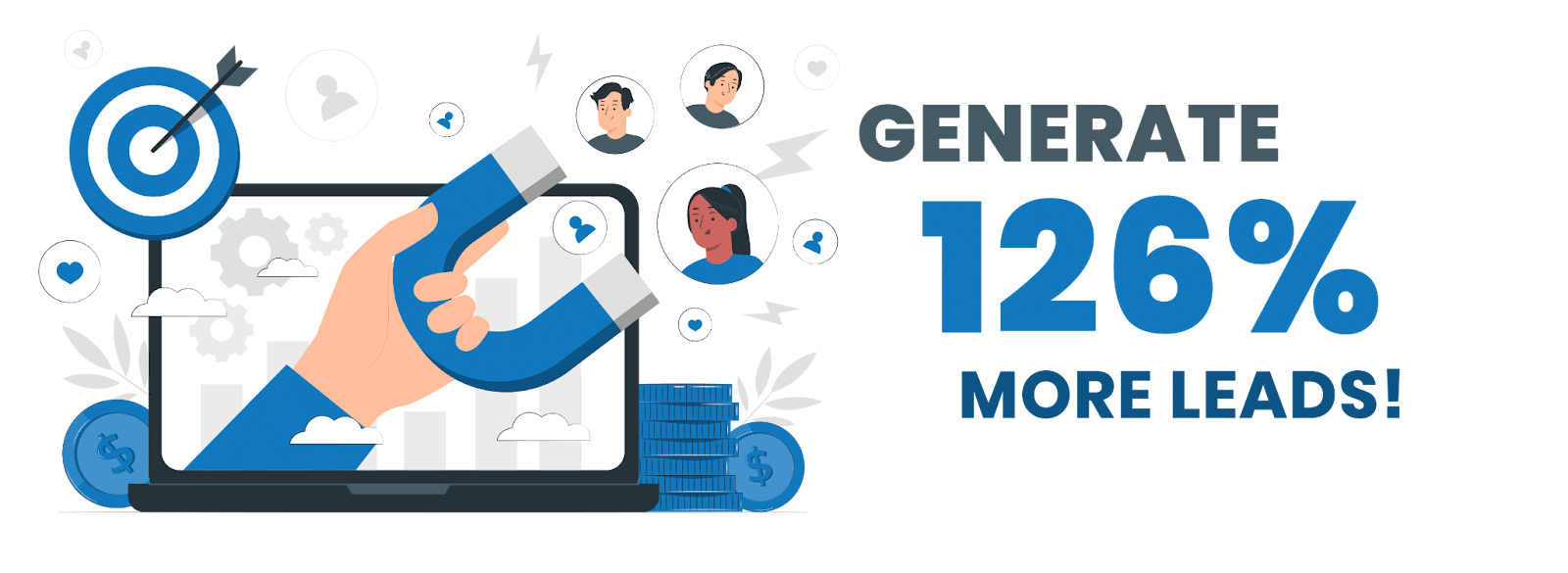
- The Stat: A 126% increase in lead generation is observed by companies that focus on blogging.
- The SaaS Twist: Content should lead directly to a “freemium” sign-up or a demo booking, shortening your sales cycle.
2. Reducing Churn through Education
In SaaS, signing up alone is not the big win. Customer Success can be further supported by your engaging blogs. When you publish features, deep dive articles, and guides, you essentially assist your users in getting more value from the product. This will have a direct impact on lowering your Churn Rate.
3. Improving SEO and Domain Authority
A blog post not only creates a new indexed page, but also every good quality post is a “backlink magnet. ” Introducing semantic entities such as Product, Led Growth (PLG), and Vertical SaaS in your content gives a strong signal to the search engines that your website is a software industry expert. Consequently, this leads to increased organic traffic and eventually, a decrease in your Customer Acquisition Cost (CAC).
4. Establishing “Category Authority”
Trust is like currency when it comes to a crowded market. Here is what a blog enables you to communicate:
- Experience: You can share “lessons learned” from your engineering or sales teams.
- Expertise: You can write in-depth articles on industry changes (e.g., “The Impact of Generative AI on SaaS Security”).
- Trust: You can feature the real case studies, bringing out the fact that your software is meeting its users’ expectations.
5. Building a Flywheel for Brand Awareness
In contrast to paid ads, which stop delivering as soon as you stop paying, a blog post is an evergreen asset. One well-written and detailed guide can be a source of traffic, leads, and brand recognition for years, thus increasing the Lifetime Value (LTV) of your marketing investment.
Key Takeaway: In the SaaS industry, content is the link that connects the visitor’s problem with the software solution. By not having a blog, not only are you missing out on the traffic, but you are also missing the opportunity to educate your potential customers before they get educated by your competitors.
5 Strategies for Keeping Your Readers Engaged
With millions of B2B articles published daily, standing out requires more than good grammar—it requires Information Gain. Here is how to write content that tech buyers actually want to read.
Tip 1: Deep Audience Mapping (Beyond Personas)

Understanding your audience is more than knowing a job title. You need to identify their Jobs-to-be-Done (JTBD). What specific friction point are they trying to remove when they search for your software?
- Go Deeper: Instead of targeting “Marketing Managers,” target “Growth Leads struggling with high Churn Rates.”
- The Data: 71% of consumers prefer personalized content tailored to their specific technical needs.
Expert Insight: In my experience, the “Aha!” moment happens when you address a pain point so specific that the reader thinks you’ve been reading their Slack channels. Use the exact language your customers use in support tickets.
Tip 2: Engineering Headlines for the Click-Through

Only 2 out of 10 readers get past your headline. For a SaaS company, your headline must promise a specific ROI or a solution to a technical bottleneck.
- Weak: 10 Tips for SaaS Sales.
- Strong: 10 Data-Backed Frameworks to Reduce Customer Acquisition Cost (CAC) by 20%.
Tip 3: The “Show, Don’t Tell” Storytelling Framework

Storytelling is not only for fiction; it can be a very effective way to market your SaaS. It causes brain activity, which helps to keep the information in the memory for longer.
- Customer Success Stories: Instead of just showing the features, tell a story of how a client combined your API and managed to save 40 manual hours per week.
- Human Experience: Incorporate lines such as, “And when we tried this workflow in our own dev team… “ to show that you are not merely an AI bot generating generic advice.
Tip 4: Product-Led Value (Actionable Utility)

The best SaaS blogs work like a “free sample” of your skills. Your writing needs to guide the reader in finding a way to their problempreferably with your tool as the primary solution.
- Avoid the “Hard Sell”: Rather than promoting, develop a “How-to” guide.
- The Visual Advantage: Offer detailed images of your software’s dashboard, clearly explaining the features, instead of using generic stock photos. This leads to Feature Adoption recognition even before they register.
Tip 5: Building a Community Feedback Loop

Engagement is considered a key indication of the success of a Product-Led Growth (PLG) strategy in the SaaS industry.
- Encourage Dialogue: At the end of the posts, ask focused questions like “What is your current approach to data stack migration?”
Omnichannel Engagement: To help the community feel engaged, post your content not only on your LinkedIn but also in niche communities such as Indie Hackers or Product Hunt.